


Listing Engineering is the disciplined process of transforming product truth into structured, AI-readable Amazon listings designed for maximum discoverability and shopper conversion. It is a distinct discipline from Amazon listing copywriting, keyword optimization, and generative AI content production — and it is the category ZonGuru is defining for the COSMO era of Amazon discovery.
For more than a decade, Amazon visibility meant ranking for keywords. The A9 algorithm rewarded keyword density and sales velocity, and "listing optimization" meant writing copy that packed the right search terms into the right places. That era is ending. Amazon's COSMO algorithm and Rufus AI shopping assistant — now used by over 250 million shoppers — evaluate listings as structured product knowledge, not keyword-matched documents. Listings built for keyword density are structurally misaligned with how AI systems interpret, compare, and recommend products today.
Listing Engineering closes that gap. This guide explains what it is, why it matters now, how it differs from traditional copywriting and prompt-based AI content, and how ZonGuru's HELIX™ framework operationalizes the discipline across five stages: Ingest, Validate, Analyze, Structure, and Engineer.
TL;DR
- Listing Engineering is a validated framework that turns product truth into structured, AI-readable Amazon listings built for AI-driven discovery (COSMO) and human conversion (Rufus + shoppers).
- It replaces listing copywriting and prompt-based AI content. The discipline combines the precision of an AI engineer, the insight of a creative director, the research depth of a brand strategist, and the tactical execution of a seasoned Amazon seller.
- ZonGuru's HELIX™ is the framework behind it. Five stages — Ingest → Validate → Analyze → Structure → Engineer — turn raw product information into listings that COSMO can interpret and Rufus will recommend.
- It matters because Amazon discovery is interpretation-based now. 250M+ Rufus users. 600M+ listings - most still built for keywords. First movers compound visibility.
What Is Listing Engineering?
Listing Engineering is the validated process of converting product truth - positioning, attributes, benefits, use cases, brand voice - into structured Amazon listing content that AI discovery systems can interpret and recommend. The process combines deep niche research, competitive intent mapping, semantic structure design, human validation, and final creative execution into a single repeatable framework.
The term distinguishes this work from the three approaches sellers typically use today:
- Traditional Amazon listing optimization. Keyword-era practice centered on search volume, keyword density, and title and bullet placement. Effective under A9. Structurally incomplete under COSMO. (See our Amazon Listing Optimization guide for how this discipline is evolving.)
- Generative AI copywriting. Running product details through ChatGPT or similar tools to produce listing text. Fast, but prompts do not create systems. The output reads well and is structurally thin - which is why we've argued that using ChatGPT to write your listing is the new keyword stuffing.
- Freelance or in-house copywriting. Craft-driven work focused on persuasion and brand voice. Strong on the human side, weak on the AI-interpretability side.
Listing Engineering is none of these. It is an engineering discipline applied to the most valuable piece of content in an Amazon seller's business: the product detail page. The output is not a rewrite. It is an engineered product knowledge system built to perform in both AI-mediated discovery and human conversion.
The Core Premise
A modern Amazon listing is not simply a marketing copy. In the AI era, it can be viewed as a product knowledge architecture. If the architecture is not structured for AI interpretation, the listing is under-engineered - regardless of how well the copy reads.
Why Listing Engineering Matters Now
Amazon's discovery engine is undergoing its most significant structural change since the marketplace launched. Three shifts, all happening simultaneously, have made keyword-era listings insufficient.
1. The COSMO algorithm replaced keyword-matching with interpretation. COSMO is Amazon's AI-powered ranking and recommendation system. Introduced in Amazon's own 2024 SIGMOD research paper and progressively rolled out across the marketplace, COSMO evaluates listings across structured dimensions - intent coverage, semantic completeness, attribute clarity, contextual relevance, and brand authority signals. Amazon's published A/B tests on roughly 10% of U.S. traffic produced a 0.7% relative increase in product sales (translating to hundreds of millions in annual revenue) and an 8% increase in navigation engagement. Amazon has committed to expanding COSMO across its entire discovery surface. Our complete guide to Amazon COSMO goes deeper on the algorithm's evaluation model.
2. Rufus shifted shopper behavior from search to conversation. Rufus, Amazon's AI shopping assistant, is used by more than 250 million shoppers, with interactions up 210% year-over-year. Instead of scanning 40 listings, shoppers ask Rufus questions - "what's the best insulated water bottle for hiking?" - and expect confident recommendations. Rufus does not keyword-match. It interprets listing content and recommends products it can confidently answer with. Listings it cannot interpret do not get recommended.
3. The installed base of keyword-era listings is enormous. There are over 600 million listings on Amazon, and the overwhelming majority were written before COSMO and Rufus existed. Sellers who optimized aggressively for A9 often score weakest on the dimensions COSMO now weighs heavily - contextual relevance and brand authority. The competitive advantage shifts from who ranks for the most keywords to whose listing the AI can most confidently interpret and recommend.
Together, these shifts produce what ZonGuru calls the AI Optimization Gap. It shows up as inconsistent rankings, weaker Rufus recommendations, and declining visibility on high-intent queries - even for products with strong reviews and established sales histories. Listing Engineering is the discipline built to close that gap.
Listing Engineering vs. Copywriting vs. AI Prompting
The three approaches differ in inputs, outputs, and what they can achieve under COSMO. The table below summarizes the distinctions.
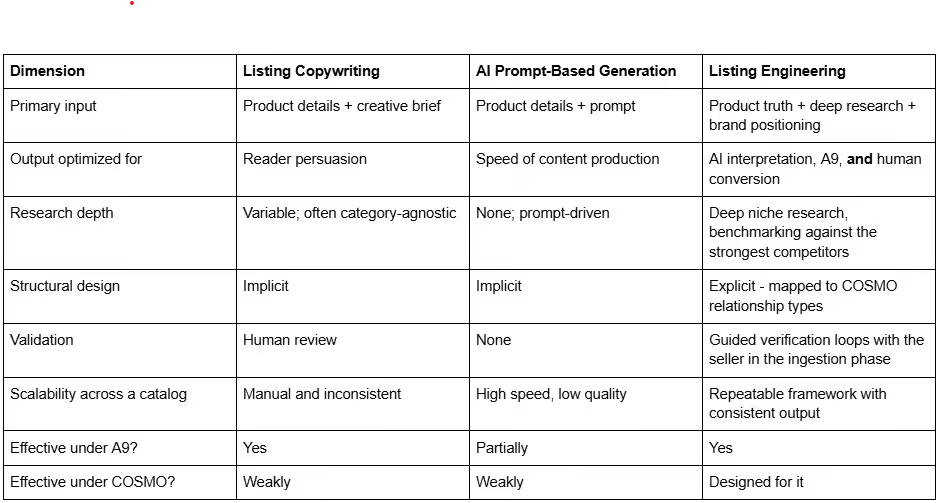
In short, using ChatGPT to write an Amazon listing is the new keyword stuffing. It feels modern. It feels efficient. It feels intelligent. But prompts do not create systems. Winning AI discovery requires engineered product knowledge - not better prompts. That is the line Listing Engineering draws.
How Listing Engineering Works: The HELIX™ Framework
HELIX is ZonGuru's Listing Engineering framework — the operating system behind every listing transformation the company produces. It executes Listing Engineering through five sequential stages, each with a specific input, process, and output.
Stage 1: Ingest
HELIX captures brand and product truth from the seller: brand positioning, tone of voice, subject-matter expertise, existing listing content, product documentation, and brand guidelines. The goal is authoritative input. The system cannot engineer a listing from keywords alone, so the ingestion stage builds the base layer every downstream stage relies on.
Stage 2: Validate
HELIX infers most of what it needs from the ingested inputs autonomously — brand positioning, product truth, category context. Validation is where the seller confirms what the system inferred. HELIX surfaces its interpretations through guided verification loops, and the seller corrects, refines, or approves before any research or structuring begins. This is the engineered confidence step: the system does the work, the seller verifies the truth. Validation preserves authority and authenticity, which matters both for compliance and for AI trust signals.
Stage 3: Analyze
HELIX performs deep niche research across the competitive landscape, customer reviews, and category signals. The analysis surfaces three things: what shoppers actually care about in the category, which competitors define the high bar in the category, and how the product's genuine strengths align against that bar. The goal is not to find weak competitors — weak competitors do not raise standards. The goal is to identify the strongest players and engineer the listing to compete on the dimensions that matter most to shoppers. This is the research step generic AI copy tools skip, and the reason their output is thin.
Stage 4: Structure
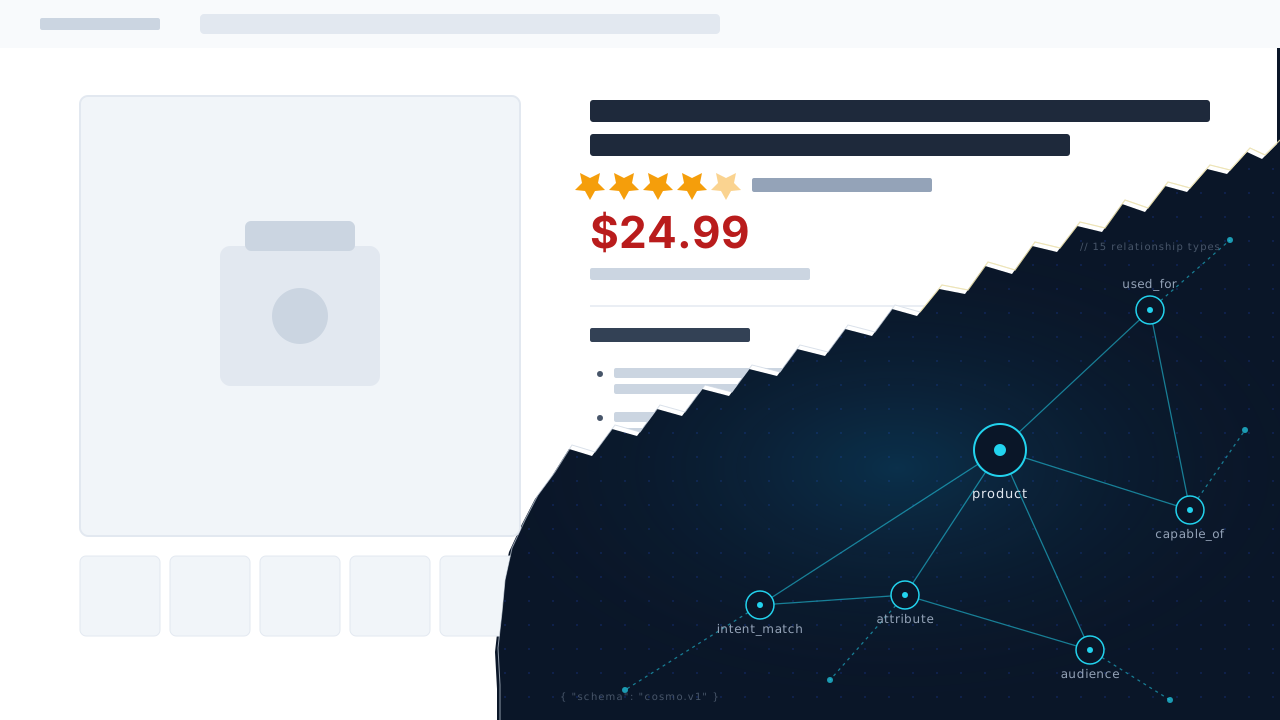
The system maps product attributes, features, use cases, and value propositions into a structured product knowledge architecture. Under the hood, this means aligning content against the 15 relationship types COSMO uses to interpret e-commerce commonsense — how a product is used, who it is for, what problems it solves, when it is used, where it fits, and so on. The result is a content plan that matches the structure COSMO evaluates against.
Stage 5: Engineer
HELIX delivers the final listing: creative, structured, AI-readable copy aligned with the brand. The output includes an engineered title, bullets, description, and backend fields, plus — at the service level — before-and-after AI-readiness scoring and an upload-ready flat file. HELIX also produces an image optimization and ideation report, structured for human conversion so the visual carousel carries the same engineered intent as the copy. The result is a listing that is creatively powerful, technically precise, and engineered to perform.
In one line: HELIX turns product truth into structured, validated, AI-readable product knowledge — engineered for discovery, crafted to convert.
What Listing Engineering Delivers
A Listing Engineering engagement produces a specific set of outputs:
- An engineered product listing (title, bullets, description, backend keywords) built to communicate structured product knowledge.
- Semantic mapping against COSMO's known relationship types, covering intent pathways that competitors miss.
- Before-and-after AI-readiness scoring across the five COSMO evaluation dimensions, so the improvement is measurable rather than claimed.
- Image carousel analysis that identifies gaps in visual intent coverage.
- A flat file for direct copy/paste to Seller Central - no manual reformatting required.
Who Needs Listing Engineering?
Listing Engineering is built for sellers and agencies whose listings were written for keywords but now need to perform under AI-driven discovery:
Growth-stage Amazon brands ($1M–$3M+ revenue) with proven products who want a trusted, repeatable system to maximize their catalog's visibility without another round of experimentation.
Agencies managing multi-brand portfolios who need a scalable, measurable methodology they can apply across client catalogs with consistent output quality.
Any seller experiencing unexplained declines in organic sessions or conversion rates. Strong reviews but dropping visibility is the clearest diagnostic signal that listing structure - not product quality - is the bottleneck under COSMO.
How to Get Started with Listing Engineering
There are two entry points:
1. Diagnose your listings for free. The COSMO Readiness Report scores any ASIN across the five COSMO evaluation dimensions and identifies the specific structural gaps reducing its visibility. Results within minutes. No credit card required. Over 1,500 reports generated to date.
2. Engineer your listings with HELIX. ZonGuru AI is the self-serve Listing Engineering platform powered by HELIX - fully transformed, validated listings in minutes.
Most sellers start with the free Readiness Report to see where their listings stand, then engineer the ASINs with the largest gaps.
The Short Answer
Listing Engineering is not a feature. It is a discipline - the first native response to Amazon's shift from keyword matching to AI interpretation. Brands that adopt it early build a compounding visibility advantage. Brands that stay on keyword-era listings fund the growth of the ones that did.
Stop prompting. Start engineering.
Frequently Asked Questions
What is Listing Engineering?
Listing Engineering is the disciplined process of transforming product truth into structured, AI-readable Amazon listings designed for maximum discoverability and shopper conversion. It combines deep niche research, competitive positioning, semantic structure mapping, human validation, and creative execution into a single repeatable framework. ZonGuru is defining Listing Engineering as a distinct discipline from Amazon listing copywriting, keyword optimization, and generative AI content production.
How is Listing Engineering different from Amazon listing optimization?
Traditional Amazon listing optimization was built for the A9 algorithm and focused on keyword density, search term placement, and title and bullet construction. Listing Engineering is built for COSMO - Amazon's AI-powered discovery system - and focuses on whether a listing communicates structured, interpretable product knowledge. Keyword optimization is a subset of Listing Engineering, but it is not sufficient on its own under COSMO.
Is Listing Engineering the same as using ChatGPT to write Amazon listings?
No. Running product details through ChatGPT or similar generative AI tools produces AI-generated copy - text that reads well but lacks the structural depth COSMO evaluates against. Using ChatGPT to write an Amazon listing is the new keyword stuffing: it feels modern and efficient, but prompts do not create systems. Listing Engineering is a structured, research-based framework that produces engineered product knowledge, not AI copy.
What is HELIX?
HELIX is ZonGuru's Listing Engineering framework. It is the system that powers every ZonGuru listing transformation, executing five sequential stages: Ingest (capture brand and product truth), Validate (seller confirms what the system inferred), Analyze (deep niche research benchmarked against the strongest competitors in the category), Structure (map attributes to COSMO relationship types), and Engineer (deliver engineered listing content plus image optimization and ideation). HELIX is available through the self-serve ZonGuru AI platform.
Why does Listing Engineering matter for Amazon sellers in 2026?
Amazon discovery has shifted from keyword matching to AI interpretation. Rufus, Amazon's AI shopping assistant, is used by over 250 million shoppers and recommends products based on listing content it can confidently interpret - not keyword matches. COSMO evaluates listings across structured dimensions that A9 never measured. Most of the 600+ million listings on Amazon were written for A9 and are structurally incomplete under COSMO. Listing Engineering is the discipline that closes this gap.
Does Listing Engineering still include keyword optimization?
Yes. HELIX ensures listings remain optimized for traditional keyword search while also being structured for AI-driven discovery through COSMO and Rufus. The two discovery pathways coexist. Listing Engineering optimizes for both, rather than choosing one at the expense of the other.
How long does Listing Engineering take?
Through the self-serve ZonGuru AI platform powered by HELIX, fully transformed and validated listings are produced in under 15 minutes.
What results do Listing Engineering transformations produce?
Across 350+ brands and over 1,000 listings transformed, ZonGuru's Listing Engineering methodology has produced a 25% reorder rate, 200% month-over-month reorder growth, and consistent improvements in tracked organic sessions and conversion rates. Individual results vary by category and starting baseline. Before-and-after AI-readiness scoring is included with every transformation so improvements are measurable, not claimed.
Who should use Listing Engineering?
Growth-stage Amazon brands ($1M–$3M+ revenue), multi-brand agencies, sellers launching new products, and any seller experiencing unexplained declines in organic sessions or conversion rates. If product reviews remain strong but visibility has dropped, listing structure under COSMO evaluation is the most likely explanation - and Listing Engineering is the corrective.
How do I get started with Listing Engineering?
Start with the free COSMO Readiness Report at ai.zonguru.com to score your listing across the five COSMO evaluation dimensions. For self-serve engineering through HELIX, visit ai.zonguru.com.


.avif)