


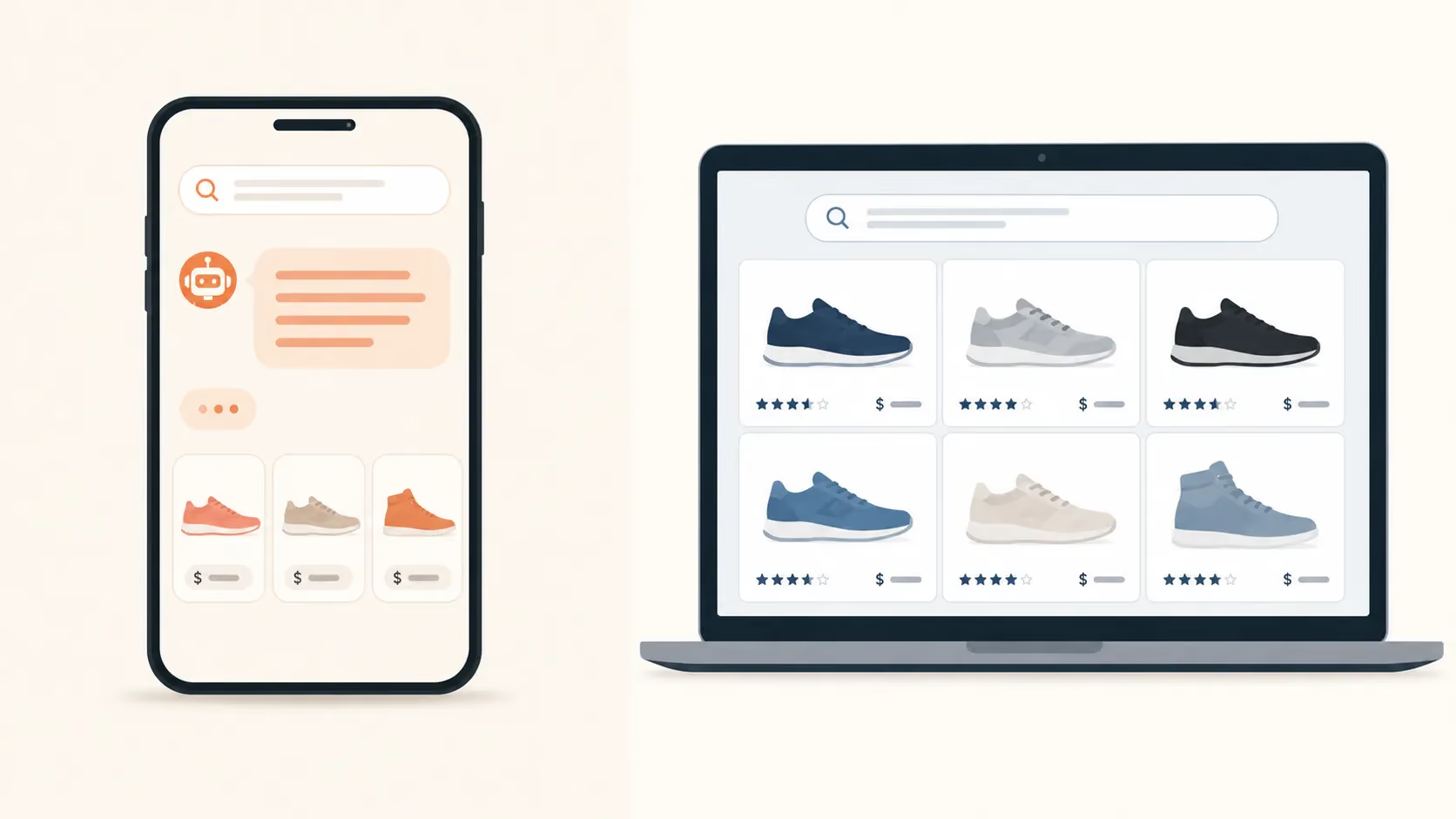
Your Amazon listing is now competing on two shelves at once.
The classic keyword shelf still drives most of your sales. You've optimized for it for years. But a second shelf went live on May 13, 2026. It's an AI-powered shopping experience already running on the Amazon mobile app. It decides which products shoppers see when they ask questions in their own words instead of typing keywords.
If your listing isn't ready for that second shelf, you're losing visibility on a shelf you may not have known existed. Here's the good news: Amazon's rollout pattern gives you a window to fix it before the AI experience reaches every shopper on every surface.
Here's what's actually live, what's still coming, and what to do with the lead time you have.
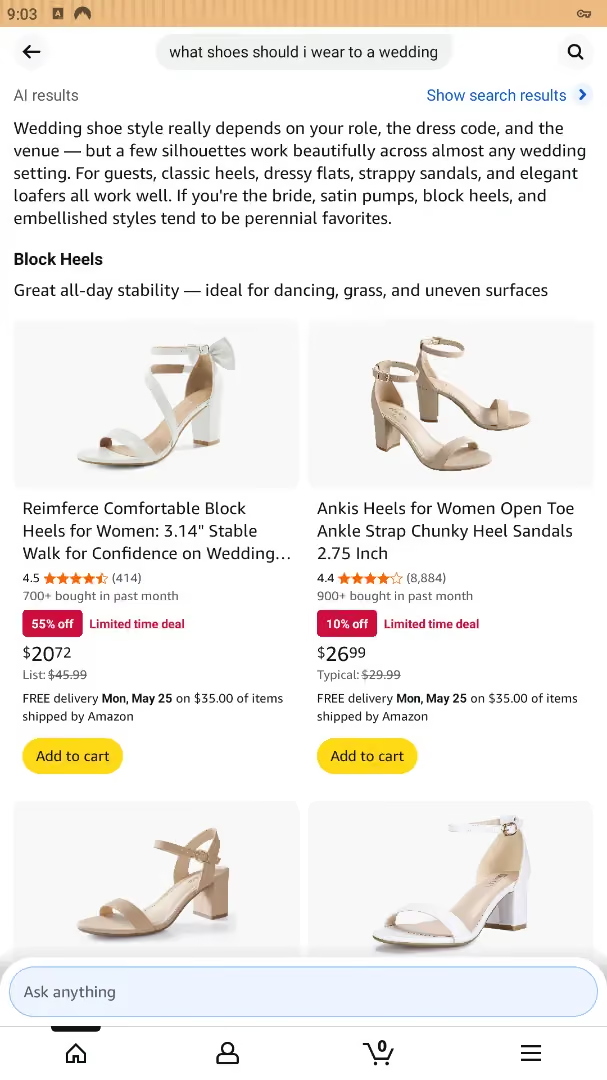
Here's the same query on each surface today, one week after launch, on the same US account.
On the Amazon Shopping app, "what shoes should I wear to a wedding" returns this:
The same query on amazon.com returns this:
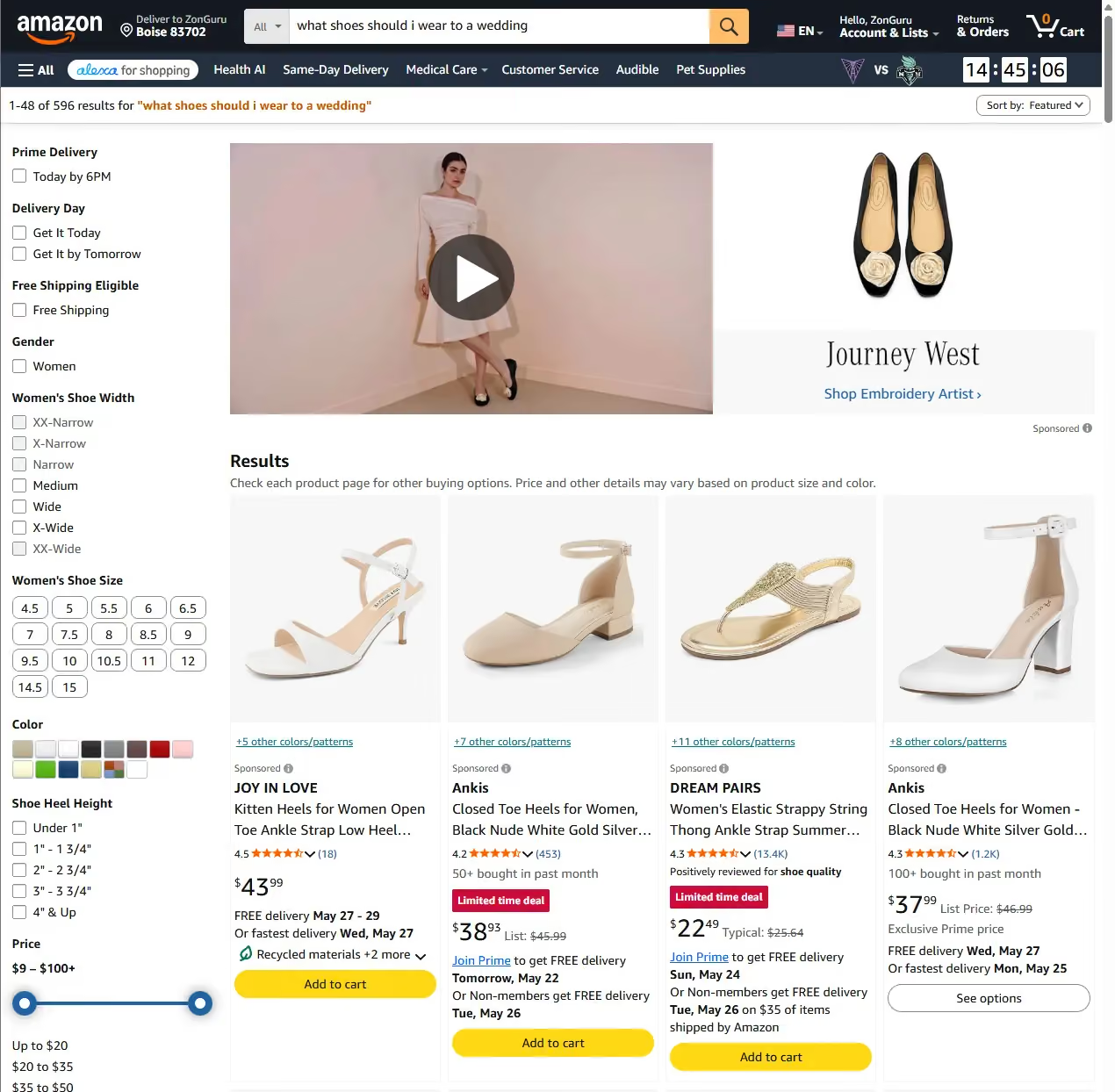
Same query. Different surface. Two completely different versions of Amazon. One already running on AI; one still keyword-only.
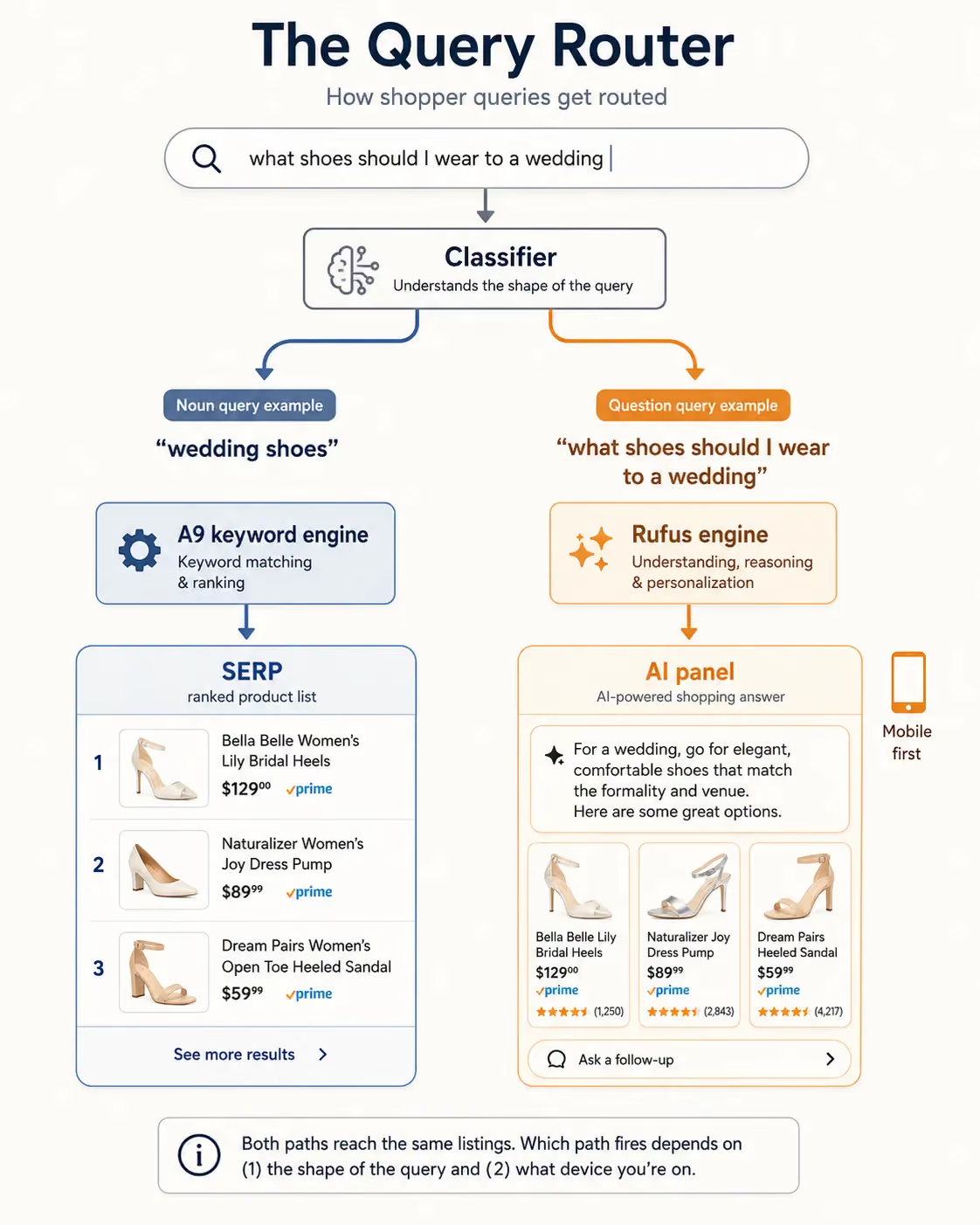
This is the gap between what Amazon announced on May 13 and what's actually deployed. The press said the AI is now in the main Amazon search bar. The reality one week in: yes on the mobile app. Not yet on desktop web. And even when the AI does fire, the search bar didn't magically get smarter. Amazon's classifier looked at your query. It decided the query was a question instead of a noun. Then it routed it to a different engine.
This guide explains how the two shelves work, what feeds them, and what to do with your listing while you still have lead time.
Want to know if your listings are already AI-ready? Check one of your ASINs with our free AI Readiness Score - no login, two minutes. Or keep reading for the full picture.
What actually changed on May 13
On May 13, Amazon did four things:
- Retired the Rufus brand. The chatbot that launched in February 2024 is gone from the shopper-facing UI.
- Renamed the AI shopping experience to Alexa for Shopping. It now lives behind a pill in the secondary navigation bar. You'll see a cursive "alexa for shopping" wordmark on the app and on amazon.com.
- Launched the About You page, where shoppers can see and edit the data Amazon uses to personalize their results.
- Brought full Amazon shopping to the Echo Show 15 and 21. The screen-based Echo devices can now browse the entire Amazon store, not just the limited subset they had before.

Most coverage of the launch called it a rename. It's bigger than that. The engine that read your listings as Rufus didn't change. What changed is where and when that engine answers a shopper before they ever scroll a product list. Mobile app today. Desktop web on a rolling basis. International markets later, after Alexa+ rolls out globally through the rest of 2026.
How much lead time do you have?
Amazon has run this play before. Rufus, the predecessor to Alexa for Shopping, launched on February 1, 2024 as a mobile-app-only beta. It took five months to reach full US availability and desktop web on July 12, 2024.
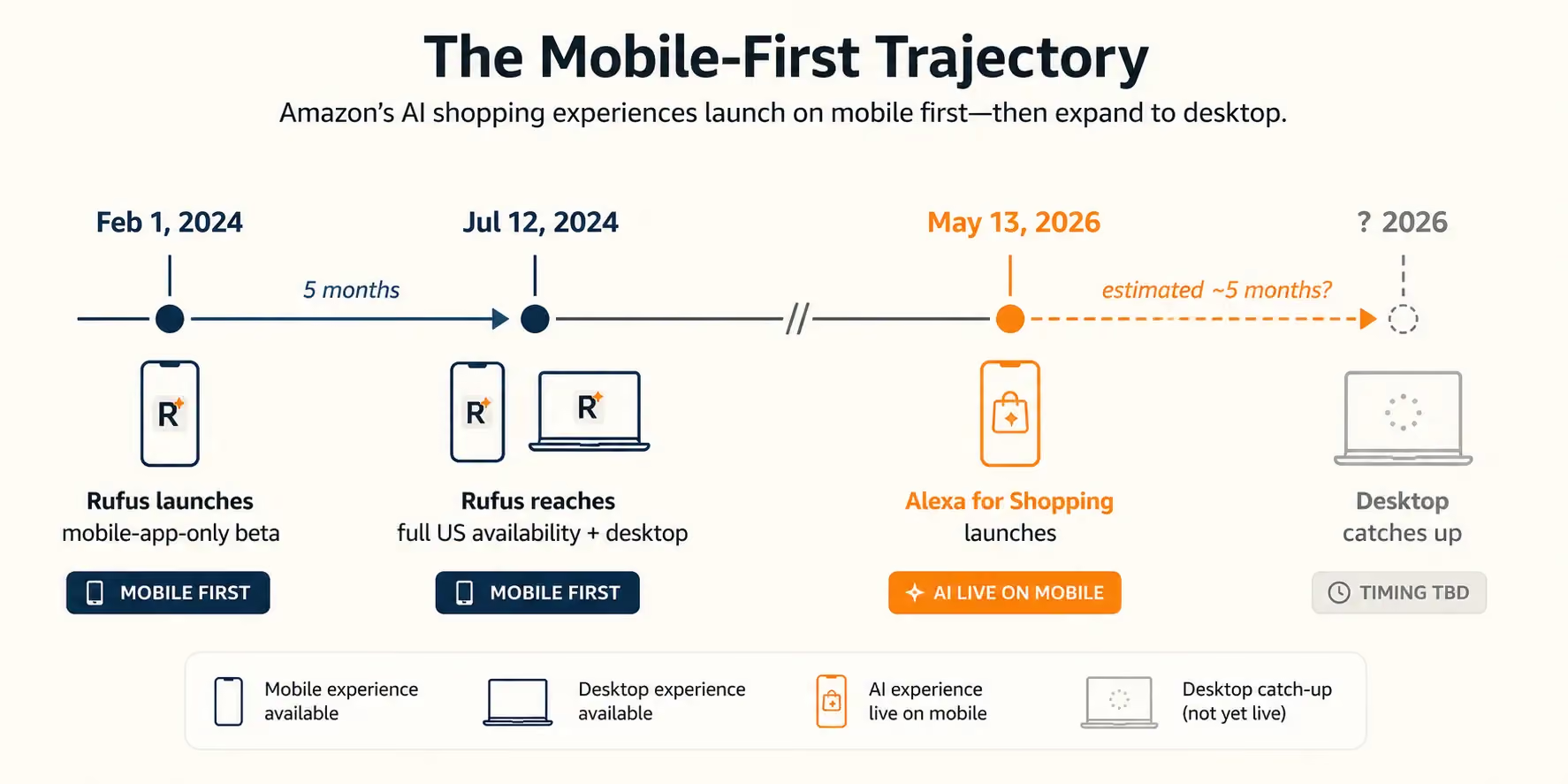
If Alexa for Shopping follows the same pattern, you have about four to five months from May 13, 2026. That's the window before the AI-first experience reaches every shopper on every surface. Use it to audit and fix your listings while the AI side is firing for some of your traffic, not all of it.
Don't read this as permission to delay. The shoppers in the AI experience today appear to skew toward mobile-first, early-adopter customers who tend to convert at higher rates. Your listing is being read by the Rufus engine for them right now. Every week you wait is a week those shoppers see a competitor's listing instead of yours.
* Amazon's own May 13 announcement describes Alexa for Shopping as created by "bringing together Rufus and Alexa+" - meaning Rufus's underlying capability continues under the new brand. ("Rufus engine" is our shorthand for that surviving system, not an Amazon-named component.)
Two engines, one input
This is the structural fact every seller needs to understand. Below the headlines, Amazon runs two shopping engines in parallel:
The A9 keyword engine. The one that's run Amazon for over a decade. Type "stainless steel water bottle 32oz" and A9 matches your words against the titles, bullets, and backend keywords of millions of listings. You get a ranked list. This is still the engine that drives most of Amazon's sales today.
The Rufus engine. The AI side, now branded as Alexa for Shopping. When a shopper asks "what's a good water bottle for hot yoga," the Rufus engine reads the same listings A9 reads. Instead of returning a ranked list, it writes a conversational answer with product recommendations.
Both engines read the same thing: your listing. Title, bullets, description, A+ content, attributes, images. What you write is one input. It feeds two engines. Those two engines produce different shopper experiences depending on the device, the query shape, and Amazon's classifier.
The classifier is the routing logic between them. Type "wedding shoes" and the classifier sends the query to A9. Type "what shoes should I wear to a wedding" and the classifier tries to send the query to the Rufus engine. Whether you actually see the AI answer depends on two things: what device you're on, and whether the rollout has reached you. The pill is the deterministic backdoor. Click it, type any query, and you always get the AI side.
How does the AI side know what shoppers actually mean?
Type "wedding shoes" into the search bar and A9 sees two words: "wedding" and "shoes." It matches against listings that contain those words.
Now type "what shoes should I wear to a wedding." The shopper hasn't told Amazon their role. They haven't said "formal." They haven't said "block heel for grass" or "satin pump for an indoor ceremony." Answering well requires knowing:
- Weddings are formal events
- The shopper's role matters (bride, groom, guest)
- The venue matters (church, outdoor, beach)
- The dress code shapes which shoes work
None of that is in the query. That's where COSMO comes in.
COSMO is Amazon's commonsense knowledge graph; a network of facts about how products, people, and contexts relate. As of Amazon's 2024 research paper, COSMO held about 6.3 million facts, 29 million relationships, and 15 named relationship types. The relationship types are things like:
- used_for_audience: who a product is for
- used_for_event: what occasion
- used_for_location: where
- use_context: under what conditions
- complementary_products: what pairs with it
When a shopper asks the AI side a question, COSMO fills in what the query didn't say. "Wedding" maps to "formal event." "Formal event" maps to "formal shoes." Audience reasoning shapes the answer. None of this requires the shopper to know what they want. That's the point of the AI side.
Here's that reasoning in action. Click the Alexa for Shopping pill on desktop, type "wedding shoes" into the side panel, and the agent's first move is to ask:
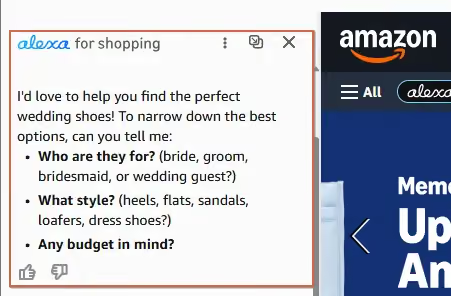
That's not random small talk. Those are the exact relationship types COSMO is built around: audience, use context, budget. The agent is asking for the data it needs to give a useful answer.
The mobile app skips the questions and just generates a full answer organized by role and use context, which is what the opening screenshot showed. The "Block Heels" subsection with "Great all-day stability - ideal for dancing, grass, and uneven surfaces" isn't a keyword match. It's use_context firing. The products underneath aren't the highest-ranking block heels in A9. They're listings whose attributes match the subsection the AI just generated on the fly.
This is a different ranking problem entirely. On A9, you compete for keyword rank. On the AI side, you compete for inclusion in the subsections the AI generates per query.
What feeds COSMO (and what doesn't)
This part trips up most sellers. COSMO is built from customer behavior, not from listings. Searches, clicks, purchases, saved lists, returns: that's COSMO's raw material. The Amazon catalog is also a COSMO input, but only as a way to label which behaviors get studied.
Your listing copy doesn't feed COSMO directly. Reviews and Q&A don't feed COSMO either. The graph is built from what shoppers do, not from what sellers or shoppers write.
That doesn't mean your copy is irrelevant to COSMO. It means your influence is indirect; your listing's attributes shape which behaviors COSMO samples. Your influence on the Rufus engine is direct, because the engine reads your listing word-for-word when it writes an answer.
This is the most common piece of advice you'll see online that gets COSMO wrong. Anyone telling you to "write for COSMO" the way you used to write for A9 has misunderstood the graph. You write for the Rufus engine. COSMO is something behavior earns you over time.
How does the Rufus engine actually answer a shopper?
The Rufus engine uses a method called RAG, or retrieval-augmented generation. Two steps:
- Retrieve. When a shopper asks a question, the engine pulls relevant content from the Amazon catalog (titles, bullets, descriptions, A+ content, attributes), plus reviews and Q&A.
- Generate. It feeds that content into a large language model that writes the answer.
The model is grounded in real listing content rather than making things up. That's the part that matters. The answer is tied to your specific listing copy. The engine reads from what you wrote on your product page, not from a generic web index.
For the technically curious: Amazon disclosed in a November 2025 AWS blog post that the Rufus engine runs across three models on Amazon Bedrock - a custom shopping model trained on the Amazon catalog, Anthropic's Claude, and Amazon Nova. A router picks the right one per query. None of that matters for optimization. What matters is what the engine reads:
- Your title
- Your bullets
- Your A+ content
- Your attributes
- Your reviews
- Your Q&A
That's it. Nothing on that list is new as of May 13. The Rufus engine was reading those fields before the rename, and it reads them after.
How personalization fits in
A shopper asks "what's a good blender for someone who only makes smoothies?" They don't get a generic answer. They get an answer shaped by what Amazon already knows about them: past purchases, saved lists, the categories they shop, and now, their previous conversations with Alexa for Shopping.
That data is the personalization profile. It sits separately from COSMO and the Rufus engine. Both engines read from it when they generate an answer. The About You page Amazon launched on May 13 is the shopper-facing UI on top of the profile, where customers can see and edit what Amazon uses to personalize their results.
For sellers, the practical upshot is that your listing competes against more than other listings. It also competes against the shopper's own history with Amazon. A returning shopper who buys a lot of vegan products will see a more vegan-skewed answer than a new shopper would. Amazon has personalized results for years, so this isn't new. The AI side just makes the personalization layer much more visible in the shopper experience.
Is keyword search dead? No. Here's why.
For all the AI hype, A9 still drives most of Amazon's sales. Three reasons:
Most shoppers still type noun queries. "Black oxford shoes size 10." "USB-C charger 100W." "Stainless steel water bottle." These go to A9, not the AI side. Amazon's framing of the May 13 launch made this explicit: simpler queries - "pants," say, or "bananas" - still route to standard product listings.
The AI overlay isn't deployed everywhere yet. Look at the opening screenshots. Amazon's own example query, "what shoes should I wear to a wedding," is structurally identical to their press-release example "what's a good skincare routine for men." It returned a normal SERP on desktop web. The AI panel only fires on mobile app for that query right now. The rollout is gradual.
Sponsored placements are intact and visible. Open any wedding-shoes search and the top row is still mostly Sponsored. The keyword path is where Amazon's $56 billion advertising business lives. That's not going anywhere.
Don't abandon keyword discipline. Write listings that perform on both engines. Keyword-rich enough that A9 ranks them. Rich enough in named details that the Rufus engine pulls them when shoppers ask questions. The shopper who types "wedding shoes" hits A9. The shopper who asks "what shoes for an outdoor summer wedding under $80" hits the Rufus engine. Both queries reach the same listing. The listing has to work for both.
What sellers actually control
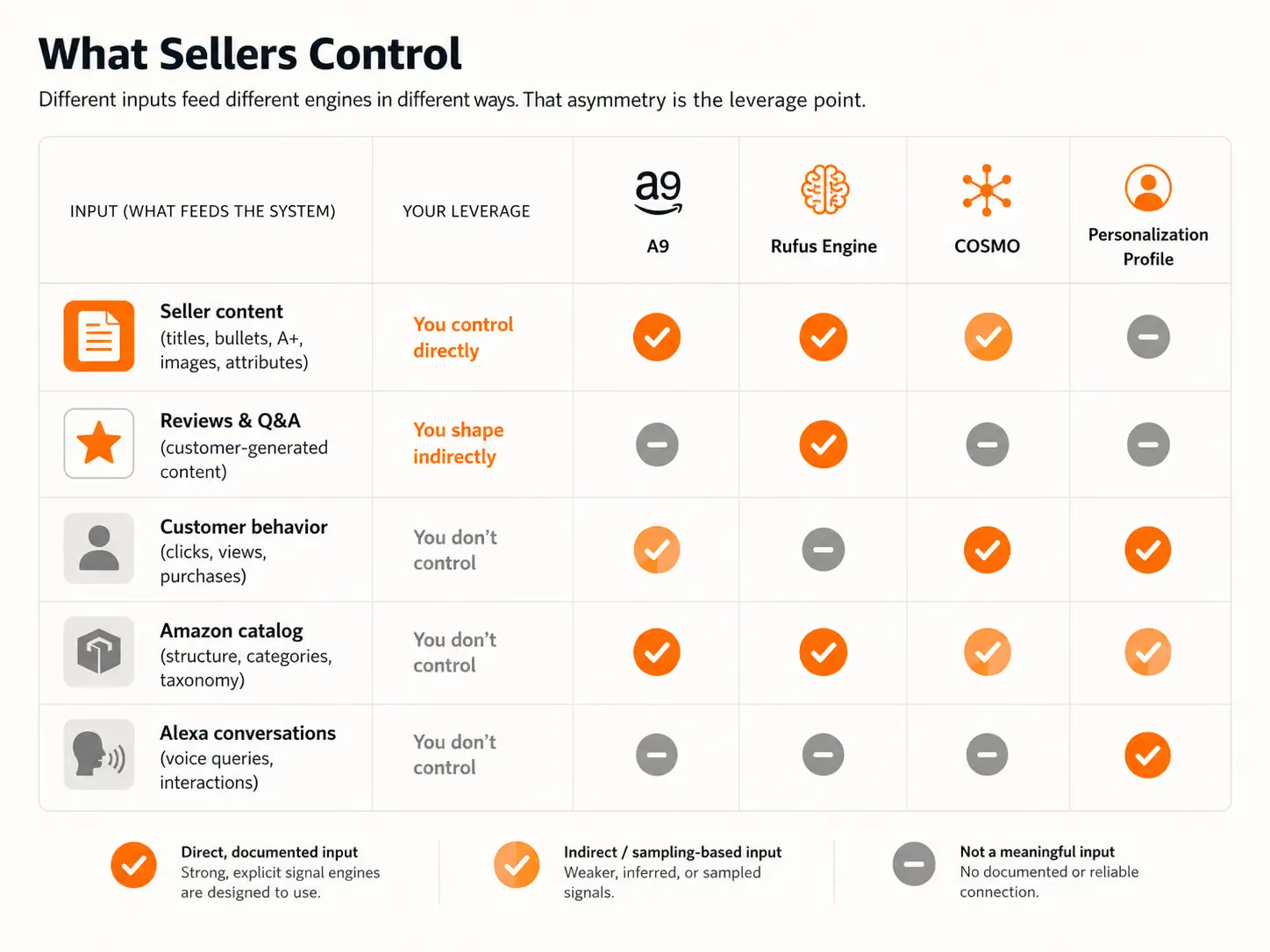
Five inputs feed everything above. You control exactly one of them directly. You shape one more indirectly. The other three you don't control at all.
You control your listing. Title, bullets, product description, backend keywords, A+ content, attributes, images, alt text, Brand Registry signals. This is the only input where your seller account is the source. A9 reads it directly. The Rufus engine reads it directly through RAG. The Amazon catalog is built from it.
You shape reviews and Q&A indirectly. Through product quality, customer service, and how fast you reply to questions. The Rufus engine reads reviews and Q&A as part of its retrieval. You don't write the words, but your operations shape what gets written.
You don't control customer behavior, the Amazon catalog itself, or shoppers' conversations with Alexa for Shopping. Customer behavior feeds COSMO. The catalog is Amazon's data. Conversations feed the personalization profile. None of these are levers you can pull.
The most direct edge in the whole system is this: your listing → the Rufus engine → the answer the AI side writes when a shopper asks a question. If your listing says "for the bride," "ivory satin," "outdoor venue," "block heel for grass," and "all-day comfort," the engine has the material to surface you when a shopper asks a wedding-shoes question. If your listing just says "black oxford shoes size 10 leather lace-up men's," the AI side has nothing to work with on that intent - but A9 will still rank you for the literal keyword query.
That's the whole architecture in one practical sentence: write for both reads, or lose half your traffic.
You write one listing. It has to perform on two engines. The question is whether yours does - without rewriting it first and waiting ninety days for the data. The free AI Readiness Score reads your listing the way A9 and the Rufus engine do, and tells you where it's strong and where it's thin. No account. No payment. Two minutes. Score one of your ASINs →
Buy for Me changes the cross-retailer game
One feature of Alexa for Shopping got far less press attention than the search bar story, and it carries the biggest strategic implications for sellers.
Buy for Me lets the Alexa agent shop on retailers other than Amazon. A shopper can ask the agent for the best option on a specific product. If a non-Amazon retailer has a better fit or a better price, the agent pulls up that retailer's listing and completes the purchase without the shopper ever leaving the Amazon app.
That's a real shift. Amazon's shopping experience has always been a walled garden. Now Amazon is putting its own agent to work finding and buying products outside its own marketplace.
For Amazon sellers, this matters for three reasons:
- Your competitive set just got wider. Shoppers searching for your product category on Amazon may end up buying the same product from Walmart, Target, or a direct-to-consumer site if the agent decides that's the better choice. The competition is no longer just other Amazon listings.
- Cross-channel pricing pressure goes up. If you sell on Amazon at one price and elsewhere at a lower price, the gap is now visible inside the Amazon experience. The agent will surface the cheaper alternative when it's relevant to the query.
- Shoppers are being trained that it's okay to leave. Even when the agent doesn't end up buying from a non-Amazon retailer, the shopper learns that Amazon's interface can compare and complete purchases anywhere. That's a meaningful change in shopper habits over time.
There's a tension in this strategy worth naming. Amazon's $56 billion advertising business depends on shoppers buying on Amazon. Buy for Me works against that directly; the agent might complete a purchase elsewhere and Amazon earns no ad revenue from it. The bet Amazon is making: better to be the interface shoppers use to buy anything, even if some of those purchases happen on someone else's site, than to lose those shoppers to ChatGPT, Gemini, or Perplexity agents that would do the same comparison and never route through Amazon at all.
What this means practically for sellers:
- Pricing parity. If you sell on Amazon and somewhere else, the gap between your prices is now visible inside the Amazon experience. Decide deliberately whether you want Amazon to be the cheaper channel, the more expensive channel, or matched.
- DTC presence. If you only sell through Amazon, you've handed away the chance to be the alternative the agent surfaces. A clean DTC product page with structured product data is no longer optional for brands serious about the AI-mediated future of shopping.
- Off-Amazon discoverability. The agent finds non-Amazon options through the open web. Your product feed, your structured schema, and your presence on retail aggregators all become routes the Amazon agent itself can use to surface you, even when you're not on Amazon.
The short version: Amazon's walled garden just installed a backdoor. Sellers who only think about Amazon SEO and Amazon Ads will miss the broader picture of what the agent can do for or against their business. Sellers who think across channels (Amazon, DTC, other marketplaces) are in a much stronger position to navigate what comes next.
What's still uncertain
Three things worth flagging honestly:
COSMO's exact role inside Alexa for Shopping isn't documented. Amazon's 2024 COSMO paper lists three confirmed uses: search relevance, "customers also bought" recommendations, and search filter suggestions. It doesn't say COSMO feeds the AI agent. The industry assumes it does because the audience, event, and use-context reasoning in the AI answers matches COSMO's relationship types exactly. The assumption is plausible. The documentation is silent.
The catalog feeds COSMO only as a sample source, not as content the graph reads. Some industry advice tells sellers to "write for COSMO." That gets COSMO wrong. The graph is built from behavior, and the catalog only helps decide which behaviors to study. Your listing copy doesn't feed COSMO itself directly.
The classifier logic isn't published. Amazon says the search bar "recognizes when you're asking a question." It doesn't say how. The behavior is real and predictable. Simple noun queries go to A9; question and comparison queries go to the Rufus engine. The rules behind the routing are hidden.
Build your listing for the parts Amazon has documented. Your content feeds the Rufus engine through RAG. Your content feeds A9 ranking directly. Your operations shape reviews and Q&A, which feed back into the Rufus engine. Treat the inferred parts as something to confirm over time, not something to plan against. If COSMO turns out to drive Alexa for Shopping directly, the listings written for the documented edges still perform. If it doesn't, the work didn't depend on the guess.
What this means for your listings
You write one input. It has to perform on three different reads:
- A9 reads it for keyword density and complete structured fields
- The Rufus engine reads it for the specific questions a shopper might ask in their own words
- COSMO doesn't read it directly, but the patterns COSMO learns are shaped by which catalog attributes your listing helps fill in
Listings that perform across all three reads share a structure. They name:
- The audience: "for new parents," "for groomsmen," "for first-time buyers"
- The use context: "indoor formal evening wear," "weekday meal prep for two," "cold-weather running"
- The occasion: "wedding," "housewarming," "Sunday brunch"
- Complementary products: "pairs with our lace-up oxfords," "works with the matching prep bowl"
- The real questions shoppers ask: how do I clean this, is it safe for nut allergies, will it fit a 15-inch laptop
And underneath all of that, they still hold the keyword density and structured-field completeness A9 has rewarded for a decade.
This is what Listing Engineering means in practice: building product content that reads cleanly on every engine that touches it. Not generating fluent AI prose that strips the structured signals out. The opposite. Keep the keyword anchors, deepen the semantic relationships, and ground everything in real shopper questions for your specific market.
The diagnostic question for any seller reading this is simple. How would you know whether your existing listings already read cleanly across all three engines, without rewriting them and watching the sales data for ninety days?
One input, two engines, one discipline
Amazon's shopping stack now runs on two layers reading the same listing. A9 still ranks for keyword queries and drives most sales. The Rufus engine, now branded Alexa for Shopping, answers when a shopper asks a question. It's deployed on mobile app today. Rolling out gradually on desktop web. Expanding through 2026. Both engines read your title, bullets, A+ content, attributes, reviews, and Q&A.
The discipline isn't generating more copy. It's engineering one listing that reads cleanly for every engine that touches it. Name the audience. Name the use context. Name the occasion. Name the complementary products. Answer the real questions. Hold the keyword density A9 has always rewarded.
That's what makes a listing perform on two distinct layers from one input.
Want to see where your listings actually land? Run Your AI Readiness Score on one of your ASINs. Two minutes, no signup. You'll see exactly where your listing reads cleanly across A9 and the Rufus engine - and where it doesn't.
Frequently asked questions
Did Rufus actually die on May 13?
The Rufus brand retired. The Rufus engine kept running. Amazon kept the AI system that read your listings between February 2024 and May 2026 and put it under a new shopper-facing label: Alexa for Shopping. Optimization work done for Rufus still pays off because the engine reading your titles, bullets, descriptions, A+ content, reviews, and Q&A is the same engine. The front-of-house label changed; the architecture didn't.
When will the AI search bar work for everyone?
The rollout is gradual through 2026 in the US. Mobile app appears to be ahead of desktop web in our testing on a US account; the same question query returns an AI panel on mobile and a standard SERP on desktop. International expansion follows Alexa+'s broader global rollout, also tracking through 2026. Amazon hasn't published a deadline.
Will Sponsored Products and Sponsored Brands still appear when the AI side answers?
Amazon hasn't detailed how sponsored placements work inside the AI panels. Standard sponsored placements remain intact on the keyword side and currently dominate the top row of most search results pages. Amazon's VP of Alexa, Daniel Rausch, told CNBC that Alexa for Shopping "will feature ads where they're relevant," so ads are coming to the AI surfaces. The specific mechanics aren't published yet. Watch for changes here over the rest of 2026.
Do my old Rufus optimization tactics still work?
Yes. The engine reads the same fields it did before the rename. Sellers who already invested in audience, occasion, and use-context content, and who built out Q&A coverage on their product pages, keep that compounding work. Sellers who haven't should start now.
What's the biggest mistake sellers can make about all this?
Writing for one engine and assuming the other will figure it out. Skip keyword discipline because "AI is the future" and you lose organic ranking on the path that still produces most of your sales. Stuff keywords and skip the semantic depth, and the AI side surfaces a competitor's listing every time a shopper asks a question in their own words. The whole point of the architecture is that one input feeds both engines. A listing that performs on only one is a listing that gave up half the field.


.avif)