


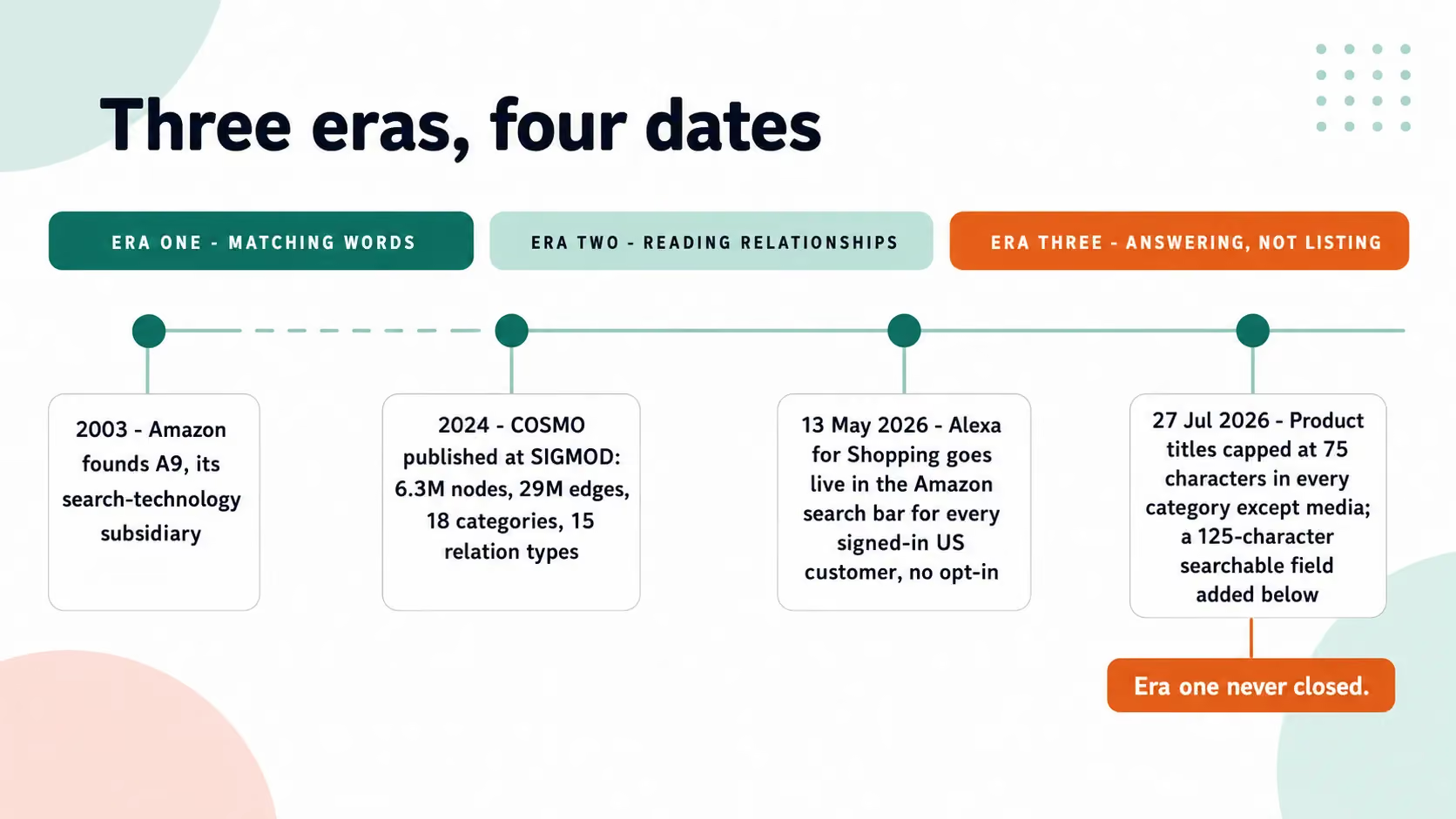
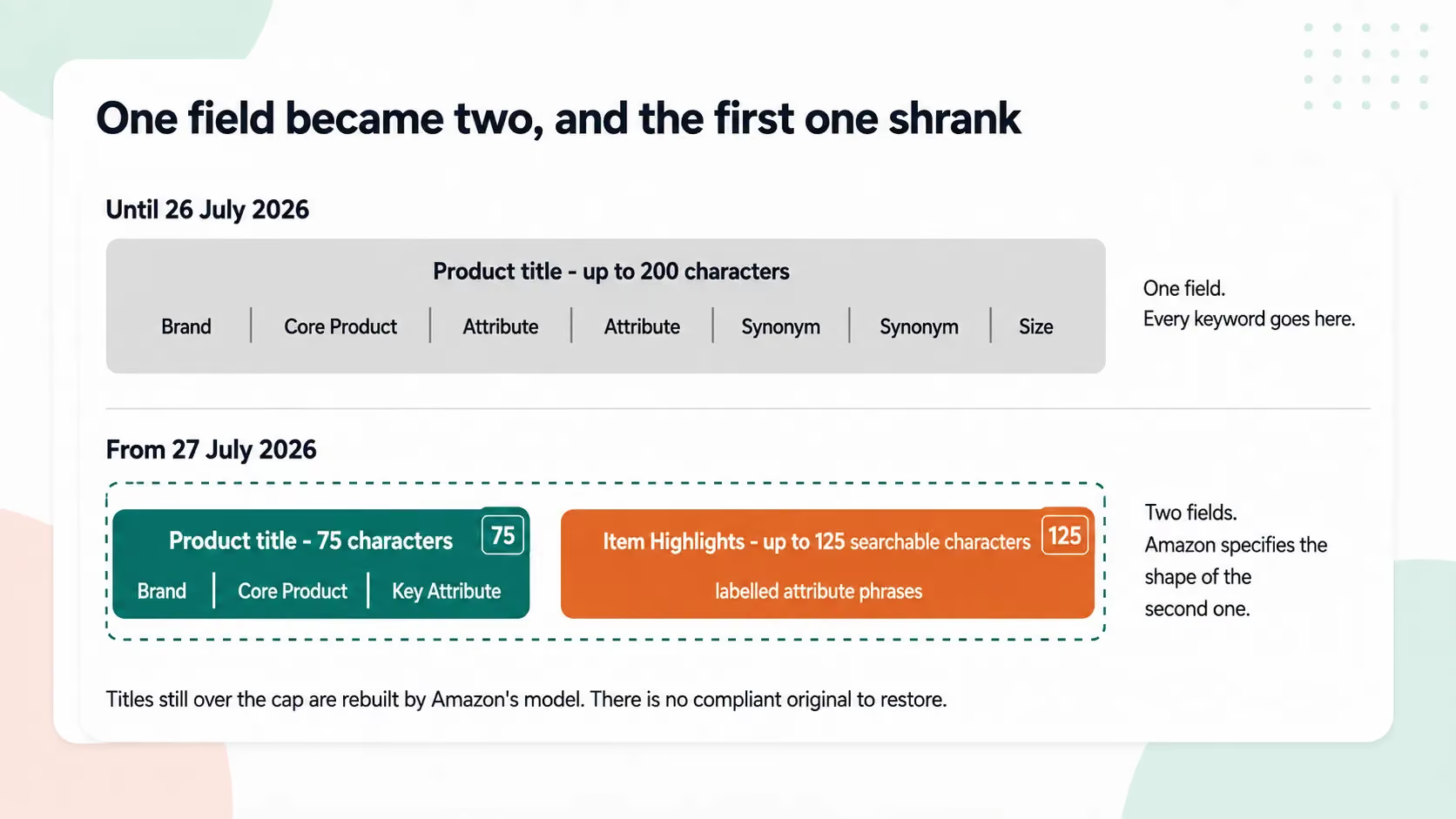
On July 27, 2026, the Amazon product title stopped being a place to put keywords. Titles that had routinely run 150 to 200 characters were capped at 75 in every category except media. That took two-thirds of the working space off the one field that twenty years of Amazon SEO, the work of getting a product found in Amazon's own search results, had been won on. A second searchable field arrived underneath, good for 125 characters. Any title still over the cap is being rebuilt by Amazon's own model, which keeps the brand and the core noun, drops what it reads as spare, and reorders what is left.
Nobody announced an era. Amazon published a policy page and a date, and opened a review window that reaches only sellers enrolled in Brand Registry, its program for verified brand owners. Everyone outside that program got the change with no notice at all, and because a title over 75 characters was never compliant, there is no earlier version for Amazon to put back.
That sequence has repeated at every turn in this platform's search history, and it is the pattern underneath everything below: the future arrives as enforcement, not as an announcement. Each era closes with Amazon shrinking a field and deciding what fills the space it just cleared.
That makes the useful question about the future of Amazon SEO narrower than the one most guides are asking. What does Amazon take away next, and what does it decide goes in the gap? But you probably arrived with a more immediate question, and it comes first. If the field your keyword practice ran on just lost two-thirds of its space, is the practice itself finished?
What has actually changed about Amazon SEO - and what has not
No, and the honest answer is layered rather than binary. The keyword engine that has decided Amazon's organic results for twenty years, the unpaid listings a shopper reaches past the ads, is still deciding them, still matching your listing against the words a shopper typed, and nothing Amazon has published since retires it. The engine did not change. Your room to write for it did, and so did the number of other systems now reading what you wrote.
Three things get collapsed into one whenever somebody says Amazon SEO is dead. One is what ranks your listing on that organic results page, and that is still the call of A9, the search engine Amazon built for itself. Another is what a conversational surface reads when a shopper asks a question instead of scrolling, a different system working from the same listing you published once. The third is what an outside agent can reach when a shopper points one at Amazon on their behalf, which until this August was a live court question rather than a settled fact.
Those three readers want different things from the same words. Amazon owns two of them, and the shortest name for that pair is dual-layer: the A9 keyword engine on one side, the AI engine on the other, both working from a single listing. The second layer is not small. Amazon told investors in July that its conversational shopping surfaces had drawn more than 350 million customers over the trailing twelve months, and that interactions had risen more than fivefold year over year. It also told investors that customers who use those surfaces spend on average more than 40% more per order than customers who do not.
So the SEO-is-dead framing fails on evidence rather than on mood. Your keyword work still decides the organic page, and a listing that fails A9 never gets in front of the systems that read it afterwards. The change is smaller and stranger than the obituary suggests: fewer characters to work with, more readers working from them, and a shorter list of places to put anything. None of that arrived at once, and the sequence it arrived in is the argument.
Era 1 - 20 years of matching words
The sequence starts in 2003, when Amazon founded a subsidiary called A9 to build its search technology. The name is the word algorithms shortened, an A and the nine letters that follow it. That system asked one question of a listing, simple enough to state in a line, and it stayed the question for the better part of twenty years. Does this listing contain the words the shopper typed?
You answered in the title. It was the longest searchable field a seller controlled, it carried the most ranking weight on the page, and under a system matching strings it was rational to fill every character. Titles ran long for a reason. The 200-character title packed with synonyms and split by vertical bars reads today as spam, and it was a correct answer to the question A9 was actually asking, which is why it beat the tidy version every time.
That history is why July 27, 2026 reads as a boundary rather than a formatting update. The cap took the era's primary working surface off the product title, cutting it to 75 characters from the 200-character standard Amazon had set in January 2025, and routing the overflow into a shorter searchable field underneath. Since the deadline the rebuilding has run gradually across the catalog rather than in one sweep, and it needs nothing from the seller to proceed. If you are rebuilding a title yourself, the character-by-character mechanics of the cap are worth having in front of you.
The boundary is real, and era one still did not close. A9 still runs, still reads every listing, and still decides which of them show up on the organic results page, so a seller who drops keyword work on the strength of an AI headline loses rank in the ordinary way. The era's method ended without its authority ending alongside it.
And the long view runs longer than twenty years. Amazon filed the patent on one-click ordering in 1997 and it expired in 2017. The same instinct now runs an agent that buys on a shopper's behalf from other retailers' sites, inside a catalog Amazon expanded in March 2026 to more than 100 million products from over 400,000 merchants. Taking friction out from between wanting a thing and owning it is the thirty-year strategy. Shrinking the title is one move inside it.
Era 2 - 15 kinds of relationship a listing has to answer
If the keyword engine still decides rank, the obvious question is what the second system changed, and Amazon publishes a worked example of it that is easier to watch than to define. A shopper searches for shoes for pregnant women, and nothing in those words names a shoe. Amazon's own account of the case is that the engine has to work out what the query never says: pregnancy changes balance, changed balance makes slip resistance matter, and slip-resistant shoes are what this shopper wants. No string carried that. Something in the middle has to hold the link between who the shopper is and what the product does.
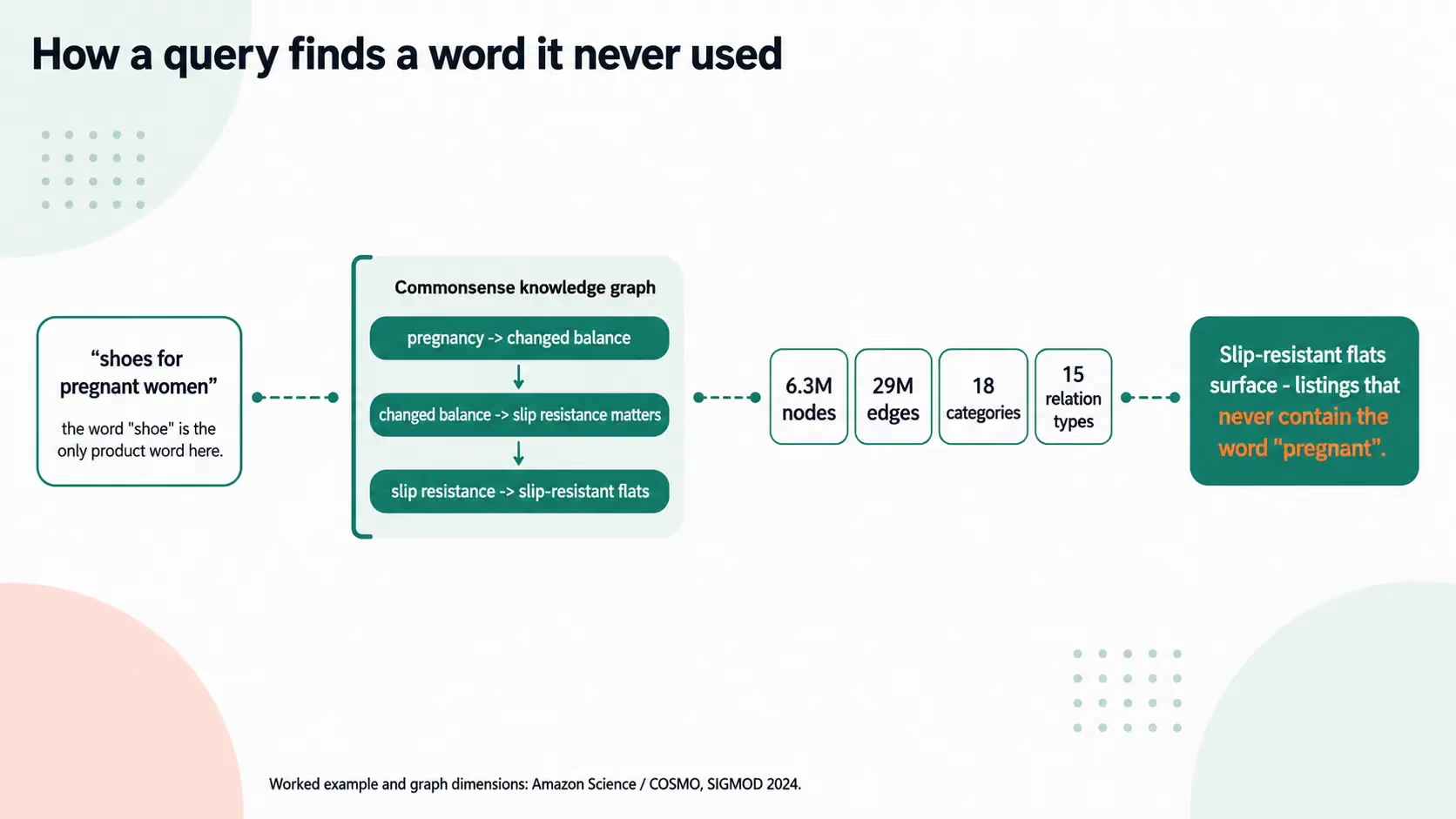
That something has a name. Amazon's researchers call it COSMO, a commonsense knowledge graph, which is a map of how products, uses and buyers connect rather than a list of words. The word commonsense is carrying real weight there, because the graph holds what shoppers know about products without anyone writing it down. Its raw material is behavior rather than text, drawn from the search-then-buy and bought-together pairs sitting in Amazon's own logs.
From those pairs the system builds claims about why people buy what they buy. It filters those claims for quality. What survives gets served. Amazon's team published the design at a database research conference in 2024 with the dimensions attached: 6.3 million nodes, meaning things, 29 million edges, meaning connections between them, eighteen categories, and fifteen kinds of relationship.
That is what use context looks like once somebody writes it down. Who the product is for, when it gets used, what it pairs with, what problem it solves, what it stands in for: each type is a question the graph can answer only if the answer already sits somewhere in your catalog. The full list of fifteen is short enough to audit a listing against in one sitting.
Amazon has published far less about the graph in production than the figures circulating about it suggest. It published one A/B test, the standard method of showing a change to a slice of shoppers and measuring them against everyone else. That test ran on roughly 10% of US traffic. It moved product sales 0.7% and navigation engagement 8%. At Amazon's volume a 0.7% lift is a large number in absolute terms, and because it is the only deployment result the company has put its name to, it is also the only one you can defend a decision with.
The patent record points the same way without proving deployment, and that gap matters. Amazon has patented machinery for answering a category-level question by working out which attribute, meaning which single structured fact about a product, answers it and pooling that attribute across listings. It has separately patented a check on the numbers in AI output against the ground-truth data a database already holds. Amazon patented those. Amazon has not said it ranks by them.
Read as direction rather than as a rubric, they say what the graph says: the answerable unit is the attribute, not the string. ZonGuru's guide to COSMO goes deeper on how the graph reads a listing.
A system reading relationships never cared how long your title was, and that is the most useful thing here for sorting out your own listing. The 75-character cap costs you less than it looks like it costs, while an empty attribute field costs you a good deal more, so separate the string problem from the structure problem before you spend a weekend on either. Only the structure problem gets worse the longer you leave it. And all of that still assumes the shopper scrolls a results page and looks at your listing themselves.
Era 3 - 13 May 2026, when the shopper stops scrolling
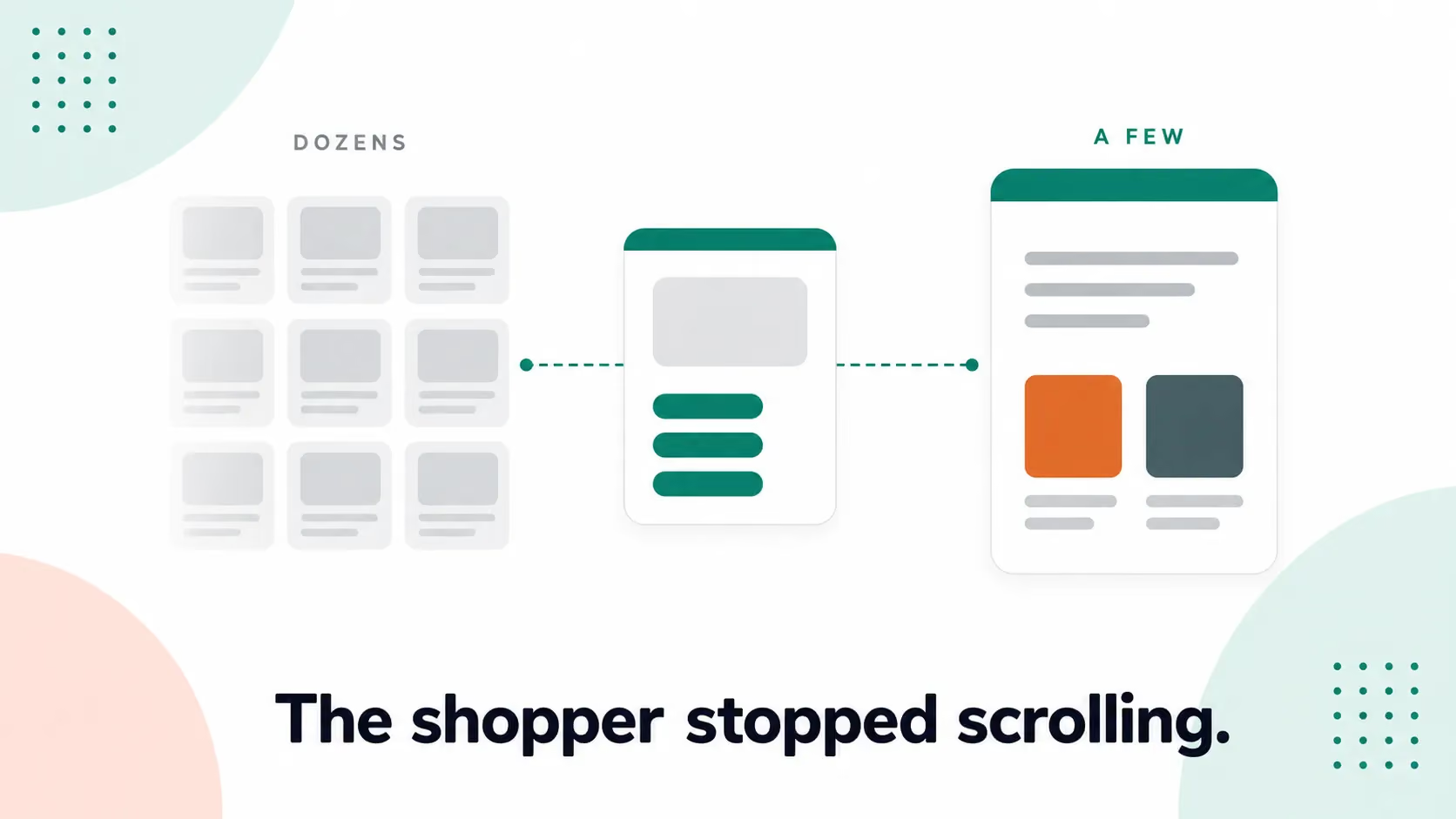
On May 13, 2026 the behavior changed before the vocabulary did. A signed-in US customer could now type a product question into the Amazon search bar and get an answer written for them instead of a results page to work through, with no opt-in. Amazon calls that surface Alexa for Shopping, the AI shopping agent it built into the search bar. The name matters less than the sequence. The shopper asks, something reads listings, and an answer comes back with a handful of products named inside it. A results page shows dozens, while an answer names a few.
Amazon's own surface is not the only new reader. On August 4, 2026 a federal appeals court held that when a shopper points an AI agent at a retailer's site, the agent is legally the shopper. Amazon had sued the agent's maker under a 1986 anti-hacking statute and won a block in March. The block came off in August. Outside agents can shop Amazon again while the case continues. Nothing about that is settled, and it is the current state of a live matter rather than the end of one. Today that means your listing gets read by software Amazon does not own and cannot switch off.
The reading job has already traveled off Amazon entirely, because retailers are now building their own. In April a brand inside the fashion group Tapestry put a gift concierge live, where a shopper describes an occasion, a recipient and a style rather than a product and gets curated picks back. Amazon packaged that same pattern for other retailers a few weeks later, selling the blueprints, the starter code and the services to run it.
Be precise about what shipped, though. It is a recipe rather than Amazon's own engine, and the first live deployment runs on a model built by Anthropic, an AI company Amazon does not own. Yang Lu, Tapestry's Chief Information and Digital Officer, put it on the record plainly about the package Amazon's cloud division, AWS, had handed over. "AWS brought the recipe, but together we built the customization our consumers needed." What a seller takes from that has nothing to do with cloud contracts and everything to do with the job itself: reading product data to answer a shopper has outlived the vendor who invented it.
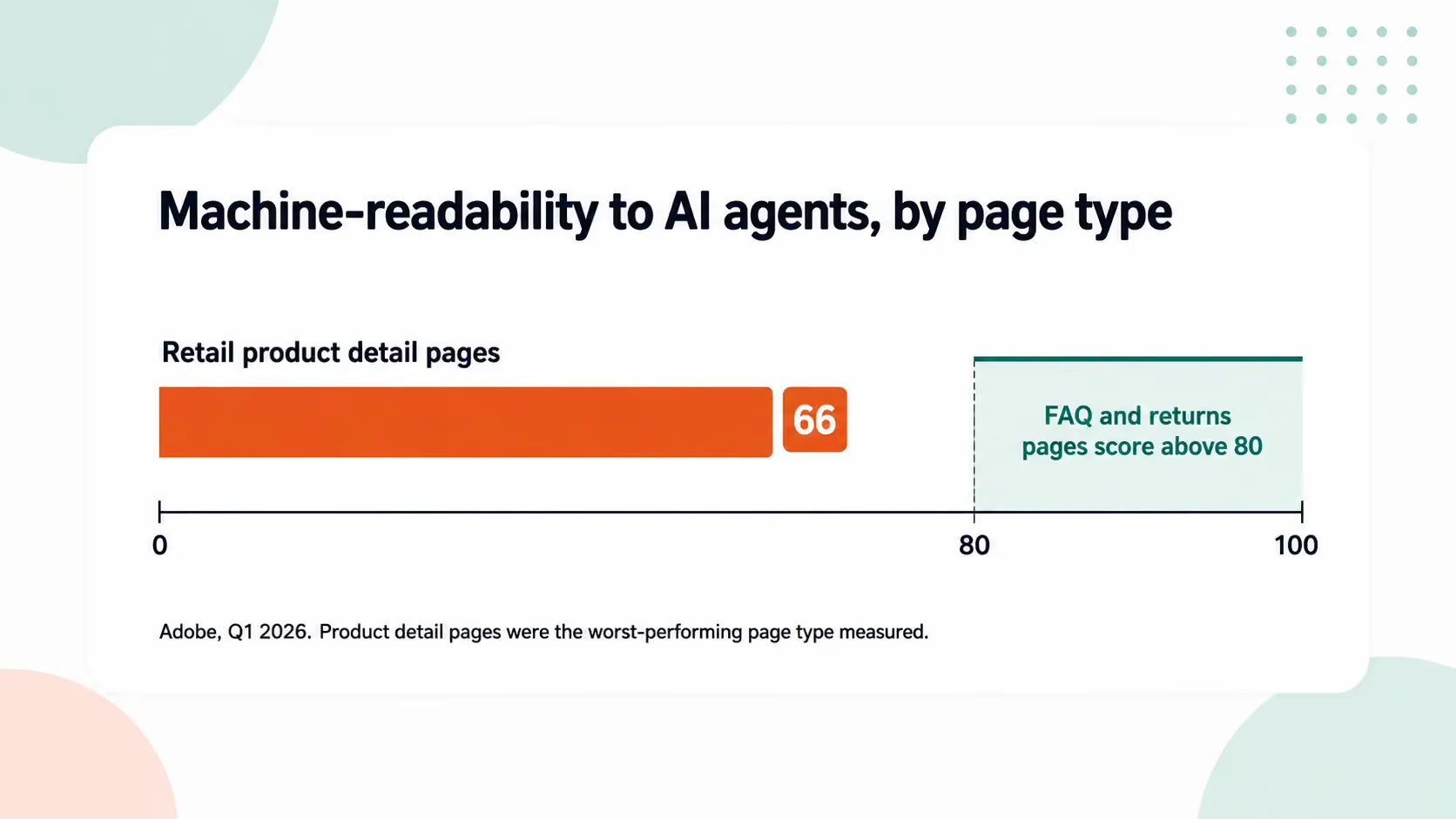
So whether your catalog is readable to these systems stops being rhetorical, and someone has measured it. Adobe scored page types on how easily AI agents can read them in the first quarter of 2026 and put retail product detail pages at 66%, the worst-performing page type it measured. The pages built to sell the product are the least legible pages on the site.
This is a long read. Your own listing is sitting on one side of that number while you finish it. The AI Readiness Score is a free 0-to-100 read of how well a live listing answers what Amazon's AI discovery asks. We analyze only your public listing data, charge you nothing, ask for no credit card, and never send spam.
That leaves one thing unexplained. If the structure of a listing matters this much to Amazon, why is Amazon taking characters away rather than asking for more?
Why does Amazon keep taking characters away?
The stated reason is display, and it is a real reason, because a long title gets clipped on a phone screen. A 75-character cap also makes Amazon's listings look like everyone else's rather than like a keyword auction. Amazon said as much, and most coverage took the explanation at face value. It holds up until you look at how the cap was applied.
A request would have looked like a deadline and a warning. Amazon's model instead began rebuilding titles that broke the cap, on Amazon's own schedule, keeping the brand and the core noun, dropping what it read as spare and reordering the rest. Sellers enrolled in Brand Registry get a window in Seller Central, the dashboard Amazon gives sellers to manage their listings, to approve or fix the rewrite before it publishes, while everyone else gets no window at all. Because a title over 75 characters was never compliant, there is nothing earlier to restore and only a shorter version to rebuild.
The displaced keywords were not left homeless, which is the part of the design that gives the intent away. Amazon opened a second field directly below the title. It is called Item Highlights, it holds up to 125 searchable characters of attribute phrases, and it sits beside the title where shoppers look. The keywords moved into a shape Amazon specified: labeled attributes rather than a run-on string. What Amazon wants in those 125 characters is a narrower brief than the title ever carried.
From the seller's side that reads less like tidying and more like being overruled. Sellers who have seen the machine's output on their own listings call it drivel, completely devoid of product knowledge. Sellers in spec-heavy categories make the opposite complaint: some products cannot even be named inside 75 characters. Both reactions sit in the same forum threads. Both are about the same thing: the decision moved. The recovery path for a listing that has already been rewritten is its own piece of work.
The economics underneath are not hidden, and they do not need a theory about anyone's intent. Amazon's advertising business passed $68 billion in 2025, and a purchase made by an agent generates none of that, because an agent does not browse a page with paid placements on it. Naming an incentive is not the same as proving a motive, and Amazon has not stated one.
But the pattern shows up on a second surface. Ads inside the AI conversation went live and billable across the US in March 2026, with existing advertisers enrolled automatically at the standard price per click. Amazon is narrowing where a seller can put words and widening where Amazon can sell them. So your question changes shape. If the fields keep shrinking and Amazon keeps deciding what goes in them, then the thing to know is what your listing has to carry.
What the future of Amazon SEO asks your listing to carry
Work backwards from the answer. For a conversational surface to tell a shopper your product is the right one, the facts have to sit somewhere it can read them:
- What the product is
- What it is made of
- Who it is for
- When it gets used
- What it works alongside
- Who it is not for, the one most listings never write down
A listing written for string-matching answers roughly the first two. The rest sits in the founder's head, or in a bullet written for a person skimming, or nowhere at all. Six is also the short version. Amazon's graph models fifteen relationship types of its own, running out to where a product gets used, what occasion it suits and what the shopper is trying to accomplish, and most of the list above already sits somewhere on that map. Two of them do not appear on it at all: what a product is made of, and who it is not for.
The name for the fix is structured product knowledge, and the phrase is more literal than it sounds. It means product facts written down in a form a machine can read and reason over, rather than prose a person can skim. It is a data standard rather than a copywriting one, and the difference shows the moment a shopper asks something your listing has no field to answer.
I would argue that the two layers are not a handoff but a sequence, and that changes what you do first. The reason is arithmetic. Reading several hundred listings in a niche closely enough to rank them against each other is far too expensive to run on every query, so something cheap and fast has to narrow the field before anything clever reads it. The keyword engine surfaces the subset a shopper could plausibly want. The AI layer digests that subset and writes the answer. A listing that fails the keyword layer never reaches the AI layer at all, which is why the older engine is not a legacy component waiting to be switched off. Everything above is one system with two readers, so one engineered input has to satisfy both.
The sellers who did the work on time then hit a wall that had nothing to do with their listings. Amazon rejected the new field outright with error 100476, "This attribute 'Item Highlight' is currently unsupported," including on listings whose titles were already under the cap. The instruction shipped before the plumbing did. That matters when you grade the advice, because a guide telling you to fill a field Amazon was refusing to save describes a July nobody lived through.
One boundary belongs here rather than at the end, because everything past it is a promise somebody could over-make. Your listing text is readable and scoreable today by anyone, including you, and that means the 75-character title, the bullets, the description, and the 125 searchable characters below the title. Your backend attribute coverage is the other half of the same argument, and no public diagnostic reads it. Anything promising to score the whole problem is scoring the half it can see and calling it the whole.
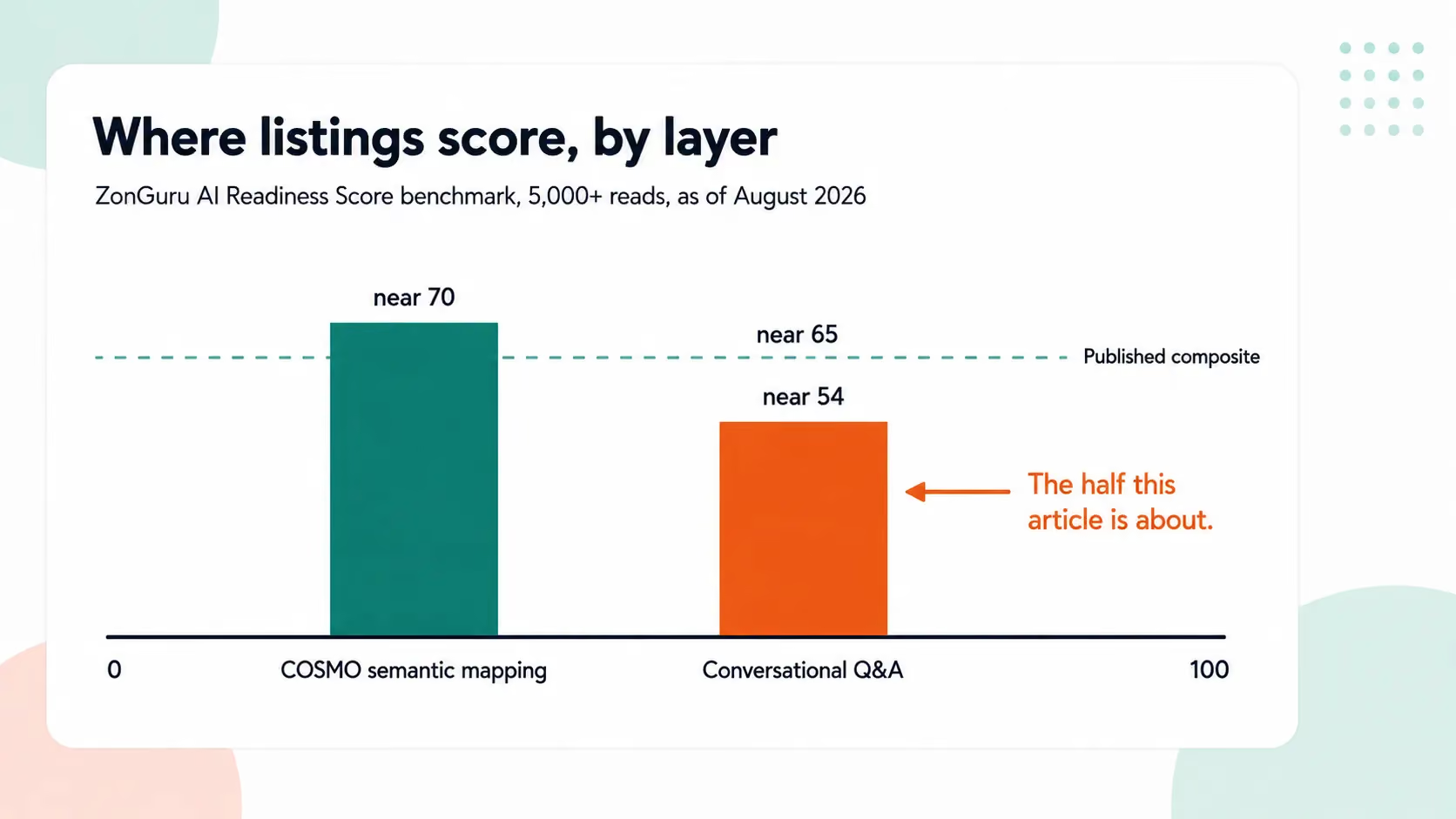
So route the two halves honestly. The text half you can read this week, and that is exactly what the AI Readiness Score reads. ZonGuru's published benchmark across more than 5,000 of those reads sits near 65 out of 100, disclosed as a split rather than a single number, with the graph half near 70 and the conversational question-answering half near 54. The lower half is the half this article has been about.
The attribute half is engineering work rather than a read. Helix™ is the agentic AI platform that runs ZonGuru's Listing Engineering methodology, the discipline of structuring a listing deliberately for every engine that reads it. Helix is currently available for US and UK Amazon marketplaces, with additional marketplace support in development.
Deciding which terms earn the scarce characters is a search-volume problem before it is a copywriting one. See a Helix Transformation in Action: a title brought back inside the 75-character cap, with the displaced high-volume attributes routed into the searchable Item Highlights field underneath it.
Start with the text half, because it is the half every reader of your listing sees and the only half a free diagnostic scores today.
What sellers get wrong about where Amazon SEO is going
The text half is straightforward to start on. Grading the advice you will read while you do it is harder, and four claims circulate widely enough to be worth checking against the record first.
- Claim: the title cap came in at the start of 2025. This is the one with money attached. January 2025 is when Amazon set the 200-character title standard, a different event pointing the opposite way. The 75-character cap was enforced on 27 July 2026, in every category except media. A seller who read the earlier date, ticked the job off and moved on is not compliant and is not being warned, because Amazon's model rebuilds an over-length title on its own schedule and leaves no earlier version to restore.
- Claim: the knowledge graph improved Amazon's search relevance by 60%. That figure is real, and it is an offline benchmark result on a public dataset inside the research paper rather than a production result. The figure Amazon published from production is the 0.7% sales lift on 10% of US traffic. An offline benchmark tells you a method works on a test set, while a production A/B tells you what happened to real shoppers. Quoting the first as though it were the second is how a paper becomes a marketing claim.
- Claim: the usage figures in circulation describe this year. A widely quoted set of them describes the year before. A customer count in the 250 millions and growth rates in the low hundreds of percent are 2025-era figures for Amazon's conversational shopping. The current disclosure is both larger and narrower. It puts more than 350 million customers over the trailing twelve months. It draws its spending comparison between customers who engage with those surfaces and customers who do not, which is not the same claim as AI search beating ordinary search.
- Claim: the patents show how Amazon ranks your listing. They show what Amazon built, which is a different thing, and patents catch people because they feel like evidence. A patent describes machinery a company may deploy, may deploy differently, or may never deploy at all. Three Amazon filings between late 2024 and early 2026 cover attribute-based question answering, number-checking against a database's ground truth, and graph answering that writes new answers back into the graph. Read them as direction rather than as a ranking rubric, and be wary of anyone who reads them the other way.
All four corrections point the same way. A forecast about Amazon discovery is worth exactly the date and the source attached to it, and a claim carrying neither is somebody's guess in a confident font. The same test quietly retires A10 as a name for Amazon's algorithm, because no Amazon announcement, patent or document has ever carried it. If you arrived here with the vocabulary of answer engines and generative search, that frame has its own explainer.
Three questions sellers ask about where Amazon SEO goes next
Is this costing me sales today, or is it a 2027 problem?
Today it costs you working space rather than sales you can count, and the honest reason is that nobody has published the number you want. The one production result Amazon has put its name to moved product sales 0.7% on roughly 10% of US traffic, a large number at Amazon's volume and a small one at yours. The conversational figure is bigger, and it answers a different question. More than 350 million customers used those surfaces over the trailing twelve months, and the ones who use them spend on average more than 40% more per order than the ones who do not. That compares two groups of shoppers rather than measuring what AI discovery did to your sales. What you can price is the field you already lost in July.
Will keyword research stop working?
Not soon, and the mechanism is more interesting than the yes or no. Volume data is a census of queries people have already typed often enough to be counted, which is the popular end of the range and nothing else. Google has said since 2013 that around 15% of its daily searches have never been seen before, and revisited that figure in the context of AI search. Conversational questions push more traffic into the uncounted end, so your keyword tool keeps working on the terms it can size while the growth sits in the queries nobody can size yet.
Is there any way to measure AI-surface visibility today?
Almost none, and knowing exactly how little is the point, because neither Seller Central nor Vendor Central, its counterpart for brands selling to Amazon wholesale, carries a dashboard for how the conversational surface treats your products. One report exists. Amazon's ads inside the AI conversation reached general availability in the US in March 2026, and they report the prompt a shopper typed, how often the ad appeared, the clicks, the cost and the sales back to the advertiser who bought them. Amazon calls them Sponsored Prompts. It is a paid surface and a narrow one, and it is also the only direct read a seller gets today.
The next field Amazon shrinks
Each era asked your listing for something different: the words, then the relationships, then legibility to things that are not shoppers. The keyword engine surviving all three is no reprieve, because the field it runs on is two-thirds smaller than it was in June. None of that structure was requested, and the advertising economics underneath explain why asking was never the plan. A pattern that has now held three times is the closest thing to a forecast this market has.
So the answer to what Amazon takes next is not a specific field, and it does not need to be. Amazon takes whatever space a system can fill more predictably than a seller can, and Amazon decides what goes in the gap. How big this gets is openly contested, because Accenture puts more than 30% of online commerce running through AI agents by 2030, while Gartner puts it at 20% of transactions in the same year. Two named research houses, one year, a ten-point spread. Anyone quoting one of those numbers without the other is selling you a confidence nobody has.
That leaves your own title, and it is short enough now to audit in a sitting.
- Open the listing that matters most to you and count the characters in the title.
- Read the 125 characters below it as a field with a job rather than as leftovers.
- Ask what a shopper's spoken question about that product would need to find.
- Check whether that answer sits anywhere in the listing at all.
That is one read, and it is available today. The next field is coming, and when it goes you will hear about it the way you heard about this one, because the future arrives as enforcement, not as an announcement.
See Where Your Listing Stands - We analyze only your public listing data, charge you nothing, ask for no credit card, and never send spam. The AI Readiness Score reads any live US or UK Amazon listing.


.png)