Rajiv Mehta, Amazon's VP of Conversational Shopping, described what was launching like this: "Alexa for Shopping is like having an expert personal shopper who already knows you and remembers your preferences, your past purchases, and your conversations, and carries that knowledge and understanding of you across your phone, laptop, and Echo devices." That was the framing Amazon used on May 13, 2026, when it began rolling out Alexa for Shopping to every U.S. customer - free, no Prime, no Echo device, no Alexa subscription required.
Most of the press read the announcement as a Rufus rebrand. It wasn't. Amazon launched two things in the same week: Alexa for Shopping, the new conversational surface that combines Rufus's product expertise with Alexa+'s personalization; and About You, the unified profile that feeds it everything from the cat's preferred food flavors to the sourdough starter's feeding schedule. Press coverage led with the search bar; the personalization substrate landed quietly underneath.
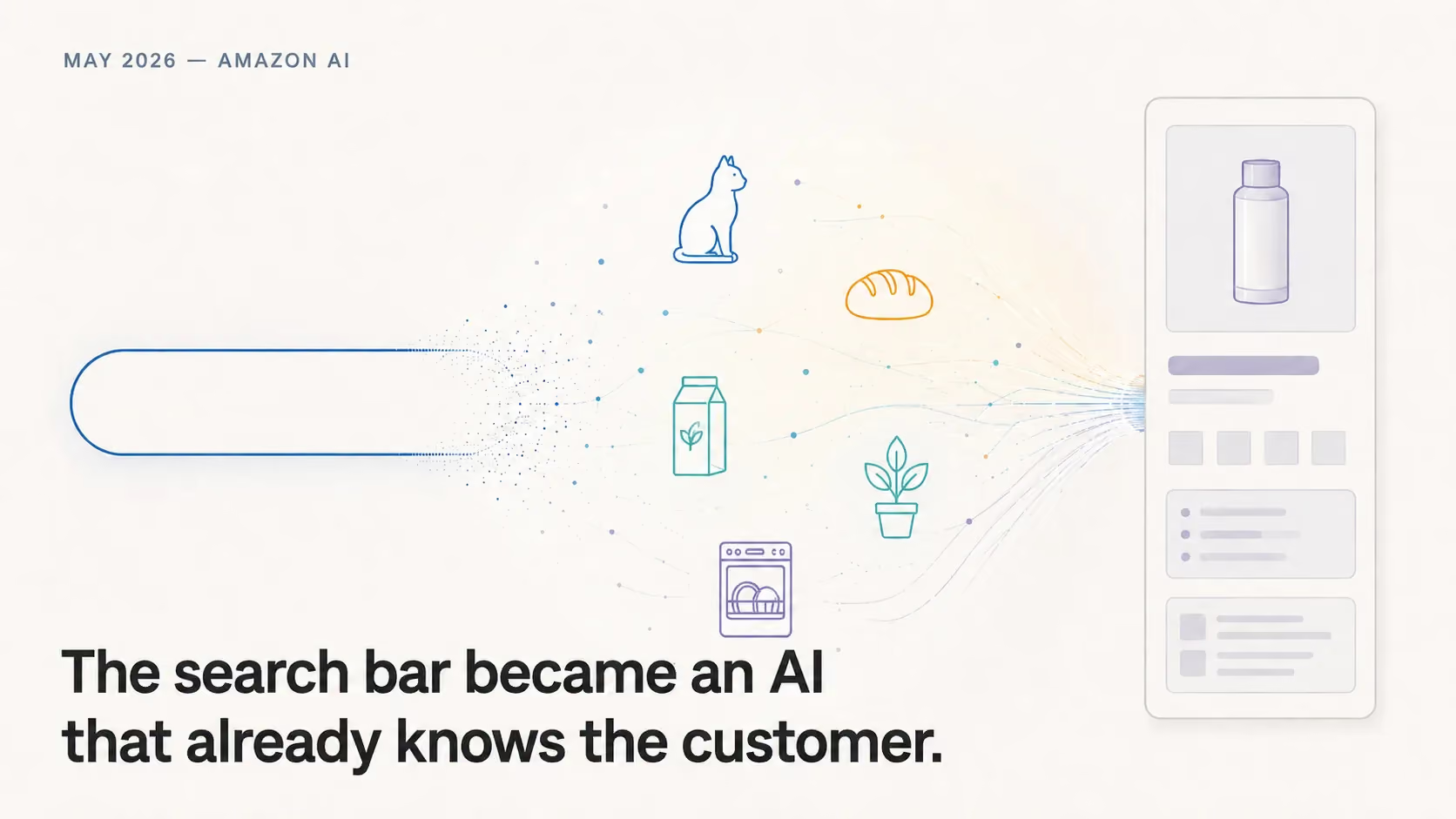
For the people writing the listings the new agent reads, that's the whole story. Amazon turned the search bar into an AI that already knows the customer - and keyword-loaded listings aren't an answer it surfaces.
What Is Alexa for Shopping?
Amazon's own framing of the architecture is the right place to start, because the press framing scrambled it. Amazon did not say it was replacing Rufus. The press release headline reads "Amazon brings together Rufus and Alexa+ to create 'Alexa for Shopping,'" and the body restates the move the same way: "By bringing together Rufus's product expertise and Amazon shopping history with the personalized knowledge and context of Alexa+." The product expertise layer is not going away; the personalization layer is being stacked on top of it. Flagship coverage (CNBC, Bloomberg, TechCrunch) led with "ditches Rufus" and "rebrand" framings; Amazon's own language doesn't carry that disposition. The fusion is the architecture.
Mehta's expert personal shopper line is the consumer-facing version of the same architecture. The expert part is what Rufus already did - read listings, answer product questions, generate recommendations against Amazon's catalog. The personal-shopper part is what Alexa+ brings: memory of who the customer is, what they bought before, what they asked yesterday, what device they're on. Alexa for Shopping is the surface where those two things are fused for the customer.
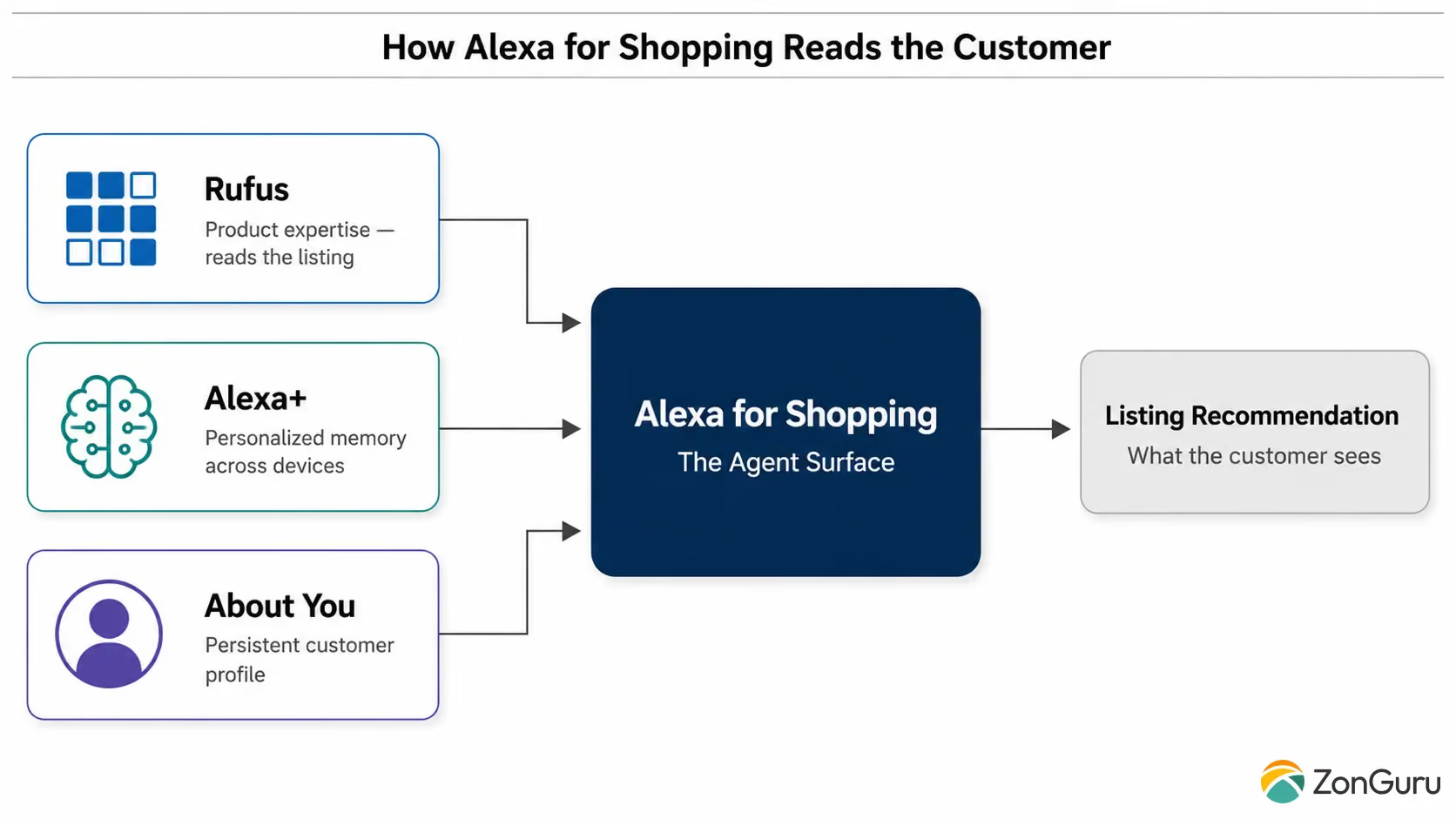
About You is the parallel launch the press is under-covering, and it matters more for sellers than the conversational surface itself. About You is a customer-facing profile inside Amazon - anyone can open it and see what Amazon thinks they want, edit it, remove categories from it. Behind the customer-facing UI, it is the persistent memory that the agent reads from at the moment of recommendation. The Mehta quote names it indirectly: remembers your preferences, your past purchases, and your conversations. About You is where those three things live.
Rollout is U.S.-only at launch, across Amazon.com, the Shopping app, and Echo Show devices over the coming week.
The Buyer Doesn't Search Anymore - the Agent Does
The orthodox view of Amazon search is that the customer types a query and the seller's listing competes against other listings to be found. Both halves of that sentence are now incomplete.
Look at the scenarios Amazon used to launch the product. "Please suggest supplies for my science fair project that we talked about" is one. "An E07 error code is flashing on my dishwasher" is another. Neither contains a keyword the seller could have planned for. The first depends on a prior conversation about a homemade volcano; the second depends on the agent decoding which appliance the customer owns and which part fits. The query the seller's listing is being matched against is not what the customer typed. It is what the agent inferred.
That inference happens inside a personalization context the seller cannot see. Family composition, dietary preferences, brand affinity, the pet's name, the gardening project that started two months ago - Alexa for Shopping reads from all of it through About You. The seller engineers what is on the listing; the seller does not engineer the context window the agent brings into the read.
Sharpen this with the consumer-side reality. On the May 13 Daily Tech News Show, Sarah Lane on Rufus: "if you would have said to me like, 'Hey, Sarah, quick, what's Rufus?' in tech terminology, I'd be like, I don't know, my neighbor's dog." Tom Merritt: "Rufus never was that useful for me either." Both Lane and Merritt cover tech for a living, and neither registered Rufus as a product worth remembering. The agent sellers spent two years optimizing for had thin recall outside the seller community.
That is what changes on May 13. Alexa is a brand consumers actually know; Echo Show already sits on the kitchen counter. The substrate sellers were optimizing for is no longer theoretical - it is wearing a name shoppers respond to.
About You: The Customer Profile You Never Wrote
About You is the audience signal sellers never wrote, and it is now the second input into every recommendation Alexa for Shopping makes.
Read what Amazon disclosed it captures. "Your Amazon shopping experience is personalized through information including your conversations with Alexa for Shopping, product reviews you've authored, your purchase history, items you've saved to Lists, and your searches." The published examples are concrete. "When you consistently shop for non-dairy milk, we may recommend additional non-dairy products when you shop for groceries." If the customer mentions that "your sourdough starter, Doughy, needs to be fed every 12 hours, Alexa for Shopping can suggest the right flour types and fermentation tools." Pet food preferences. Gardening project ingredients. Cat food flavors specific to the cat's name.
Sellers have built this kind of profile before, but on the wrong side of the platform. AMC and DSP are the surfaces where audience cohorts get constructed for paid placements - the seller decides who to target, then bids for impressions inside that segment. About You inverts the workflow: the customer constructs the cohort themselves through years of behavior, and the agent reads the cohort and surfaces products that fit organically, before any paid placement enters the consideration set. The persona that lived inside campaign manager now lives inside the customer's profile and feeds the organic surfacing layer.
That has a downstream consequence for how listings need to read. A keyword-dense listing answers what is this product? It does not answer what is this product for someone who buys non-dairy and shops weekly for groceries? The audience-fit layer was implicit in PPC work because the targeting controlled who saw the ad. On an organic agentic surface, the listing has to carry signals that read as a fit for the cohort the agent has already inferred.
The audience signal sellers never wrote is the one Amazon just made structurally legible to the agent.
What Alexa for Shopping Evaluates in Your Listing - The Four Substrates
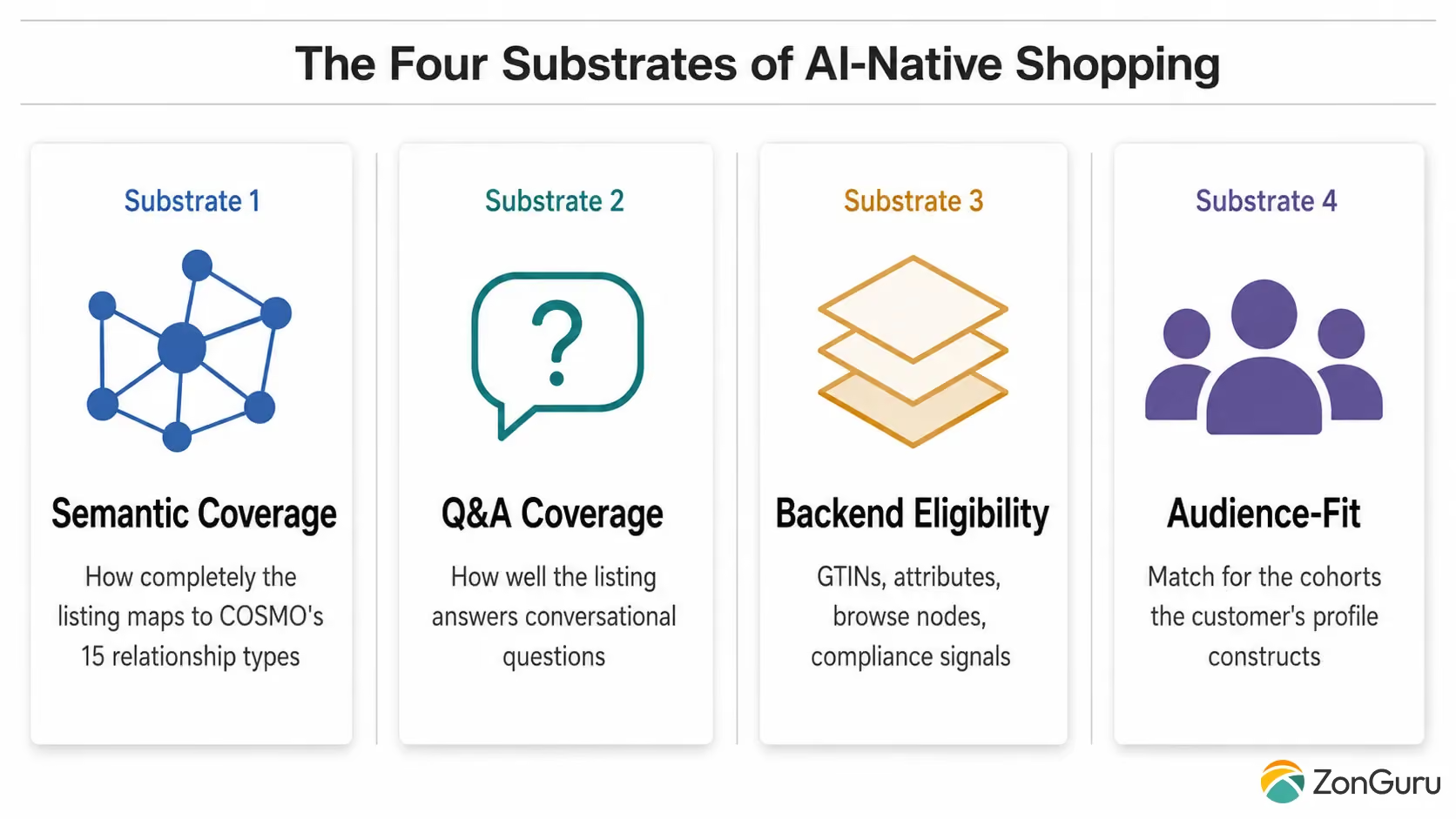
The agent reads your listing along four dimensions. Call them the Four Substrates of AI-Native Shopping - naming them this way is useful because every section that follows ties back to one of them.
The Four Substrates of AI-Native Shopping
- Substrate 1 - Semantic Coverage. How completely the listing maps to COSMO's 15 named relationship types (audience, function, use-context, complementary products, occasion, location, comparison, and the rest).
- Substrate 2 - Q&A Coverage. How well the listing answers the conversational questions a customer asks out loud - the substrate that began as Rufus's evaluation surface and survives unchanged into Alexa for Shopping.
- Substrate 3 - Backend Eligibility. The structured-data scaffolding (GTINs, category attributes, browse nodes, compliance signals) that gates AI eligibility before any front-end copy is read.
- Substrate 4 - Audience-Fit. How closely the listing reads as a match for the cohorts About You constructs on the customer side. Did not exist as an organic surfacing input until May 13.
Substrate 1 is what most engineering work has been pointed at for the past two years. It lives in title, bullets, description, and A+ Content - the surfaces where products connect to the relationships customers ask about (used by women in early pregnancy, pairs with the mat we already sell, functions as a quiet alarm for shift workers). Substrate 2 is the surface where the same work pays off conversationally: bullet structure that anticipates the customer's follow-up question, Q&A entries that resolve use-case ambiguity, A+ Content text that walks scenarios out loud. The two substrates share a substrate root, which is why brands engineered for one tend to be partially engineered for the other.
Substrate 3 sits underneath both - the structured-data scaffolding (GTIN-1, category attributes, browse nodes, regulatory compliance flags) that Amazon checks before the front-end copy gets read at all. A listing missing the scaffolding never reaches the surface where the agent evaluates the other three substrates. Substrate 4 is the newest of the four because it didn't exist as an organic input until About You launched: the brand entity, the category placement, the lifestyle context the imagery carries, the complementary-product framing - every signal that tells the agent whether the listing is a match for the cohort it just inferred about the customer.
Substrates 1 and 2 are Amazon's own, derived from what Amazon has published about COSMO (Amazon Science, SIGMOD 2024) and Rufus. Substrates 3 and 4 are this article's reading of the structural inputs the agentic surface depends on. Naming them as a four-substrate framework is a synthesis ZonGuru is making, not a taxonomy Amazon disclosed.
Two grounding numbers from ZonGuru's own data. Across more than 5,000 AI Readiness Score runs on live U.S. Amazon listings, the median listing scores 65 out of 100 - with median COSMO Semantic coverage at 70 and median Rufus Q&A coverage at 54. That asymmetry (competent on Substrate 1, structurally thin on Substrate 2) was the structural ceiling of a well-optimized A9-era listing twelve months before Alexa for Shopping launched. The substrate the new agent reads from was already mismeasured; the announcement made the cost explicit.
The dual-layer reality matters too. A9 keyword optimization still drives organic ranking, and a listing missing keyword fundamentals does not reach the surface where Alexa for Shopping evaluates the four substrates. The AI layer sits on top of the keyword layer; it does not replace it. For deeper reading on Substrate 1, see the COSMO guide; for Substrate 2, see optimize Amazon listings for Rufus. Rufus helped over 300 million customers in 2025, by Amazon's own count - the substrate had scale before it had a household-name interface.
Why Amazon Did This Now - The Agentic Commerce Race
The press is covering Alexa for Shopping as Amazon adding AI. The analyst read is that Amazon refused to let third-party AI commerce platforms intermediate its customers. The dated events of the past nine months explain why.
September 29, 2025: OpenAI and Stripe co-published the Agentic Commerce Protocol, an open standard for agent-initiated checkout, and U.S. ChatGPT users got Instant Checkout for U.S. Etsy sellers - with a million Shopify merchants slated to follow.
January 2026: Google announced the Universal Commerce Protocol at the National Retail Federation. Launch partners included Shopify, Etsy, Wayfair, Target, and Walmart, plus 20+ endorsing partners across payments and retail (Adyen, American Express, Best Buy, Mastercard, Stripe, Home Depot, Visa, Zalando). UCP wires consumer surfaces like AI Mode on Search and the Gemini app into merchant backends; merchants stay the merchant of record. Perplexity, meanwhile, was running a third path: zero fees, zero commissions, zero listing costs on its 22-million-user (probably understated) discovery surface.
March 5, 2026: OpenAI announced it was discontinuing Instant Checkout. About 30 Shopify merchants had integrated. Few users were finalizing purchases inside ChatGPT despite browsing in it; merchant onboarding turned out to be operationally hard; OpenAI had not built tax-collection infrastructure. The company pivoted to merchant-built apps inside ChatGPT, with checkout completed on the merchant's own site.
Two months later, Amazon launched Alexa for Shopping. Amazon did not join ACP. Amazon did not join UCP. Buy for Me lets Alexa shop other retailers' websites on the customer's behalf, but the agent stays Amazon's, the interface stays Amazon's, and the data the agent reads from stays in About You. The walled-garden bet is that customers stay inside Amazon's interface even when the purchase happens elsewhere - and that Amazon's first-party catalog plus its proprietary agent is more durable than any open protocol that compresses merchants into a 4% fee or asks them to re-platform.
The Daily Tech News Show hosts surfaced the through-line on May 13: "one of the problems Amazon has had is figuring out how to monetize the Echo. And one of the things they are hoping people will do is shop on the Echo." The Echo monetization arc is real - Dash buttons in 2015, Subscribe & Save, voice reorder, now Alexa for Shopping. Each move tries to make the Echo the customer's first shopping touchpoint; this is the version where the Echo finally has an AI agent that can carry on a conversation about which non-dairy milk to reorder. Whether shoppers respond is a separate question - the same hosts noted that experience to date hasn't shown much consumer appetite for shopping on Echo, and Alexa for Shopping is Amazon's bet that an AI agent on top of the device changes that.
The seller-strategic implication runs in both directions. Brands engineered only inside Amazon are betting on the walled garden. Brands also showing up cleanly across UCP partner surfaces (Walmart, Target, Shopify, Etsy) are hedging across protocols. The listings that survive both bets are the ones engineered for the discipline rather than for one platform's algorithm.
The Shift Didn't Start with Alexa for Shopping - and Why "AEO" Misses What Just Changed
Walk the substrate timeline back. COSMO, the knowledge-graph layer Amazon Science published on in 2024. Rufus, the conversational surface that launched the same year. About You and Alexa for Shopping, the personalization layer Amazon stacked on top May 13, 2026. Each layer reads from the substrate the prior layer prepared; none cares about keyword density in the way A9 did.
Brands engineered against COSMO and Rufus did not just optimize for an old surface. They built listings the next surface could read - because the substrate is the same substrate. The engineering thesis was right twelve months ago, and the May 13 announcement is the platform's own evidence. Mehta's expert personal shopper still has to read inputs. The inputs that worked for Rufus work for Alexa for Shopping; the listings written against them are pre-positioned, and the listings written for keyword density are not.
Some seller-agency voices are calling this shift AEO - Answer Engine Optimization - naming the move from keyword-driven SEO to intent-driven, conversational answer surfaces. The shift the term names is real. What it misses is the discipline.
AEO names the symptom. Listing Engineering names the work. The symptom is that keyword density doesn't survive the new surface; the work is structured product knowledge - mapped against COSMO's 15 relationship types, written to cover Rufus's Q&A pathways, validated against the actual Amazon market - engineered before the agent reads the listing rather than retrofitted after.
Amazon keeps stacking AI surfaces, and the substrate underneath stays substantially the same. Brands building inside that substrate compound their advantage with each new layer. Brands writing for the surface - generic AI copy that reads fluent but is ungrounded in actual market data - keep paying to retrofit and keep arriving late to whatever Amazon stacks next.
What Surfaces Alexa for Shopping Reads That You're Ignoring
A listing has seven primary surfaces a seller controls: title, bullets, description, backend attributes, images, A+ Content, and the front-end Q&A and reviews section. Sellers historically optimize three of those aggressively - title, bullets, backend keywords - and treat the rest as secondary. Alexa for Shopping reads all seven. The two or three usually under-invested are the ones that just got more important.
A+ Content has been a brand-credibility nice-to-have for years, gated to Brand Registry sellers and treated as marketing real estate. The agent does not read it as marketing. It reads the structured content blocks as additional Q&A coverage, additional use-context signals, additional complementary-product framing - Substrates 1 and 2 in concentrated form. A brand with rich, detail-dense A+ Content is feeding the agent a second pass at its own listing.
Customer reviews. About You's disclosed personalization sources include "product reviews you've authored" explicitly. Reviews are part of the product expertise layer the agent reads, not just social proof. Stale reviews, thin review counts, unanswered negative reviews - all of it is signal the agent integrates into its read of the listing.
Product images. Amazon called out visual search explicitly: "Snapping a photo to use visual search." The agent reads what the image shows, not just whether it loads. Recognizable lifestyle context tells the agent who the product is for; alt-text and image-meta tell the agent what the product is. Image quality became substrate on May 13.
Brand Registry. Brand Registry gates A+ Content, several backend attribute fields, and the brand-entity recognition the agent uses for brand-affinity matching on Substrate 4. A non-Brand-Registry seller is structurally cut off from the surfaces the new agent reads most heavily.
The brand operating across all seven surfaces with engineered intent is feeding the agent a coherent answer at every layer it reads. The brand operating across three is feeding it a partial one. About You and Alexa for Shopping extend the structured-product-knowledge logic to surfaces that used to read as marketing - every surface is substrate input now.
What Happens to Amazon PPC Under Alexa for Shopping?
Sellers spend more on PPC than on listing engineering. Sponsored Products, Sponsored Brands, Sponsored Display, with AMC and DSP audience targeting on top - keyword bidding has been the bedrock since Sponsored Products launched. The seller pays per click on a query the customer typed.
If the customer no longer types the query - if the agent does, with context the seller cannot see - what happens to keyword-targeted bids? Amazon has not stated a position. The May 13 announcement did not address PPC behavior under the new surface. The right move is to track the analytical questions, not predict the answer.
Three are worth watching. First, sponsored placement visibility: when the agent surfaces a curated answer in conversation rather than a search-results page, are sponsored slots part of the answer, or does the agent route around paid placements at the moment of recommendation? The early read from how Rufus surfaced products favored organic over sponsored, and the new surface inherits the same architecture.
Second, audience-targeted bids: the same dimensions About You captures on the customer side (pet, dietary, hobbies, brand affinity) are dimensions AMC and DSP let sellers target on the paid side. If the agent weights audience cohort more heavily than keyword match, the cohort-built campaign is closer to the recommendation logic than the keyword-built one. Sellers with rich AMC audience segments are pre-positioned the same way engineering-discipline brands are pre-positioned on organic.
Third, attribution opacity: if the agent's recommendation comes from a personalization context the seller cannot see, the attribution the seller relies on for ROI gets murkier. The seller pays for an ad but cannot tell whether the conversion came from the keyword the customer never typed, the cohort the agent inferred, or the agent simply remembering the brand from a prior About You interaction. TACoS modeling assumes traceable causation; Alexa for Shopping degrades that assumption.
CPC inflation is the bedrock pressure already running through every brand's P&L - bids creeping up while reach drifts down. Adweek covered Alexa for Shopping from the ad-industry side, framing the launch as poised to shake up ecommerce advertising; the seller frame is that PPC is going to fork. Brands running on keyword density and blanket-CPC bidding get squeezed from both sides: organic AI surfacing demands engineered listings, paid AI surfacing demands engineered audiences. Brands doing both keep their unit economics intact.
Reorders, Subscribe & Save, and Why Incumbents Just Got Stronger
Read what Amazon shipped on the reorder side. Scheduled Actions: "Create a Scheduled Action, such as adding healthy kids' snacks to your cart each month, restocking regular household items like pet food, paper towels, and detergent." Conditional auto-buying: "Add this sunscreen to my cart if the price drops to $10 and I haven't purchased it in the last 2 months." Subscribe & Save was the prior version of the same logic; Alexa for Shopping consolidates and conversationalizes it.
Every one of these features disproportionately benefits listings with established repeat-purchase patterns. The expert personal shopper who already knows the customer also knows what they usually buy - and the agent surfaces what you usually buy before it surfaces alternatives. A challenger now has to displace not a search rank but a customer-side preference plus the agent's reorder logic plus the persistent memory in About You that says this is the brand of detergent in this household. The more integrated a customer's About You profile becomes, the more switching costs run through the customer's own profile rather than through any algorithm a competing platform could replicate. The brand the agent calls yours compounds advantage in a way keyword rank never did.
Stockout risk is the other side of the same coin, and it costs more now. Going out of stock on Amazon already removed a listing from Rufus's consideration set during the period of unavailability. Alexa for Shopping inherits that dynamic and stacks the reorder logic on top: a stockout removes the listing from the agent's what you usually buy memory until the customer manually re-engages, which most customers do not. The cost of running thin inventory just got priced into the reorder graph.
For challenger brands, the path forward isn't lower bids on the incumbent's keywords; it's the engineered listing that earns Substrate 4 audience-fit signals strong enough to surface as the better alternative inside an existing customer's About You profile - when they ask the agent for something better than what I usually get. Different prompt structurally than cheaper detergent. It rewards brands whose positioning, lifestyle imagery, and review evidence read as a clean upgrade for the cohort the customer's profile fits.
What Does Buy for Me Mean for Amazon Sellers?
Buy for Me and Shop Direct are the half of the announcement that changes the funnel itself. Per Amazon: "For eligible products, the Buy for Me agentic AI feature handles the entire purchase on your behalf using your primary address and credit card." And: "Discover hundreds of millions of products in Amazon's store and from stores across the web through Shop Direct." The agent stays Amazon's; the purchase may not.
This is where Amazon's walled-garden bet becomes visible to the seller. For an Amazon-only brand, the customer arrives via Amazon's agent and may exit via another retailer's checkout if the agent's match is better there. For a diversified brand selling across Amazon, Walmart, Target, Shopify, and Etsy, Amazon's agent becomes a new inbound funnel surface - one that may surface their non-Amazon listings during a Shop Direct query the customer asked inside Alexa.
Multiple outlets have characterized Buy for Me as controversial; SEC News on May 13 called it "the somewhat controversial for me feature." The framing is documented; whether sellers find it controversial in practice depends on which side of the funnel they sit on. For incumbents, the cross-retailer reach is a leak. For diversified brands with clean catalog presence elsewhere, it is a discovery channel that did not exist before.
The operational implication is brand consistency across surfaces. A listing engineered cleanly on Amazon and abandoned to default templates on Shopify gives the agent inconsistent inputs to read across the same product. A coherent catalog - same product knowledge, same imagery logic, same review hygiene, same compliance signals across every surface - gives the agent a clean answer no matter which retailer Shop Direct routes the purchase to.
The Mehta quote tightens here. The expert personal shopper who already knows the customer may decide that what serves the customer best is buying somewhere other than Amazon. For sellers, the question is no longer just am I findable on Amazon? It is am I findable across every surface Amazon's agent might route the customer to?
What Should Amazon Sellers Do About Alexa for Shopping?
Pick the highest-revenue ASIN. The listing that already has traffic is where decay costs the most and where the engineering work compounds fastest. Don't audit the whole catalog this month; audit one ASIN well.
Score that listing against the four substrates. A diagnostic like our free AI Readiness Score returns a 0–100 evaluation with separate sub-scores for COSMO Semantic Mapping (Substrate 1) and Rufus Q&A Coverage (Substrate 2); the substrate definitions above work as a manual checklist for Substrate 3 (GTIN-1 populated, browse nodes correct) and Substrate 4 (brand entity registered cleanly, lifestyle imagery carrying audience signal).
Address the Q&A asymmetry first. The 5,000-run distribution shows median 70 on Semantic Coverage but median 54 on Q&A Coverage - the same substrate Alexa for Shopping inherits from Rufus and reads most directly when a customer asks a use-case question out loud. Highest-leverage move available in the next 30 days for most listings.
Then audit the underread surfaces named earlier: A+ Content blocks, image quality and lifestyle context, review recency, Brand Registry coverage. Layer the engineering work on top of the keyword-optimized title and bullets that already convert; A9 still drives organic ranking, and rewriting from scratch destroys the surface ranking that gets the listing in front of the agent in the first place.
One ASIN, four substrates, 30 days - and a monthly loop that keeps the listings surfacing as Amazon stacks the next layer.
Alexa for Shopping Is a Forcing Function, Not a Choice
Mehta's expert personal shopper from the announcement is real, and Amazon will keep extending it. Read his line from the seller's side: the question isn't whether the personal shopper knows the customer. The question is whether the personal shopper, when it reads the listing, finds enough engineered substrate to recommend it - and whether the purchase that follows lands inside Amazon's checkout or routes off through Shop Direct to a competitor.
What sellers do about that is the smaller list. Score one ASIN against the four substrates. Close the Q&A gap first. Audit A+ Content, images, reviews, Brand Registry. Layer the engineering on top of what already converts on A9. Run the loop monthly. None of it is optional now; Alexa for Shopping is the forcing function the past two years of platform changes were building toward.
Alexa for Shopping turned the search bar into an AI that already knows the customer; the listings that get surfaced are the ones engineered for what the agent actually reads.
A free four-substrate evaluation on one of your live ASINs is available here if you want a number to start from.