Loading...


Let our Amazon experts show you how to leverage the power of ZonGuru to smash your sales goals. You’re invited to a 15-minute Rocket Demo so you can see the ZonGuru tools first-hand.
Book your seat now!
An Amazon ASIN (Amazon Standard Identification Number) is a unique 10-character alphanumeric code that Amazon assigns to every product in its catalog. Every listing on Amazon - whether it's a hardcover book, a yoga mat, or a 12-pack of paper towels - has exactly one ASIN. Sellers don't choose it. Amazon generates it automatically when a product enters the catalog. You'll find it in the product URL (amazon.com/dp/B07XYZ1234), in the Product Information block of any listing page, and in your Seller Central inventory.
In 2026, the ASIN does more than identify a product. It is the primary key Amazon's AI systems - COSMO and Rufus - use to map your product into a semantic knowledge graph and decide whether to recommend it to a shopper. That makes the ASIN, and the listing content behind it, the addressable unit of discovery on Amazon. This guide covers what an ASIN is, how to find one, how it differs from a SKU or UPC, and how to optimize the listing behind it for the AI era of Amazon search.
ASIN stands for Amazon Standard Identification Number. It is a 10-character identifier that uses a mix of letters and numbers - most begin with the prefix B0, followed by eight more characters. Books are the exception: a book's ASIN is identical to its 10-digit ISBN, because Amazon's catalog evolved out of its original bookstore.
Amazon assigns one ASIN per distinct product. The same ASIN is used by every seller offering that product - if ten merchants sell the same brand of stainless steel water bottle, all ten share a single ASIN. This is why the Buy Box exists: multiple sellers compete for the same ASIN, and Amazon decides which seller's offer is featured.
How Do You Find an Amazon ASIN?
There are three reliable ways to find any Amazon ASIN.
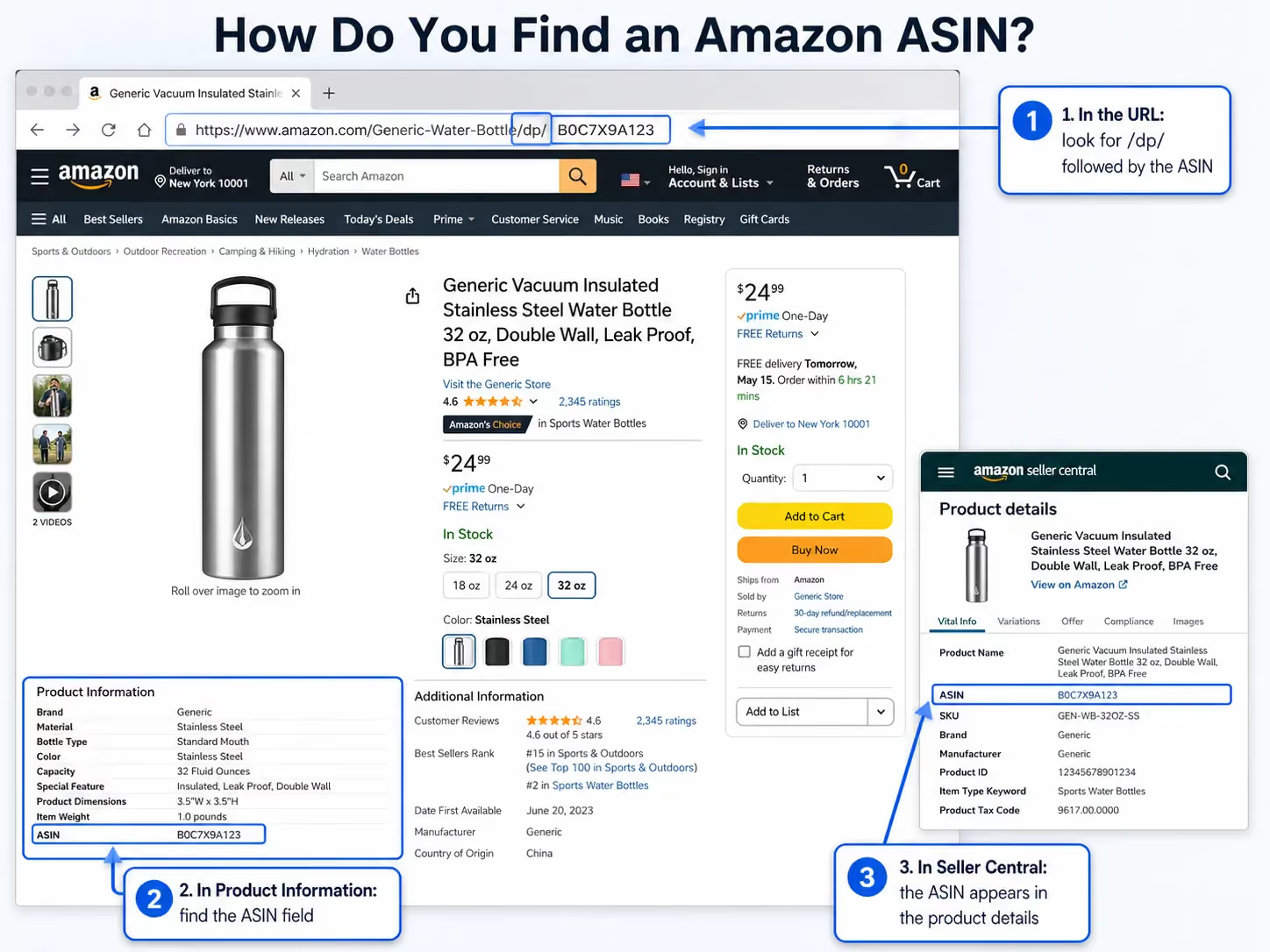
1. Read it from the URL. Open any product page on Amazon. The URL contains a /dp/ segment followed by the 10-character ASIN. In the URL amazon.com/dp/B07XYZ1234/ref=..., the ASIN is B07XYZ1234. This is the fastest method and works for any product, whether you sell it or not.
2. Find it in the Product Information block. Scroll down the listing page until you reach the section titled "Product Information," "Product Details," or "Additional Information," depending on the category. The ASIN is listed there as a clearly labeled field.
3. Check Seller Central. If the product is in your own catalog, the ASIN appears in Seller Central under Inventory → Manage All Inventory. It's also visible in your Business Reports, advertising dashboards, and FBA inventory views. Most third-party tools, including ZonGuru's, pull ASINs directly from Seller Central via the Amazon SP-API.
Sellers regularly confuse these three identifiers because all of them attach to a single product, but they serve entirely different purposes.
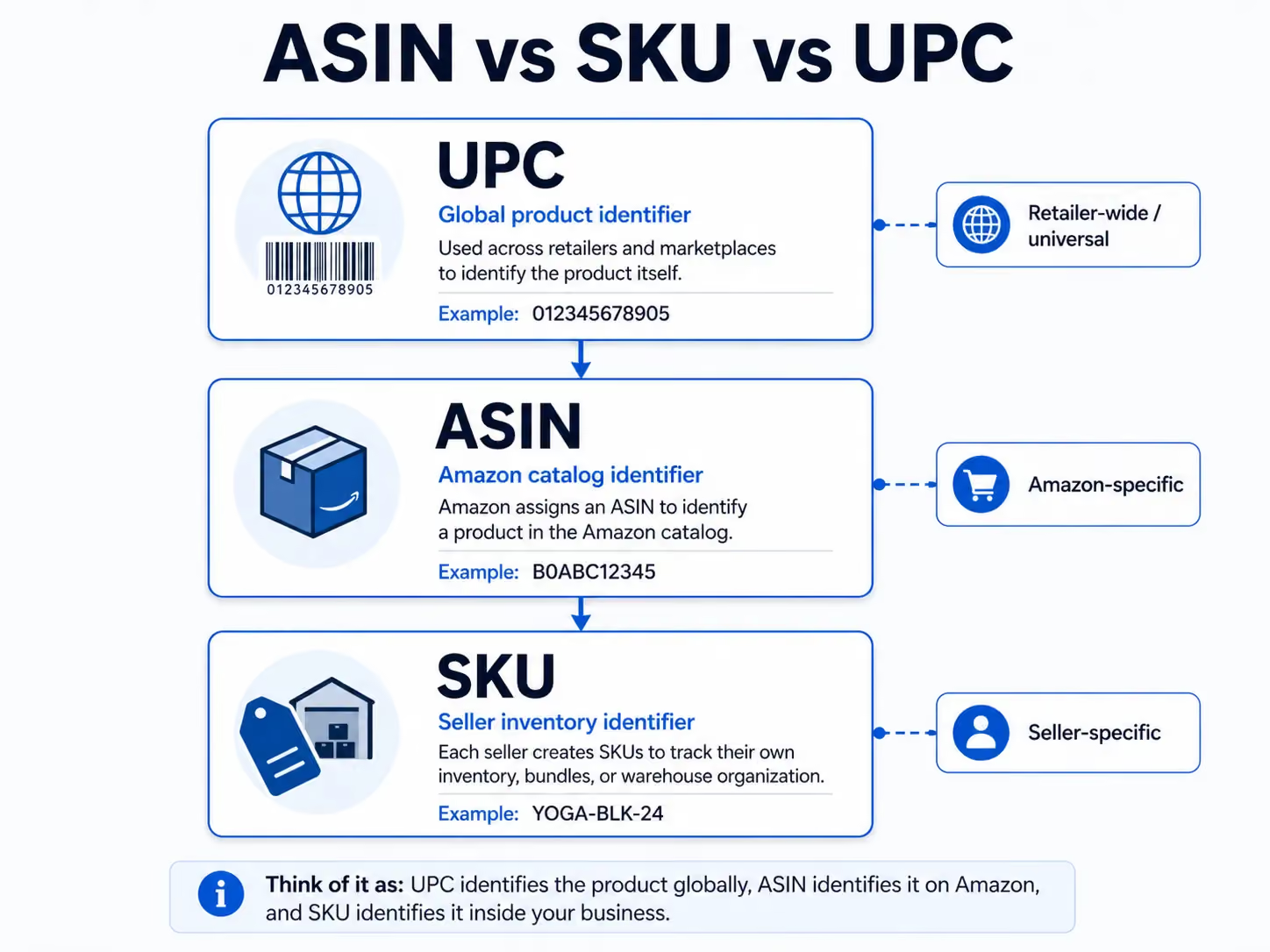
An ASIN is assigned by Amazon and is identical for every seller of a given product. It is Amazon-only - it does not exist outside Amazon's catalog.
A SKU (Stock Keeping Unit) is created by the seller and is unique to that seller's inventory system. Two merchants selling the same item will share an ASIN but use different SKUs. SKUs typically encode internal information - supplier code, color, size, warehouse location - that the seller defines.
A UPC (Universal Product Code), along with the related EAN and GTIN standards, is a global product identifier owned by GS1 and used across retailers, distributors, and supply chains. Amazon usually requires a valid UPC when you create a new listing. Amazon then generates an ASIN that maps to that UPC.
The simplest way to remember the hierarchy: UPC is the global identifier the world uses, ASIN is Amazon's internal version of it, and SKU is your private name for the inventory you hold against that ASIN.
When a product comes in multiple variations - different sizes, colors, flavors, or pack counts - Amazon groups them under a parent ASIN with each variation receiving its own child ASIN.
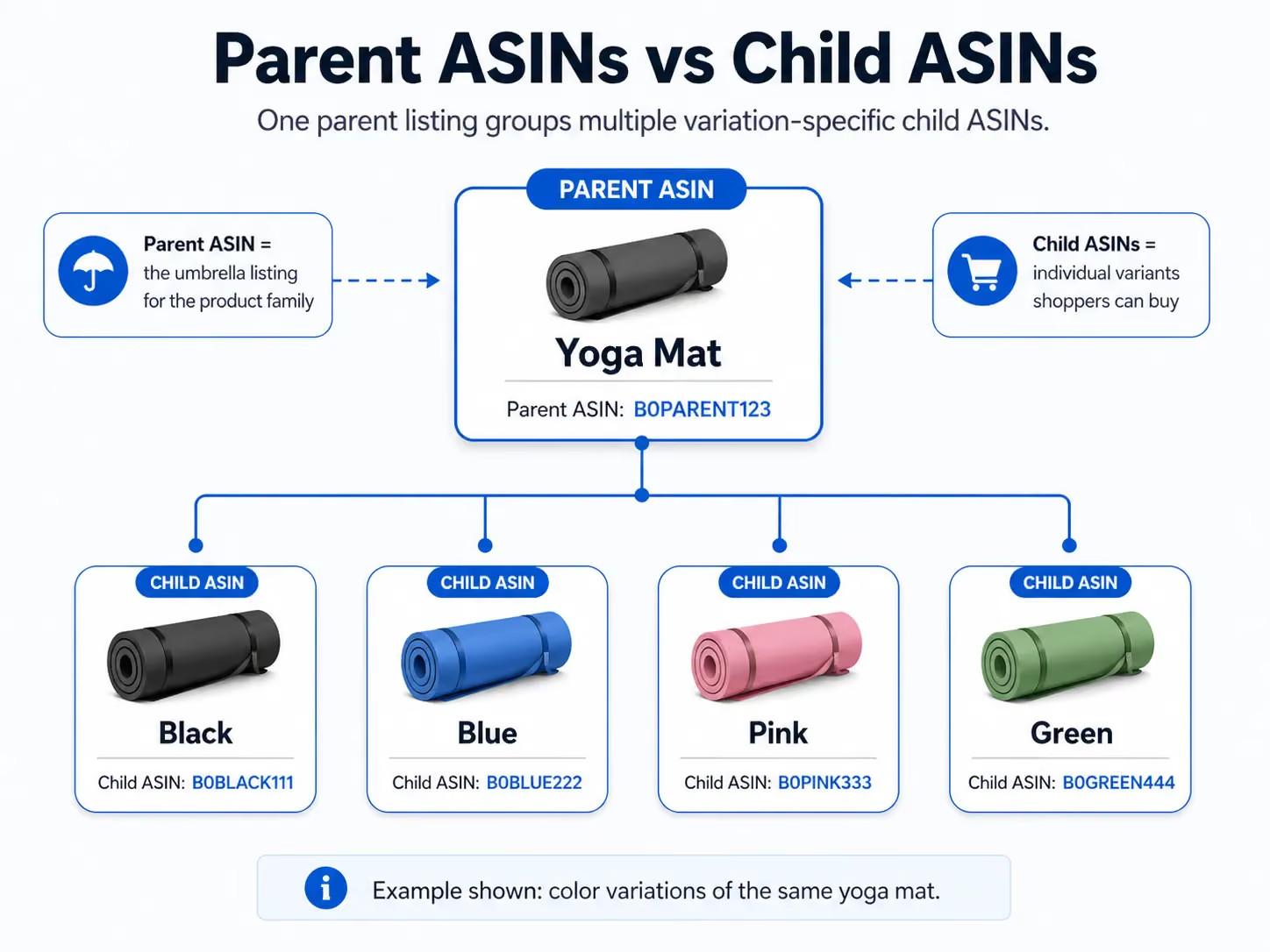
The parent ASIN is a non-purchasable container. Shoppers don't buy the parent; they land on the parent listing, select a variation (small/medium/large, or red/blue/green), and the page resolves to the corresponding child ASIN, which is the actual purchasable unit. Reviews and many ranking signals aggregate at the parent level, which is why correctly grouping variations under one parent is one of the highest-leverage catalog decisions a seller makes. A 200-review parent with five children outranks five orphaned ASINs with 40 reviews each, even when the underlying product is identical.
Variation themes are category-specific. Apparel typically uses Size + Color. Supplements use Flavor + Count. Electronics often use Color + Capacity. Amazon's category-specific templates dictate which themes are available.
You do not create an ASIN manually. Amazon generates it when you add a product to the catalog. The exact path depends on whether the product already exists:
A common source of seller suspensions is creating a duplicate ASIN for a product that already exists, or grouping two distinct products under one ASIN. Both violate Amazon's Terms of Service. If you're unsure whether a product already has an ASIN, search the catalog by UPC before creating a new listing.
For most of Amazon's history, the ASIN was a back-end identifier - a database key that mattered to Seller Central, advertising, and inventory systems but was largely invisible to shoppers. That changed in 2024, when Amazon deployed COSMO, a large-scale e-commerce knowledge graph trained on 6.3 million product nodes and 29 million relationships across 18 product domains. COSMO doesn't just index your listing - it interprets it, mapping each ASIN against 15 semantic relationship types: audience, use context, complementary products, comparisons, capabilities, and more.
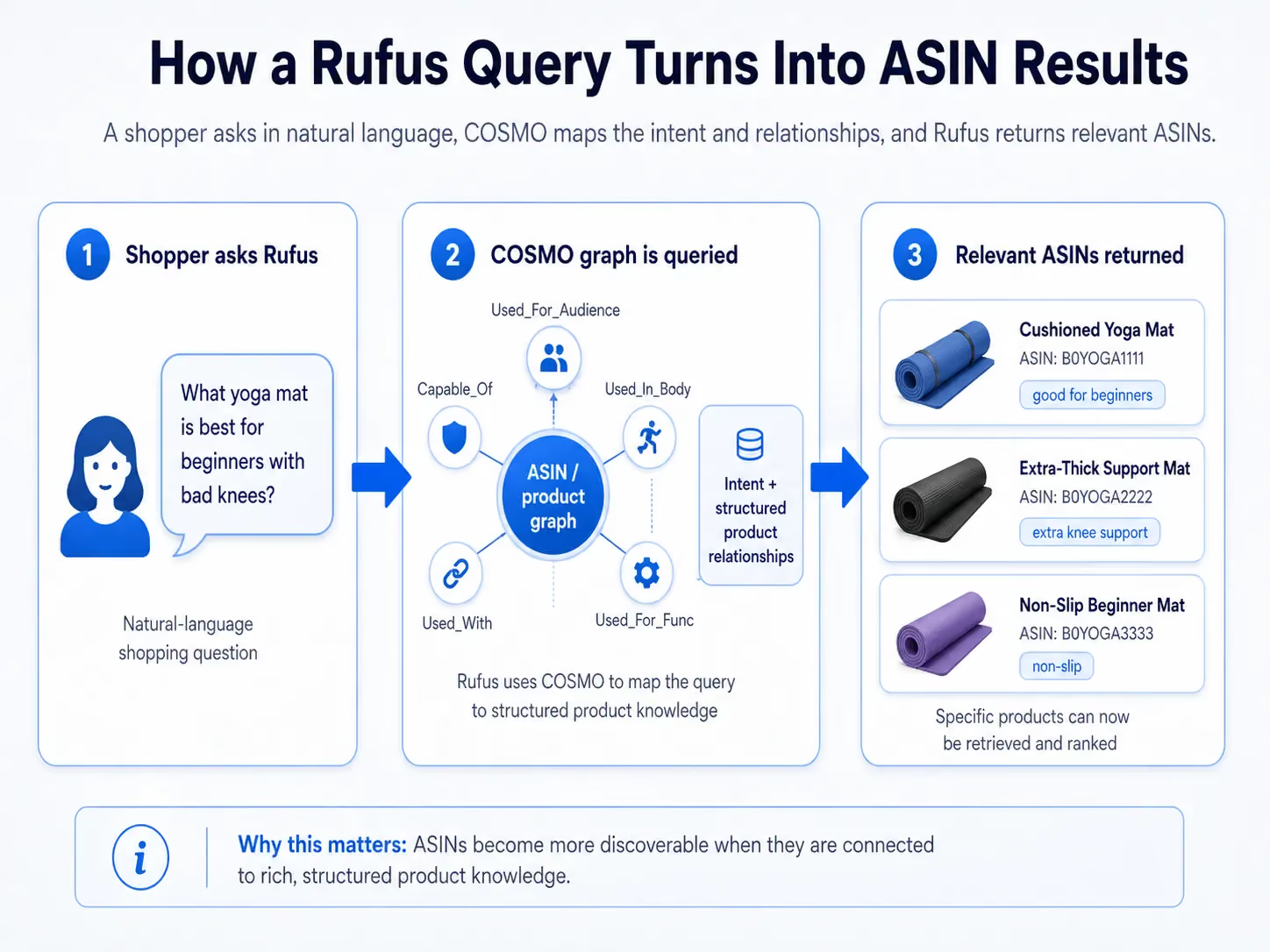
Rufus, Amazon's generative shopping assistant, sits on top of COSMO as the consumer-facing layer. Over 250 million shoppers now use Rufus, and they convert at rates roughly 60% higher than traditional keyword search users. When a shopper asks Rufus "what's a good yoga mat for hot yoga?", Rufus does not run a keyword search across titles. It queries COSMO's semantic graph and returns the ASINs whose listing content most clearly establishes the relationships in that question - audience (yoga practitioner), use context (high-heat environment), product attributes (grip, sweat resistance, thickness).
The implication is structural. Your ASIN is now the addressable unit of AI discovery. A listing built for the legacy A9 keyword era - keyword-stuffed title, generic bullets, vague description - leaves COSMO with too little signal to confidently map the ASIN to specific buyer intent. Two ASINs in the same category, with similar keywords and similar review counts, can perform very differently based on whether their content is structured for AI interpretation. The ASIN itself never changes. What changes is whether the content behind it gives COSMO and Rufus enough to work with.
This is the shift the rest of this guide is built around: the ASIN is no longer just a SKU for Amazon's database. It's the unit AI engines recommend.
See how AI-ready your ASIN is. The free COSMO/Rufus Readiness Report scores any Amazon ASIN against COSMO's semantic relationships and Rufus's buyer-question coverage in 60 seconds. No account, no payment.
→ Run a free AI Readiness Report on your ASIN
Optimizing for an ASIN means optimizing the listing tied to it. The ASIN itself is fixed once Amazon assigns it; the content underneath is what AI systems and shoppers evaluate. In 2026, that work breaks into two layers.
Layer 1: keyword indexing (still required). A9, Amazon's classical relevance algorithm, still handles the initial query-to-product matching. Your title, bullets, backend keywords, and description need to contain the terms shoppers search. This is table stakes - without it, your ASIN doesn't enter the candidate set.
Layer 2: semantic structure (the new layer). COSMO determines which of the indexed candidates actually surfaces in AI-driven recommendations and Rufus answers. This rewards a different kind of content:
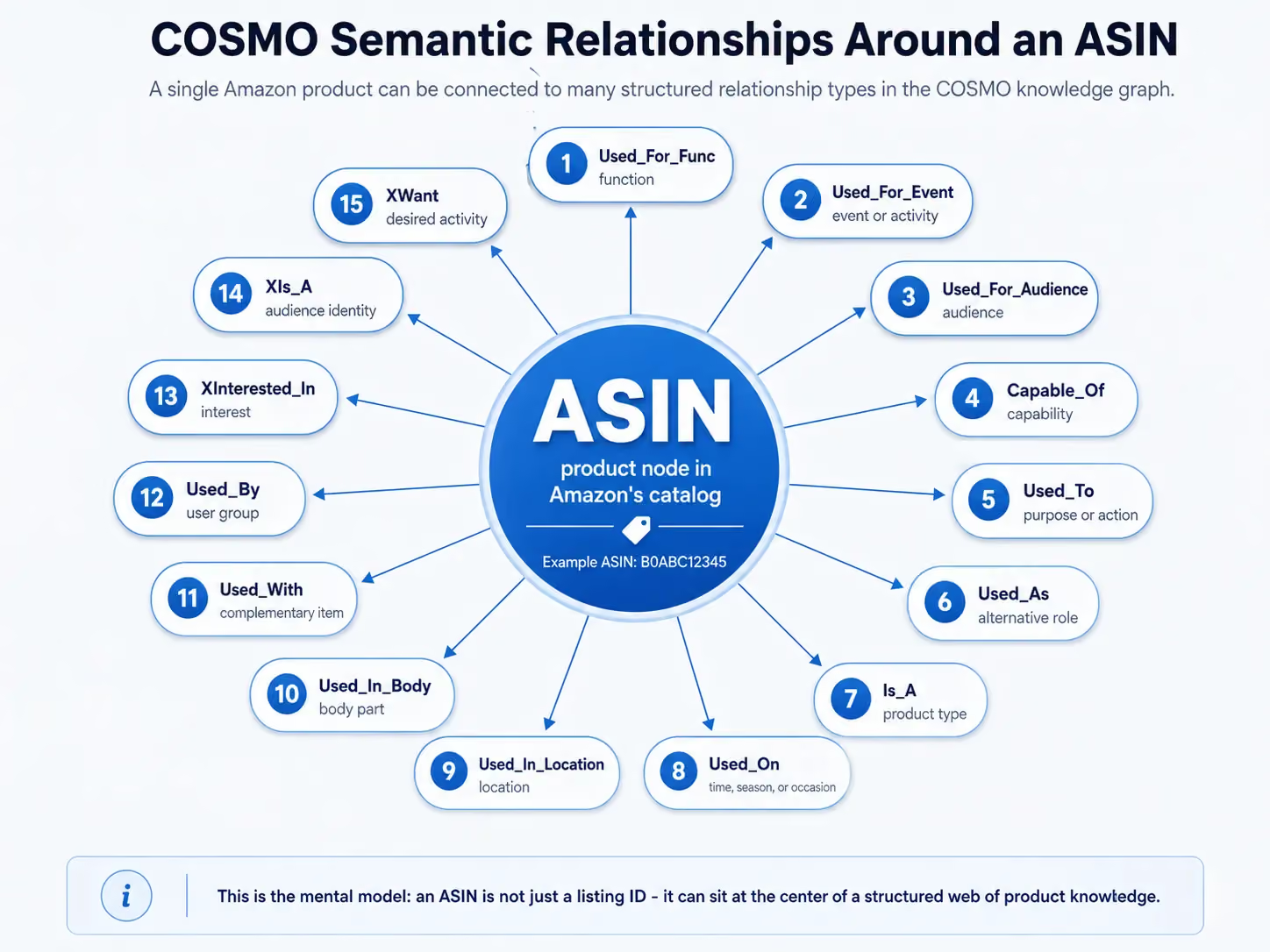
The simplest test: read your listing as if you were a knowledge graph trying to answer the question "what is this, who is it for, and when would I use it?" If you can't answer all three from the listing itself, neither can COSMO.
For a deeper walk-through of the underlying mechanics, see the Amazon SEO Guide, which covers both A9 and COSMO ranking factors in detail.
Five mistakes appear repeatedly across our transformation engagements and are worth flagging because they all happen at the ASIN level and all are fixable.
1. Listing two distinct products under one ASIN. A common cause of suspensions. If the underlying product changes - new formula, different size, new packaging - create a new ASIN or new variation. Don't repurpose the existing one.
2. Failing to group variations under a parent ASIN. Selling small, medium, and large as three orphan ASINs splits review aggregation, dilutes ranking signals, and confuses shoppers. Group them under one parent with three children.
3. Inconsistent content across child ASINs. When variations have wildly different titles, bullets, or images, COSMO struggles to map the parent as a coherent product family. Keep variation content structurally identical and only differ on the variation-specific facts.
4. Treating backend search terms as the keyword strategy. Backend keywords help A9 indexing, but they don't establish any of COSMO's semantic relationships. A listing with rich backend terms and an empty front-end body underperforms a listing with the opposite balance.
5. Not auditing high-revenue ASINs annually. A listing engineered in 2022 was built for a different algorithm. The product may still sell - but if the underlying content hasn't been updated for the COSMO/Rufus era, it's likely losing visibility quietly to better-engineered competitors. Run a Readiness Report on your top revenue ASINs at least once a year.
A handful of tools are common across the seller toolkit, each addressing a different ASIN-level question.
→ Transform your listing with Helix
The ASIN itself is unchanged from the day Amazon introduced it: a 10-character identifier that anchors a product in the catalog. What's changed is everything around it. The ASIN is now the unit Amazon's AI engines reason about, recommend, and rank. Sellers who treat it that way - engineering structured listing content per ASIN, auditing semantic coverage rather than just keyword density, grouping variations cleanly under parents - capture compounding visibility gains as Rufus and COSMO continue to expand. Sellers who treat the ASIN as a keyword bucket are increasingly the ones funding those gains.
If you're not sure where your ASINs sit on that spectrum, start with a free Readiness Report on your highest-revenue product and read the gaps it surfaces. The fix is rarely the ASIN. It's almost always the listing behind it.
ASIN stands for Amazon Standard Identification Number. It's a 10-character alphanumeric code Amazon assigns to every product in its catalog. Every listing has exactly one ASIN, and Amazon generates it automatically when a product is added.
You can find an ASIN in three places: the product URL (the 10 characters after /dp/, for example amazon.com/dp/B07XYZ1234), the "Product Information" section near the bottom of any listing page, and your Seller Central inventory dashboard if you own the listing.
No. An ASIN is assigned by Amazon and is the same for every seller of that product. A SKU (Stock Keeping Unit) is created by the seller and is unique to that seller's inventory system. One ASIN can have many SKUs across different sellers; a SKU only ever maps to one ASIN.
No. A UPC, EAN, or GTIN is a global product identifier owned by GS1 and used across retailers. An ASIN is Amazon-only. When you add a new product to Amazon, you typically supply a UPC, and Amazon generates an ASIN that maps to it.
No. Each ASIN identifies one product. Variations of the same product (different sizes, colors, or flavors) each get their own child ASIN, grouped under a parent ASIN. Listing two distinct products under one ASIN is a Terms of Service violation and a common cause of seller suspension.
No. Amazon generates the ASIN automatically when you add a product to the catalog. If a matching product already exists, Amazon assigns you the existing ASIN. You can only create a new ASIN by listing a genuinely new product Amazon hasn't seen before.
The ASIN is the primary key Amazon uses to track every signal associated with your listing - clicks, conversions, reviews, search relevance, and increasingly, the semantic relationships COSMO uses to recommend your product. All ranking and discovery happens at the ASIN level, which is why optimizing the listing behind each ASIN matters more than chasing keywords across a category.
Rufus, Amazon's generative shopping assistant, uses ASINs as the unit it recommends. When a shopper asks Rufus a question, Rufus queries Amazon's COSMO knowledge graph and returns specific ASINs whose listing content most clearly answers that question. ASINs whose listings establish strong, structured product knowledge - audience, use context, comparisons - are recommended more often.
A parent ASIN groups variations of the same product (such as different sizes or colors). Each variation gets its own child ASIN. Shoppers see the parent listing and select a variation, which routes them to the corresponding child ASIN. Reviews and search ranking signals typically aggregate at the parent level.
No. Amazon does not delete ASINs once they're created - they remain in the catalog permanently, even after a product is discontinued. Sellers can close or delete their offer against an ASIN, but the ASIN itself persists.
For 2026, optimizing the listing behind an ASIN means engineering structured product knowledge that COSMO and Rufus can interpret - explicit audience, use cases, comparisons, and complementary products - rather than stuffing keywords. Run a free COSMO/Rufus AI Readiness Report on any ASIN to see exactly which semantic relationships are missing and which buyer questions your content fails to answer.
Reverse ASIN lookup is a research technique that takes a competitor's ASIN and returns the keywords driving traffic to that listing. It's still useful for keyword discovery, but in the COSMO era it tells you only part of the story - competitor ASINs may rank for keywords without being well-engineered for AI interpretation, so the deeper question is which semantic relationships their listings establish, not just which keywords they cover.
Discover opportunities. Maximize your sales. Grow your Amazon business!

Free score in 2 minutes. See how Amazon's AI reads your listing and what to fix.
 Run my Free Score
.svg)
Get started with ZonGuru, access all the tools with a FREE trial.
.avif) Start FREE Trial
Start FREE Trial