


Which of your listings pull plenty of sessions but never convert? Which of your titles won't survive the cap Amazon starts enforcing on July 27? And is there a claim sitting on one of your listings that your own compliance notes would never clear?
The answers are all in your data already, and that's exactly what makes them so maddening to get at: an afternoon of Seller Central tabs, three downloaded reports, and a spreadsheet where you play the join.
Or one plain-English message to an assistant that can actually see your business.
Here's what the second option looks like. Pointed at a $118 HexClad wok, Claude spent under fifteen minutes producing a 17-page brand-strategy document, and buried in it were two findings worth real money. The listing never mentions that Gordon Ramsay co-created the wok, the strongest selling point the brand owns. And one live bullet claims "third-party certified PFOA-free," wording that HexClad's own compliance notes flag as risky.
Nobody typed either of those facts into the chat. Claude read them itself, through a live connection to the brand's records and to Amazon market data.
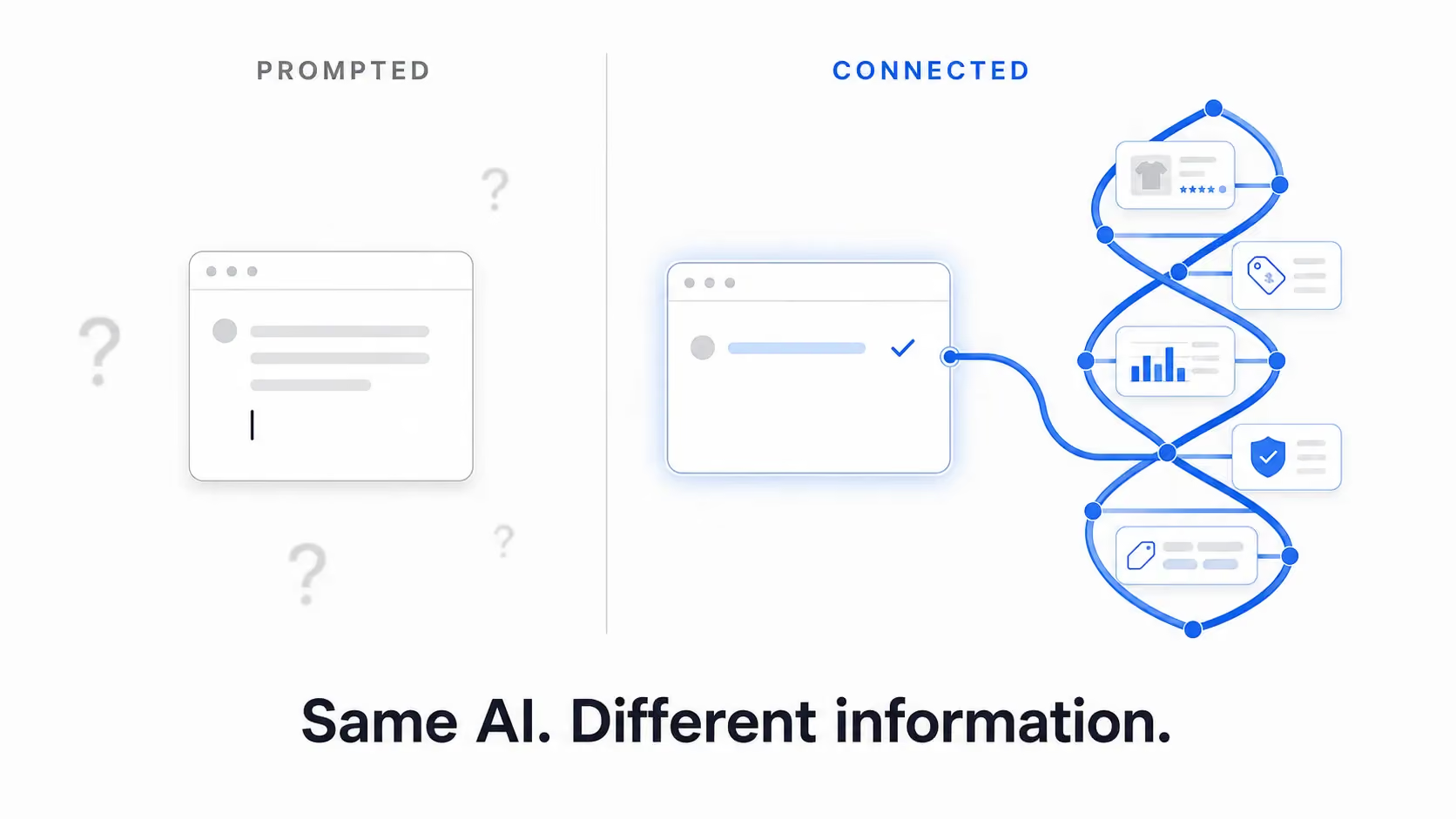
That's the whole point. Claude didn't get smarter for that job; it got better information.
Most "connect AI to your Amazon business" advice walks straight past that distinction, and it's the one that decides everything. Give the assistant your sales data and it answers the first question. Give it your catalog and it flags the second. But the third needs something neither of those holds - a record of what your brand is actually allowed to say - and that's the claim that gets a listing suspended, caught here before Amazon could catch it.
The connection is called MCP, short for the Model Context Protocol, and this year it stopped being developer territory. Setting one up takes about ten minutes and no code at all, so only one question is left worth arguing about: what should your assistant be reading?
TL;DR
- MCP is the open standard that lets Claude, ChatGPT, and Gemini read live systems. Amazon's own Ads MCP Server has been in open beta since February 2026, so this is normal infrastructure now.
- Connected to your Amazon data, the assistant answers in one message what used to cost an afternoon: which listings pull sessions but don't convert, which titles won't survive the July 27 cap, and which of your brands needs attention first this morning.
- Setup takes about ten minutes. Register at Helix, put your first credit on the account, copy a connection string, and paste it into Claude or ChatGPT. No code - and your Amazon credentials never pass through the chat, because you authorize Amazon Connections once, on Amazon's own page.
- Most seller MCPs work from account data you already own. The Helix connection also reads engineered product knowledge - your claims, your positioning, a decade of Amazon market data which is what lets an assistant make judgment calls instead of merely working the numbers you already have.
- The entry cost is one credit ($49). It unlocks the connection, and the same credit later pays for a hero-listing transformation. No subscription.
- First hour: ask which listings pull sessions but don't convert, score your hero ASIN, and decide whether it earns a transformation before the July 27 title deadline.
What is MCP for Amazon sellers?
The Model Context Protocol is an open standard released in November 2024 by Anthropic, the company behind Claude, and what it does is give an AI assistant a direct line into live systems. Rather than reasoning over whatever you've pasted into the chat, the assistant reads your data at the source. For a seller, that retires the copy-paste-between-tabs routine entirely: you connect a system once, and from then on the assistant can pull from it, reason over it, and, where you allow it, act on it.
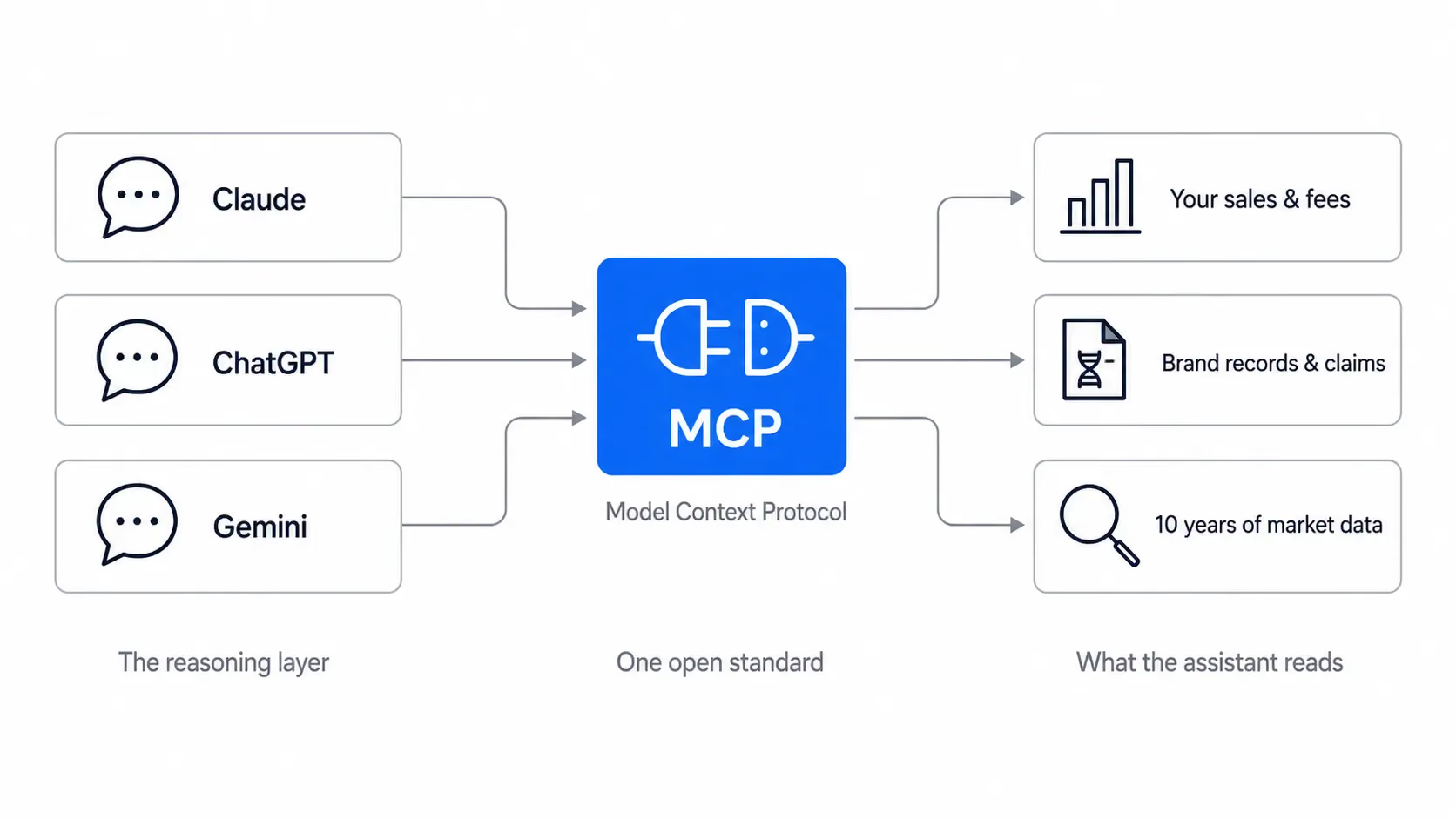
The standard spread quickly. OpenAI and Google picked it up within months, so the same style of connection now works across Claude, ChatGPT, and Gemini. Then Amazon itself joined, opening the beta of its own Amazon Ads MCP Server on February 2, 2026, which lets a connected assistant manage campaigns, pull performance reports, and build a ready-to-review Sponsored Products campaign from a single prompt. When a platform ships its own connector, it has stopped running an experiment.
The chat window isn't the only place an AI reads your business, either. Alexa for Shopping, the AI shopping surface Amazon launched on May 13, 2026, answers shoppers straight from listing content, inside an AI shopping stack that more than 300 million shoppers have already used. Both of these AIs answer from whatever they can read - the shopping AI from your listing, Claude from whatever you've connected - so when you compare MCP options, one question separates them. What does this connection let the AI read?
Why connect Claude to your Amazon data at all?
Start with what a connection actually changes. You ask once, in plain language; the assistant pulls the numbers, joins them, and shows its reasoning. No tab-hopping, no export, no pivot table.
The questions from the top of this page turn into messages you can send, and every one below was run live at ZonGuru's July workshop:
- Search my catalog and find the three ASINs that most need optimization right now, based on sales and conversion rates.
- Which listings have high sessions but weak conversions? I want to optimize those next.
- Which of my transformations are oldest and could use a refresh?
- I want to add a new claim to bullet three. Check it against the brand voice before you confirm it.
- What's sitting in my Helix inbox that needs decisions right now?
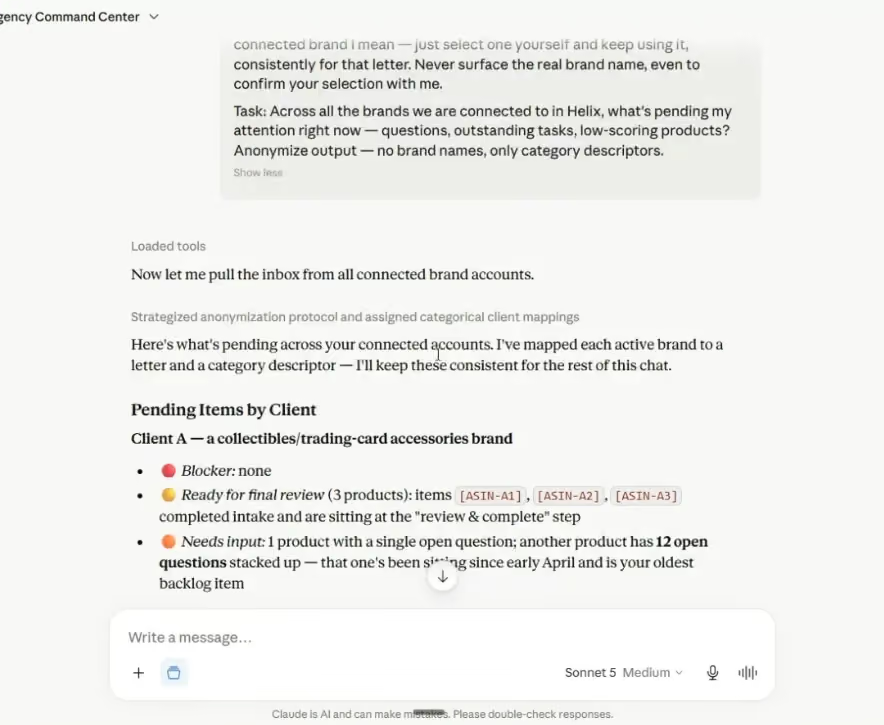
Your work shifts from gathering the data to judging the answer.
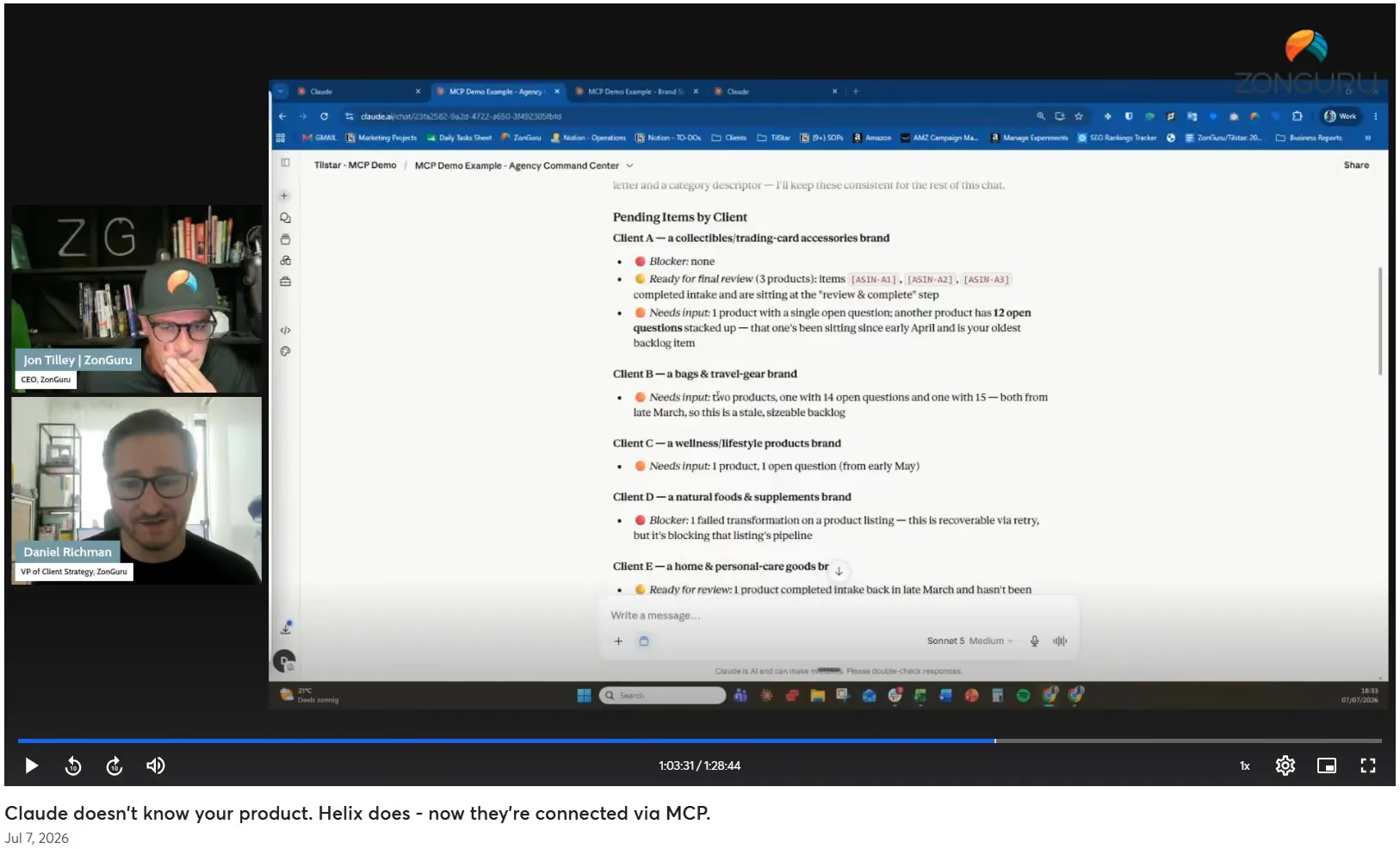
Anyone who has tried to get this far on prompting alone knows how it ends. A bare assistant holds no Amazon keyword history, no niche sales or pricing data, and no record of what your brand can honestly claim, so it writes fluent copy tuned to nothing beyond its training. ZonGuru's July Claude <3 Helix MCP workshop deck compressed the failure into a single line: "A prompt without structured product data isn't a shortcut. It's a guess with good grammar." The workshop reply is linked below:
The guess is measurable, as it happens. The AI Readiness Score is a free 0-to-100 read of how well a live listing answers what Amazon's AI discovery asks, half of it graded by COSMO, Amazon's knowledge graph, which reads listings as relationships between products, uses, and buyers rather than as keyword strings. Across more than 5,000 runs the median score is 65 out of 100, with the COSMO half at 70 and the Alexa for Shopping Q&A half at 54. That median is what pure A9-era optimization scores when no real market data sits behind it.
Better prompting does raise the floor, and these ChatGPT prompts for Amazon sellers mark roughly the ceiling of the unconnected approach, but the work past that ceiling goes by a different name. Listing Engineering is the discipline of structuring a listing's content deliberately for every engine that reads it, and it runs on market truth that no prompt contains.
So if you're ready to connect something, the mid-2026 menu is short, and almost all of it is built around your account data:
- Amazon's Ads MCP Server. The advertising console: campaigns, bids, budgets, performance reports.
- DataDoe. A normalized data layer across Seller Central, Vendor Central, and Ads — orders, settlements, ads, inventory, even your COGS for true profit — queryable in plain language over MCP, API, and BigQuery, and able to write changes (bids, prices, listings) back to Amazon. From $97 a month after a seven-day trial.
- Seller Labs. A similar managed connection, free until revenue passes $2,000 a month.
- Zapier. A single new-order trigger.
- Self-hosted GitHub servers. The same SP-API data, for sellers who would rather run their own.
Every one of these is real and useful, and every one works from the same class of thing: your account data — some can even act on it for you. None of them knows your product's story, your claims, or your market, and that's precisely what listing work needs.
Before you connect anything, though, it helps to know your own gap. Run your AI Readiness Score on your best listing first: it names where the listing falls short and suggests what to fix, though it won't rewrite anything for you. We analyze only your public listing data, charge you nothing, ask for no credit card, and never send spam.
How do you connect Claude (or ChatGPT) to your Amazon brand data?
The connection that carries product knowledge runs through Helix™, ZonGuru's listing-engineering platform, and setting it up is the least technical thing you'll do this week. The whole path is copy-and-paste.
- Register at Helix. Registration is free and carries no subscription, with Amazon Connections and your sales data included.
- Put a credit on the account. The connection unlocks once at least one credit sits on the account. A single credit is $49, and it stays yours: it pays for a listing transformation whenever you choose to run one.
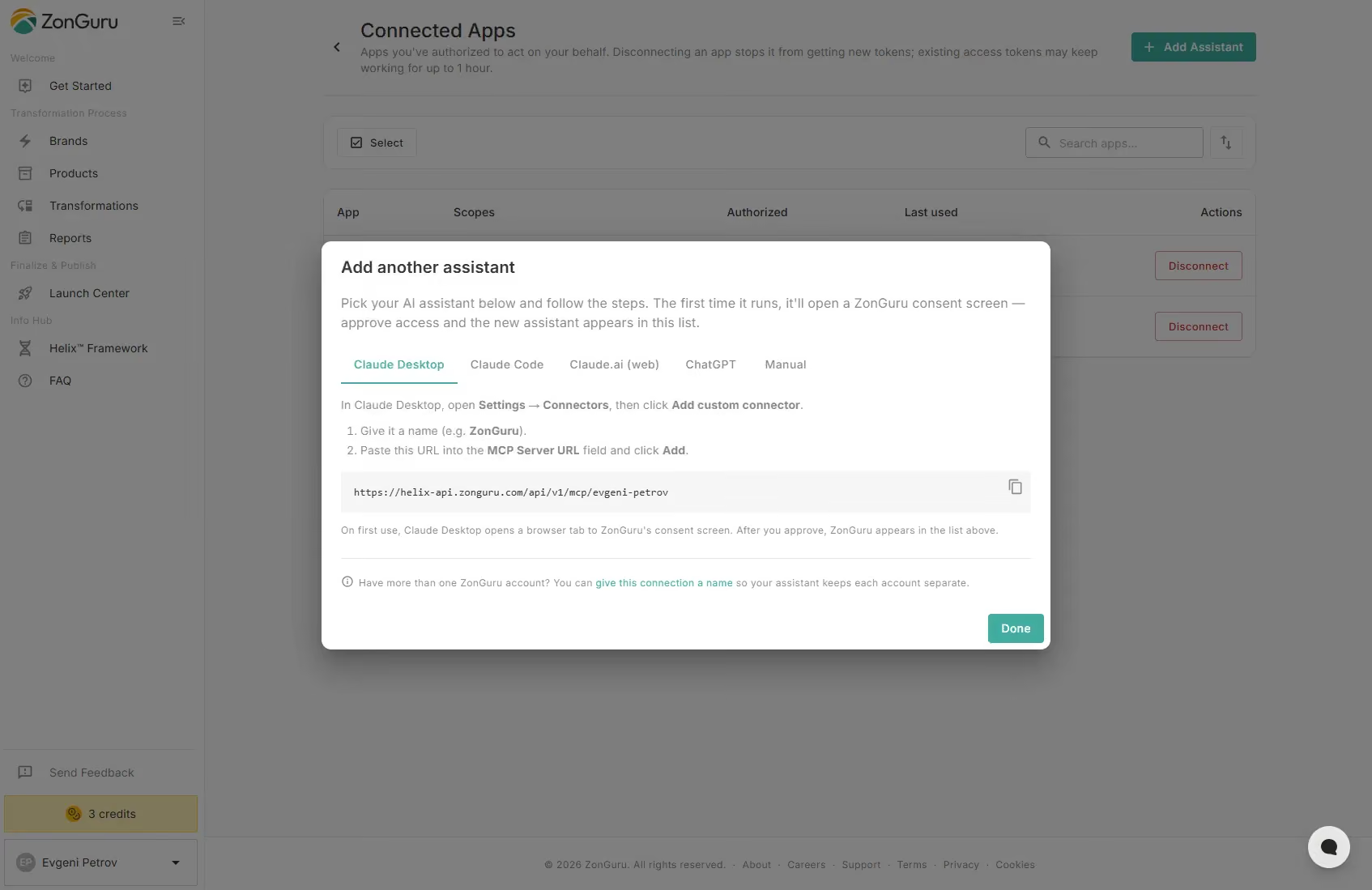
- Copy the connection string. In Helix, open Integrations from your account menu at the bottom left, then Connected apps, then Add assistant. The string is a plain URL personalized to your account, along the lines of https://helix-api.zonguru.com/api/v1/mcp/your-account, and the dialog shows click-by-click steps for Claude Desktop, Claude.ai on the web, Claude Code, ChatGPT, and a manual config for any other MCP client.
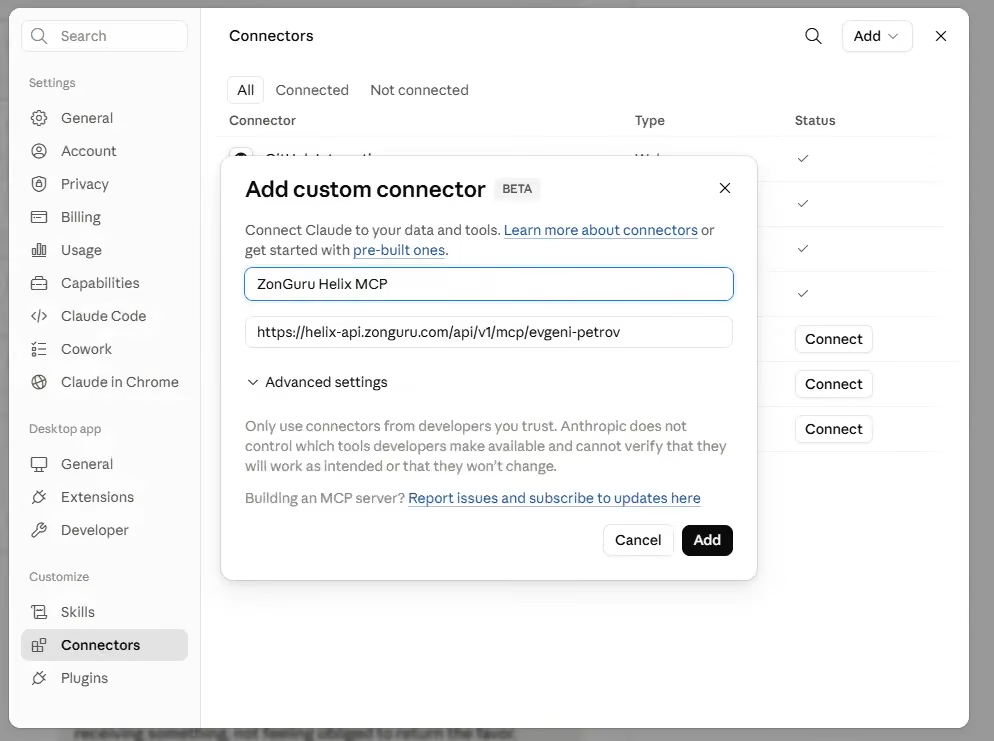
- Paste it into your assistant and approve access. In Claude, on desktop or web, go to Settings → Connectors → Add custom connector, paste the URL, and click Add. ChatGPT takes one extra step: under Settings → Apps, turn on Developer mode, then create an app with the same URL, leaving authentication on OAuth. The first time it runs, ZonGuru's consent screen opens in your browser, and once you approve it, the connection is live.
That's the entire setup: no code, no developer, and typically under ten minutes from registration to a live connection.
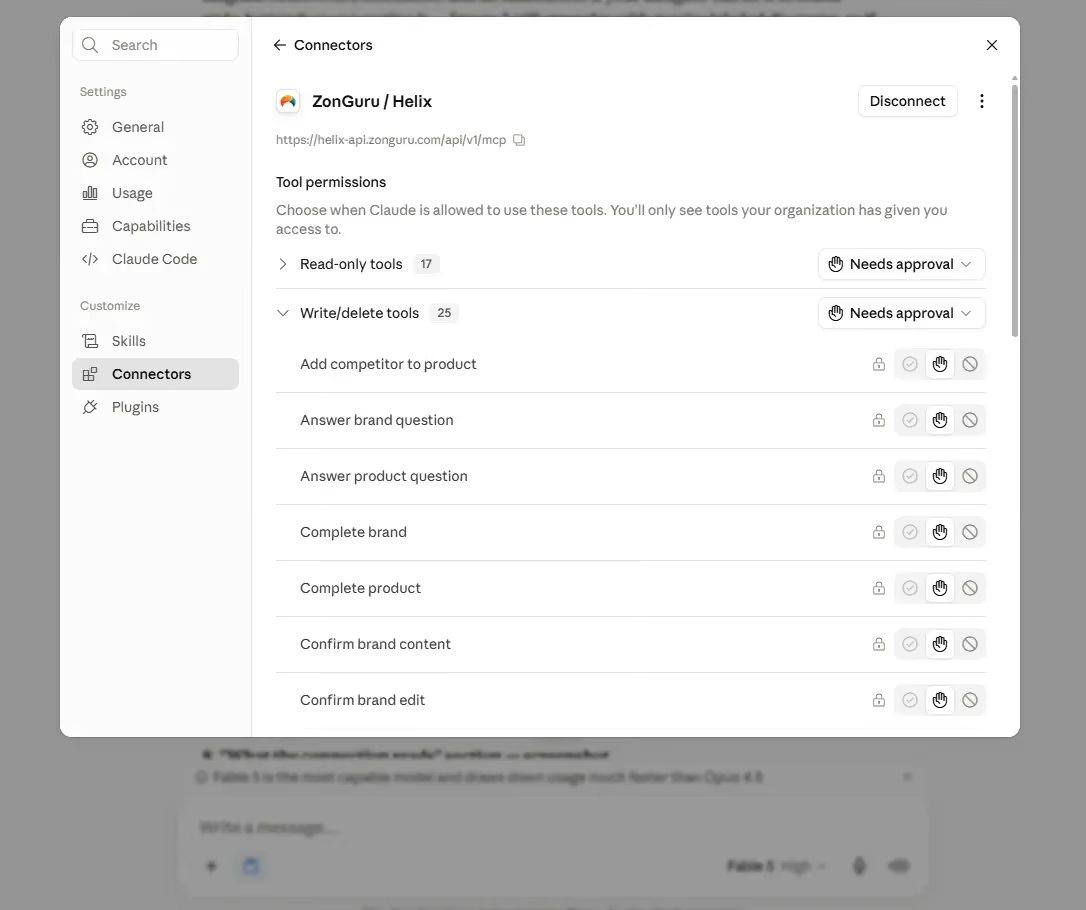
The moment it goes live, Claude shows you a permission screen listing everything it can now do - 42 tools, split into 17 read-only and 25 write, each one yours to allow or hold back. The read side covers your numbers and records (Get amazon sales, Get amazon fees, List products, Get brand, Get transformation, Get inbox), while the write side covers the work (Create transformation, Evaluate product edit, Update brand, Answer product question). Competitor and market data needs no button of its own; it rides inside your product records and the research pipeline, both of which pull live Amazon catalog data whenever they run.
Your Amazon data arrives through Amazon Connections. You authorize it once on Amazon's own login page, and Helix pulls your data from there. Neither Helix nor the assistant ever stores your Seller Central credentials, and the chat never sees a password. The connection string itself behaves like a revocable key: remove the connector from your assistant's settings, or the app from Helix's Connected apps, and access ends.
One timing note is worth having in advance. The first import of your sales, traffic, and fee history runs in the background after you authorize, so give it a little while to land. Once it has, start with a low-stakes question you can check yourself - last week's unit count on a product you know well - and when that comes back right, you know the pipes work.
Underneath all of this, Helix runs anti-hallucination loops (objective re-checks of what the model produced) plus human validation gates at brand and product setup, so the product knowledge an assistant reasons over was checked by a person first. You can see those gates in the tool list, where edits run in two steps: Evaluate product edit shows you the suggestion, and Confirm product edit commits it. Nothing writes to your records without your sign-off.
Past that first credit, nothing recurs. There's no subscription, and credits are spent only when you run a transformation.
Six jobs you can run the day you connect
A well-worded prompt in a fresh chat is enough to get going, because the model recognizes the job from the tools it can now see. Six are worth running first:
1. Find what to optimize next.
Ask: "Search my catalog and find the three ASINs that most need optimization right now, based on sales and conversion rates."
Or more bluntly: "Which listings have high sessions but weak conversions? I want to optimize those next."
Back comes a shortlist ordered by evidence rather than by hunch, and you can send it straight into a transformation without leaving the chat. Since the job needs nothing but your Seller Central connection and spends no credits, it belongs in your first hour.
2. Reformat titles and bullets in bulk.
For the July 27 deadline: "Pull the titles for this brand, flag every one running over 75 characters, and split each into a compliant title plus Item Highlights."
For body copy: "Rewrite these bullets to 250 characters each, keeping the essence and every claim exactly as written. Show me before and after."
Both end in a CSV you can push through a partial flat file. Helix writes bullets at the full 500-character limit by default, because the extra room is where the buyer Q&A coverage lives; when a category or a client forces you down to 250 or 200, this is how you get there without losing what the transformation found. Read the caveat below before you run this one at scale.
3. Re-cut a listing for another marketplace.
Ask for the destination's rules first - "Give me Walmart's title and description format rules" - and then: "Take my Amazon listing for [ASIN], re-cut it to those rules, and flag anything Amazon-specific that shouldn't carry over."
The second marketplace stops being a manual translation project. Walmart and Shopify search read content much the way Amazon's engines do, so the structure travels intact; what you need flagged are the Amazon-isms that don't.
4. Triage across every brand you run.
Multiple Helix accounts link to a single Claude login, one named connection per client and no practical ceiling on how many you wire in, so an operator can open the morning with: "Across all connected brands, what should I prioritize? What needs my attention right now?" Then narrow it - "Rank these by urgency. Which needs a response today rather than later in the week?" - and then close it: "Give me the context I need to resolve the top item."
The answer comes from a real queue rather than a guess, because the connection includes a Get inbox tool that returns everything waiting on you, tagged blocker, input-needed, or review. In the live run, the reply named the product, gave its current pre-transformation score, and said what a transformation should improve. One chat replaces the morning walk through a dashboard per client.
5. Hand your writers the differentiators and the do-not-say list.
Ask: "Show me the key brand-level differentiators and the do-not-mention restrictions Helix has on file for [brand]."
Back comes a summary of what genuinely sets the brand apart, drawn from the research done at brand and product setup, and beside it the restricted-claims list. Together they make the single most useful page you can put in front of a copywriter, a creative team, or an agency. Point the same prompt at two connected brands and you get a side-by-side read: two pet-supplement accounts in the workshop demo came back split down the middle, one built around small-breed dosing and the other around senior dogs, meaning two different sets of benefits, two tones, and two sets of creative guidelines.
6. Generate the carousel image your listing is missing.
Name the specific gap: "Generate the missing carousel image for [ASIN], with benefit copy overlaid. Pull the claims from the listing."
On a real lip-balm listing (Earth's Daughter), a single run returned a finished carousel image complete with copy overlays the live listing never had: "nourishing moisture for everyday lips, made of simple organic ingredients." At the time of writing, ChatGPT (Image 2) holds the edge on image generation, and that's the one clear reason to connect both.
One tip saves a lot of re-typing: store your adapted prompts in a Claude Project's instructions, and every new chat starts with the whole toolkit loaded rather than pasted in fresh. ChatGPT's projects work the same way.
Now the caveat, because it's the objection you should raise before anyone raises it for you. Jobs 2 and 3 are text reformatting, and a bulk title split will make a listing technically compliant. That's all it will make it. The reformat never asks which keywords deserve the 75 characters, or what belongs in Item Highlights, because that judgment lives in the keyword and market data behind a transformation rather than in the copy being reformatted. So run the reformat on listings you've already engineered, and run a transformation on the ones you haven't.
Which claims deserve the title, what's true enough to say, what actually sets your product apart: these are judgment calls, and judgment needs the Helix engineered record underneath it.
One more job shows that difference in action - a full positioning pressure test against live competitor data, and the clearest demonstration of what separates a connection that reads your numbers from one that knows your product.
What the connection reads is what the assistant can judge
The wok document came out of exactly that pressure test.
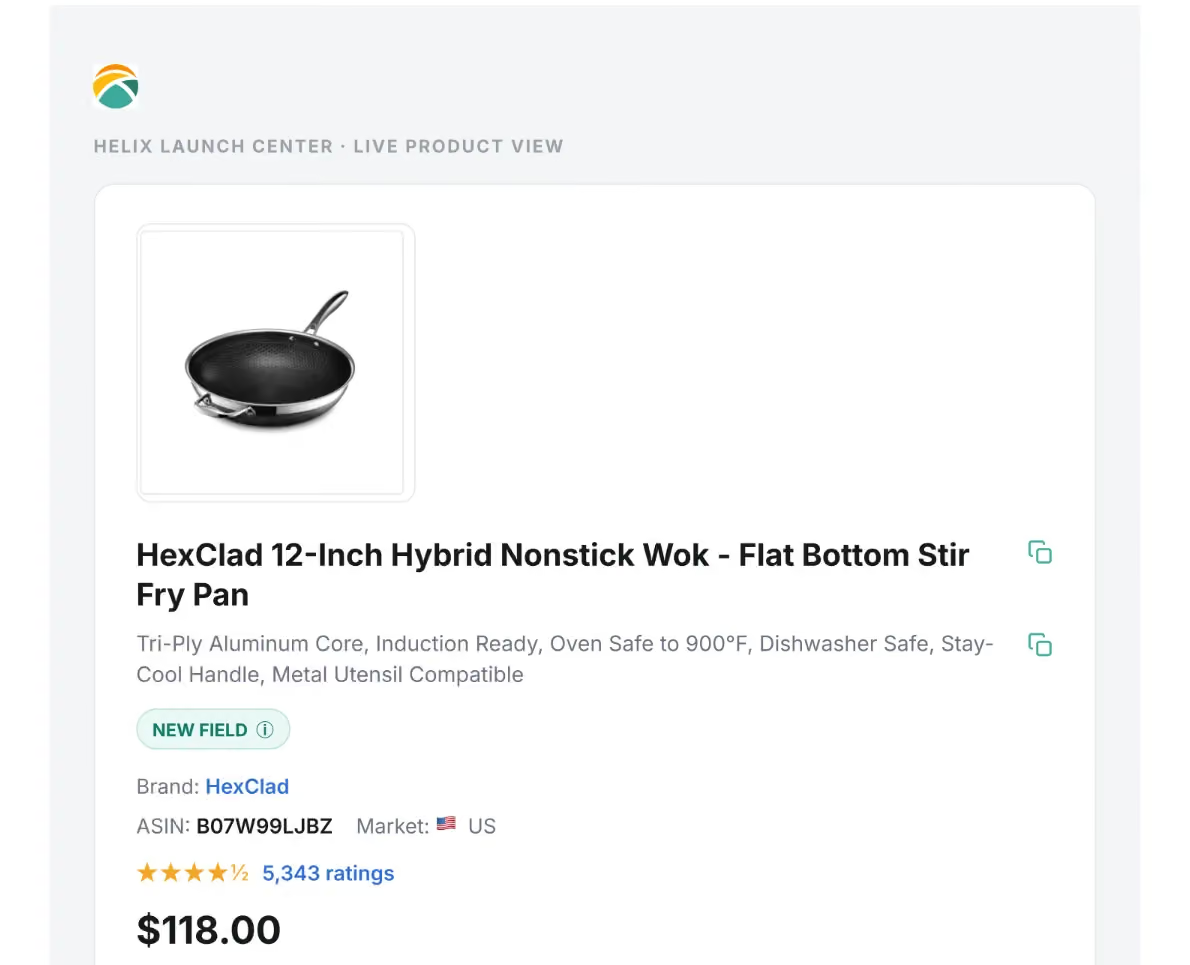
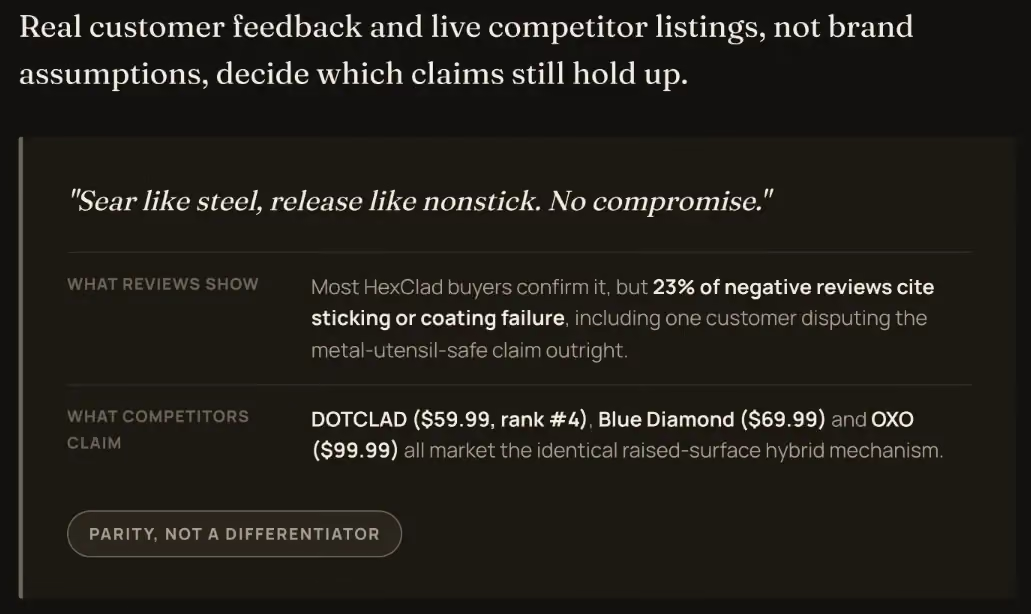
Connected to Helix and pointed at HexClad's 12-inch hybrid wok (ASIN B07W99LJBZ, $118, 5,343 ratings), Claude pulled the brand record and the listing analysis, then pulled live competitor listings, pricing, and reviews through the same connection, and sorted the four things wok buyers care about most into table stakes or edge. (the HexClad PDF document is here)
The hybrid-sear claim, the feature the brand is named for, came back as "PARITY, NOT A DIFFERENTIATOR," with three competitors making the identical claim at $60 to $100 less. Chef authority came back as "TRUE DIFFERENTIATOR… Nothing comparable, at any price point." A footnote under the competitor tables states the provenance plainly: the data was "pulled live from Amazon's public catalog… via MCP."
The document also caught two things no dashboard would ever surface. Gordon Ramsay co-created the product and the listing never says so, leaving the strongest credibility signal the brand owns absent from the copy a shopper actually reads. And a live bullet claims "third-party certified PFOA-free" while the brand's own restricted-claims file marks that exact wording as a compliance risk.
Both are judgment calls - one about what's missing, the other about a clash between what's claimed and what's cleared - and both require knowing the brand's truth rather than merely its numbers. (These findings are the demo document's read on a demo build; treat them as what the document found, not as audited facts about HexClad's business.)
You can put the same questions to your own hero ASIN. Which of my claims do competitors match at a lower price? Which signal is genuinely mine alone? What does my listing assert that my own compliance notes wouldn't clear? The verdicts come back only as good as what the connection can read, and a thin brand record produces thin verdicts.
All of it traces back to what gets read. An account wrapper reads numbers you already own, whereas this connection reads structured product knowledge: an artifact holding what the product is, who it's for, and what's true about it, rather than a block of copy. Alongside that sit brand records carrying positioning, voice, and restricted claims, plus the engineered title, bullets, and backend terms behind each listing; and under all of it, ten years of A9 keyword, ranking, and niche data. A9 still decides organic rank while Alexa for Shopping decides conversational discovery, and both engines read the same listing. Two engines, one input - that's the reality the engineering is built against.
The same run rebuilt the listing itself, and the demo build's receipts are easy enough to check:
- Listing score up from 76 to 91.
- 291+ A9 primary keywords covered.
- Title brought inside Amazon's 75-character limit, at 62 characters.
- Six searchable phrases added through Item Highlights, the new field of up to 125 characters that ships alongside the shorter title.
- Six competitor brand names, T-fal, Misen, Our Place, and Le Creuset among them, caught sitting in the backend search terms and removed before publish.
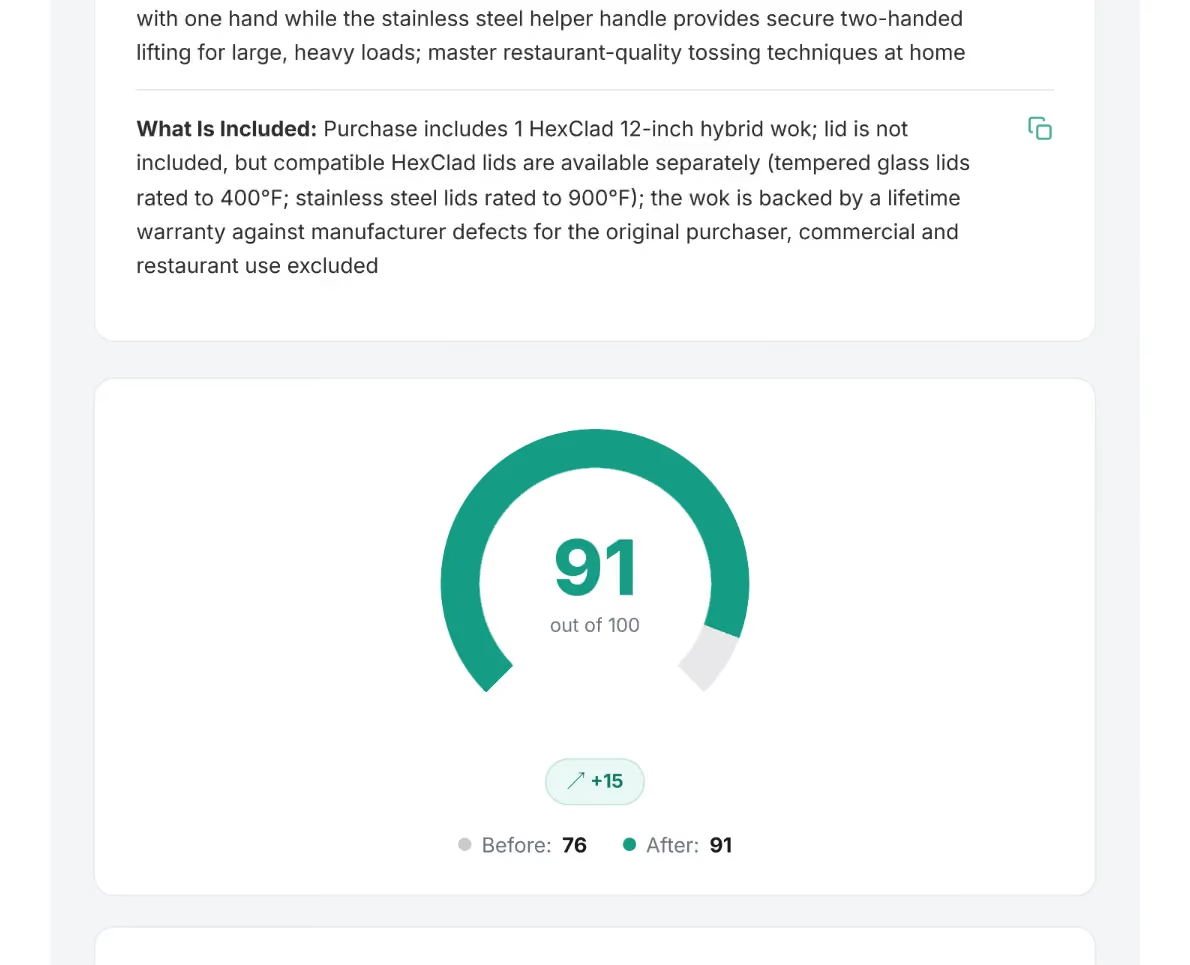
The semantic half of that work is engineered against COSMO's fifteen named relationship types, the full set the knowledge graph reads.
On July 27, 2026, Amazon starts enforcing the 75-character cap in nearly every category, rewriting oversize titles with its own AI on its own schedule, and roughly 90% of the listings in ZonGuru's weekly readiness scans haven't touched their character counts at all. An MCP that reads your fee schedule can't tell you which keywords survive a 75-character cut; that call needs to know what your product is, who buys it, and what's true enough to claim. The full 17-page HexClad document quoted throughout this section sits in the same public workshop materials folder as the deck, so read it and judge the verdicts yourself.
What it costs and where it stops
Registration is free and carries no subscription, with Amazon Connections and sales data included, and the MCP connection unlocks with your first credit purchase. A single credit is $49, volume packs slide the per-credit price down to $30 by the 100-credit tier, and one hero-level listing transformation costs one credit, so the credit that unlocked your connection is the same one you can spend on that first rebuild. The methodology those credits buy has run across 500+ Amazon brands and 3,000+ engineered listings.
The model, meanwhile, is now the cheap half of the equation.
In June, US export controls landed on Anthropic's two most capable models, and rather than risk serving the wrong user, the company pulled them for everyone. Eighteen days dark. They came back on July 1, and eight days after that OpenAI shipped GPT-5.6 Sol. Whoever leads this month won't be leading by Q4, and not one of those events changed anything about your listings.
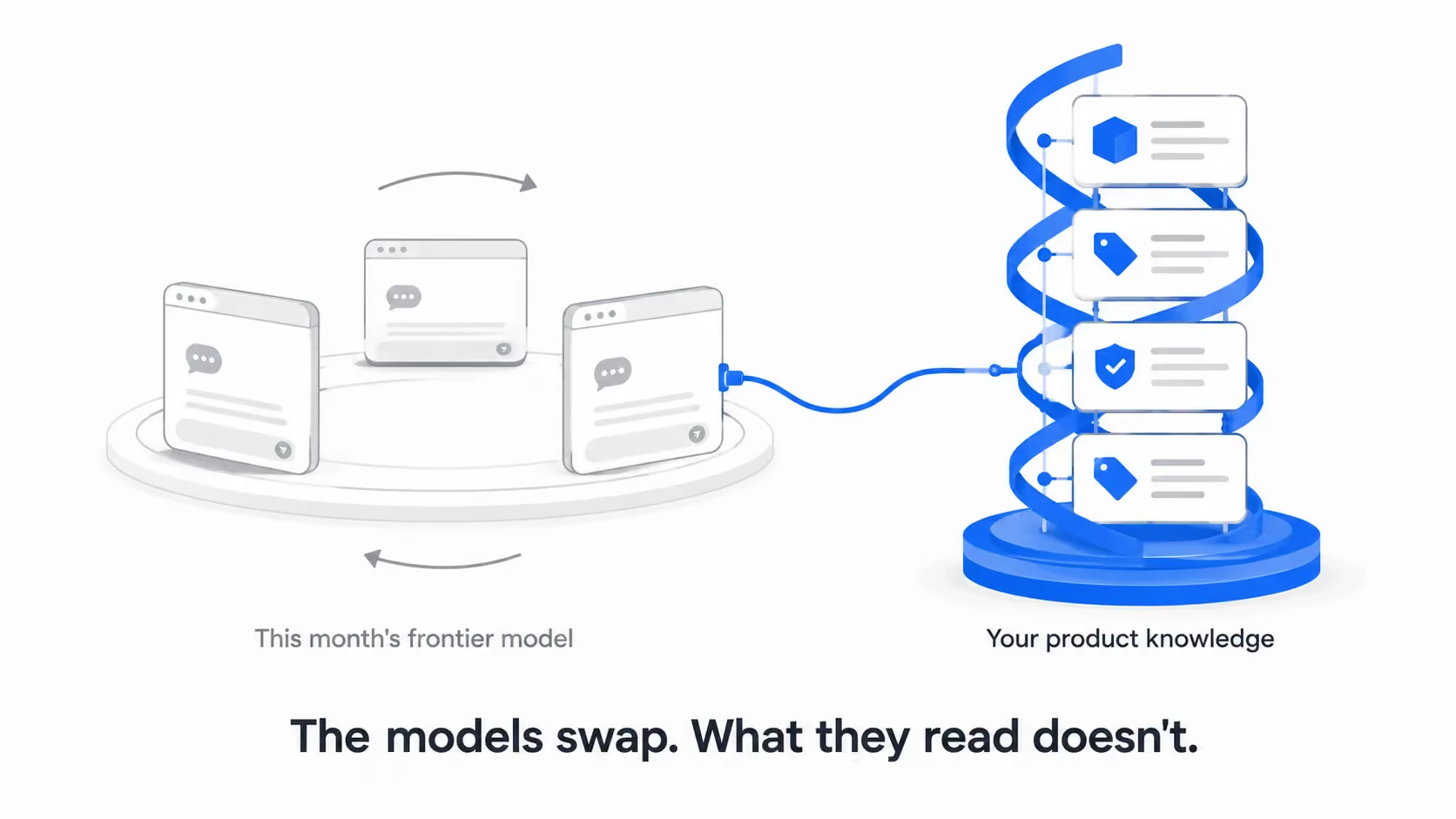
That is what it means to say frontier AI has become a commodity, and it isn't an insult to the models. They are extraordinary, and they improve on a cadence nobody can track. It means capability has stopped being the scarce ingredient. MCP is an open standard, so the connection string that runs Claude today runs ChatGPT tomorrow and whatever wins next quarter, and you swap between them without rewriting a thing.
What doesn't swap is what sits on the other end. Your brand records. The claims your own notes have cleared, and the ones they haven't. The engineered title, bullets, and backend terms behind each listing. Ten years of Amazon keyword, ranking, and niche data underneath all of it.
So Helix isn't a commodity connector with a chat window bolted on top. It's a Listing Engineering framework, and the connection doesn't make Claude more capable in general so much as put that framework underneath it. That's where the parity verdicts and the compliance catches you saw on the wok came from.
And here is where it stops, plainly. Helix currently supports the US and UK marketplaces, with more in development. The assistant works on engineered content inside Helix, so nothing publishes to your live Amazon listings without you. And a thin brand record still produces thin verdicts: no model, however frontier, repairs that from the outside.
FAQ
How much do you charge for the MCP connection?
Registration is free and carries no subscription, and it includes Amazon Connections and your sales data, but the MCP connection itself unlocks once at least one credit sits on your account. A single credit is $49, with volume packs bringing the per-credit price down to $30. One hero-level listing transformation costs one credit, and the credit that unlocks the connection stays spendable on that transformation.
Do I need to know how to code?
No code is needed. You copy a connection string from Helix's Integrations page into your assistant's connector settings, and Helix shows click-by-click steps for Claude Desktop, Claude.ai on the web, Claude Code, and ChatGPT. There is a manual JSON option for any other MCP client, which bridges through mcp-remote and needs Node.js 18+, but nothing requires that path.
Does it work with ChatGPT, or only Claude?
It works with both. In ChatGPT the setup takes one extra step: turn on Developer mode under Settings → Apps, then create an app with the same connection URL, leaving authentication on OAuth. Connecting both is reasonable, since ChatGPT currently holds the edge on image generation while everything else runs equally well in either.
If Helix is already powerful, why connect Claude or ChatGPT at all?
They do different jobs. Helix builds and stores the truth - brand records, engineered listings, a decade of Amazon market data, and the transformation pipeline that produces the listing - while the assistant is the reasoning layer on top, reading that truth, joining it with your sales and fee numbers, and answering the multi-step questions no dashboard can.
It also covers the custom work no UI anticipates. An apparel client needs 200-character bullets instead of 500; you want a one-off analysis of three ASINs rather than a dashboard view; you need the same content re-cut for another marketplace. That's the ten percent living outside the product, and it's where the connection earns its place.
Where do I put the prompt controllers: in each chat, or in the project instructions?
Either works. A controller is just a reusable prompt template, one per job, and once you paste it into a fresh chat and confirm the assistant can see your Helix connection, it will pull the ASIN, the brand record, and the image prompts on its own, with nothing to copy across by hand. If you run a job often, store the controller in a Claude Project's instructions so every new chat starts with it loaded. ChatGPT projects work the same way.
Is a controller the same thing as the brand strategy document?
No - the controller is the prompt, and the brand strategy document is what the prompt produces. The brand-strategy controller takes the brand story and product summaries already sitting in your Helix records and assembles them into a single document covering positioning, tone of voice, unique selling proposition, proof points, and the claims you have restricted. It's the brief you hand to an agency, a creative team, or whoever writes for you next.
How do I know when the AI gets something wrong?
Three layers catch it. Helix runs objective re-checks, called loops, on what the model produces, and it gates brand and product setup behind human validation, so the stored product knowledge was verified before anything reasons over it. Writes are two-step, evaluate then confirm, so a wrong suggestion dies at your review. And for reads, the cheapest habit works: ask for the reasoning, then spot-check any number you can verify in Seller Central before acting on the pattern it found.
There's a fourth layer, and it's you. Those validation steps at brand and product setup are where your own expertise enters the system, so the less you put into them, the thinner every answer downstream.
Can the assistant change my listings or my account, or only read data?
The connection splits cleanly: 17 read-only tools cover your sales, fees, records, and reports, while 25 write tools operate on your Helix records - brands, products, transformations - through two-step evaluate-then-confirm flows. Nothing publishes to your live Amazon listings behind your back. The assistant works on the engineered content inside Helix, and you control what goes live.
Do I share my Amazon login or seller credentials?
Not with Helix, and not with the chat. You log in once on Amazon's own page to authorize the Amazon Connections link, which is Amazon's standard authorization flow, and Helix pulls your data from there; neither Helix nor your assistant stores your Seller Central credentials, and your assistant connects to Helix with a paste-in connection string. Claude's permission screen separates the connection's 17 read-only tools from its 25 write tools, so you can allow reads while gating every write. Content changes go through two-step evaluate-then-confirm flows rather than silent writes, and removing the connector ends access.
Amazon is already rewriting long titles. Does changing mine early actually help?
Amazon has already begun using its own AI to rewrite oversize titles, visibly on mobile, and in ZonGuru's review the results are poor. Enforcement of the 75-character cap begins July 27, 2026.
The argument for moving early is control: you decide which keywords survive the cut and what goes into Item Highlights, instead of leaving both to Amazon's rewrite. Roughly 90% of the listings in ZonGuru's weekly readiness scans still haven't changed their character counts, so the window is not crowded yet.
I've already optimized my listings. Can they be re-run with a new title?
Yes. A transformation starts from the live listing and your brand record rather than from whichever tool last touched the copy, so previously optimized listings re-run like any other, whether they were optimized on ZonGuru's classic tools or somewhere else.
If a listing is genuinely well optimized and all you need is the shorter title and Item Highlights, that is a reformatting job rather than a rebuild, and it's exactly what the connection handles well (see job 2 above). Just know what you're getting: a reformat makes the listing compliant, not better.
To check where a listing stands before you decide, run the free AI Readiness Score. It names the gaps and suggests what to fix, but it won't hand you a finished title and it won't rewrite the listing.
How often should a listing be re-run, and is A10 a new opportunity?
No fixed timer is worth following. Re-run when something material changes: a competitor moves on price or claims, reviews surface a new objection, a season shifts what buyers ask for, or Amazon changes the rules - the 75-character title cap being exactly that kind of trigger. A connected assistant makes the check cheap, since you can ask which of your transformations are oldest and what has changed in the niche since, before spending a credit.
As for A10, that's the name sellers use for the current evolution of Amazon's keyword ranking engine, the same lineage this article calls A9. The name matters less than the structure: one keyword engine still decides organic rank, one AI engine (Alexa for Shopping) decides conversational discovery, and both read the same listing. The opportunity isn't a new algorithm to chase; it's that most listings still serve only the keyword half.
Helix built my brand positioning from my website, and my website is out of date. Can I submit better information?
Yes, and you have two routes. You can skip the website pull entirely and answer the questionnaire instead, which is the right move if you already have a brand strategy document worth more than your current site. Or, if you've since updated the site, re-run the brand in Helix and run your transformations off the refreshed brand record.
Either way, the validation steps at brand and product setup exist so you can correct what the research got wrong before anything is built on top of it.
Can an agency run multiple client accounts through one connection?
Yes. Multiple Helix accounts link to a single Claude login, one connection per client, each carrying its own name so accounts stay separate, with as many connected as you manage. Cross-account questions work: ask which brand needs attention first, and the assistant reads each account's inbox of pending items to answer with a ranked, resolvable list.
Does any of this work for Walmart?
For re-cutting content, yes, and it's one of the six jobs above. Helix engineers structure against Amazon's data and Amazon's engines, but Walmart and Shopify search are AI-driven too and read content the same broad way, so a re-cut carries most of the signal across. Ask the assistant for the destination's format rules first, then have it flag anything Amazon-specific that shouldn't travel.
Helix itself currently supports the US and UK Amazon marketplaces, with additional marketplace support in development.
How is this different from Amazon's own Ads MCP Server?
They answer different questions and coexist happily. Amazon's server covers the advertising console - campaigns, bids, budgets, performance reports - while the Helix connection covers your products: what they are, what they can honestly claim, how their listings are engineered, plus your sales and fee data. Connect both, then send ads questions to one and product questions to the other.
Your first hour, connected
- Register, add your first credit, and connect. The paste-a-string setup fits inside ten minutes, and you may as well authorize Amazon Connections while you're there, so your sales history starts importing in the background.
- Ask what to optimize first, once the import lands. Which listings pull sessions but don't convert? It spends no credits, and it hands back a shortlist built from your own numbers.
- Score your hero ASIN to see how it reads to Amazon's AI discovery.
- Decide on the transformation. With the July 27 title deadline in view, judge whether that first listing earns the credit you're already holding.
Each step returns something you can act on the same day.
The next time a "connect AI to your Amazon business" pitch crosses your desk, you need exactly one question: what does it read? If the answer is your orders and fees, you're buying a faster dashboard - useful, and blind to your product. Claude caught the missing Gordon Ramsay mention and the risky compliance claim on that wok because a brand record and ten years of market data sat behind it, and your catalog has the same kind of findings waiting: a selling point your listing never mentions, a claim your notes wouldn't clear, a bestseller quietly leaking margin.
The models will keep changing hands. What any of them can do for your Amazon brand is decided by what sits on the other end of the connection.
Transform Your Listings - put engineered product knowledge behind your connection, starting with your hero ASIN.
Helix is currently available for US and UK Amazon marketplaces. Additional marketplace support is in development.


.avif)